
The biggest esports tournament app isn't automatically the right one for your event. A platform built for publisher-backed qualifiers may be excessive for a weekly community bracket, while a mobile-first tool can struggle with a PC league that needs detailed seeding, permissions, and match reporting.
Organizers should compare the job first: live brackets, recurring leagues, asynchronous competition, mobile community events, integrations, or prize operations. Registration and check-in flow matter just as much as format support. So do game and platform coverage, API access, payment responsibilities, pricing visibility, and the amount of manual administration your staff will still handle.
This list compares GamerPlug, established bracket platforms, publisher-oriented systems, mobile tournament tools, asynchronous leaderboards, and payout specialists. It also separates documented capabilities from access limits and stated costs. For organizers tracking broadcast performance, a live Twitch data API can complement tournament software, but it won't replace the operational layer that keeps players registered, checked in, matched, and paid.
Table of Contents
- 1. GamerPlug
- 2. Start.gg
- 3. Battlefy
- 4. Challengermode
- 5. Toornament
- 6. FACEIT
- 7. Game.tv
- 8. Community Gaming
- 9. Repeat.gg
- 10. Matcherino
- Top 10 Esports Tournament App Comparison
- Choose the Tournament Stack That Fits the Job
1. GamerPlug
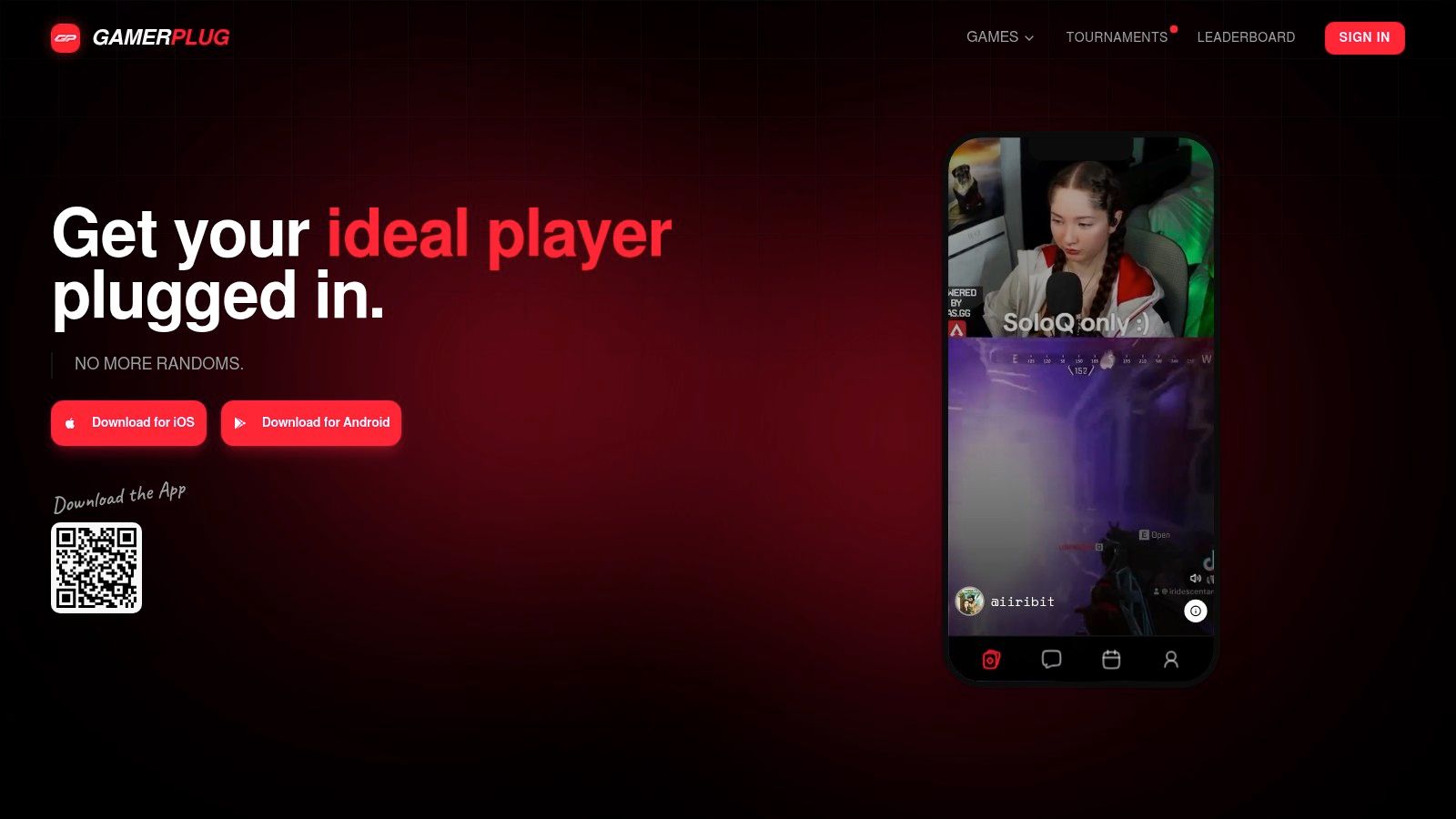
GamerPlug fits events where roster building starts before bracket play. It combines player discovery, teammate matching, chat, and tournament hosting in one gaming social app, so organizers can address the matching problem before registration fills with incomplete teams. If players cannot find compatible teammates, even a well-run bracket can leave organizers with empty slots, late roster changes, and more manual support.
The platform is available on iOS, Android, and the web, with support for players on PC, PlayStation, Xbox, and Nintendo Switch. Profiles include gameplay clips of up to 90 seconds, verified ranks, play-style information, microphone preferences, team-play preferences, and gaming schedules. Rank and stat syncing through official APIs currently covers Apex Legends, Fortnite, and League of Legends, while other supported games may rely on clips or manual context.
Best fit for community-led competition
The Discover feed lets users filter players by game, platform, and verification status. Squads listings add practical constraints such as mode, rank range, microphone requirements, and open slots. For organizers, that is more useful than a generic event page when the main task is helping players assemble a workable roster before registration closes.
Tournament tools support Single Elimination, Double Elimination, Swiss, and Round Robin formats, with registration, check-ins, live leaderboards, and tournament-specific chats. Registered players can coordinate lobby codes and reminders in the event thread instead of scattering instructions across separate channels.
Organizer insight: If roster formation is part of your tournament workload, evaluate the player network and communication flow alongside the bracket editor.
GamerPlug supports 19 competitive titles, including Apex Legends, Valorant, Fortnite, League of Legends, Call of Duty, Overwatch 2, Rocket League, PUBG, and NBA 2K. Its mobile launch took place in January 2026, so organizers should test the size and activity of their specific game and region before promising fast teammate matching. Optional World ID badges, clip-based profiles, and in-app reporting add trust signals, but automatic verification remains narrower than the full game catalog.
Website: gamerplug.app
2. Start.gg
Start.gg is a strong choice when the tournament itself is the main product, particularly for fighting game community events and grassroots LANs. Its workflow covers registration, seeding, pools, scheduling, check-in, match reporting, and event-stage notifications. That depth helps tournament organizers who need precise control over how players move from registration into pools, brackets, and final standings.
The platform's community recognition is a practical advantage. Players and tournament organizers already encounter Start.gg in grassroots competition, and its use in official rulebooks can reduce the explanation required before an event. The mobile-first app experience is designed to support player and admin flows while an event is in progress, which is useful for staff moving between stations rather than sitting at one dashboard.
Costs and administration
Start.gg surfaces its platform fee model in dashboards and reports. The listed fee is 6% of the user subtotal on paid signups, so organizers should model that charge alongside payment processor costs and any event-specific expenses. The fee is clear enough to include in planning, but it still changes the economics of low-margin paid events.
The tradeoff is operational complexity. Strong seeding and pool controls give experienced tournament organizers room to manage difficult formats, but some community feedback describes the interface as complex. A small organizer should run through registration, payment, check-in, and match reporting before publishing an event.
For a broader view of the responsibilities involved, organizers can review this guide to running an online tournament. Start.gg fits best when your staff values mature controls and community familiarity over the simplest possible setup.
Website: Start.gg
3. Battlefy
Battlefy makes the most sense for organizers who need a recognizable, structured environment for publisher-backed qualifiers, branded events, and organized community competition. The platform supports tournament pages with registration, rules, check-in, match lobbies, brackets, and participant-facing match information.
Its key strength is the flow around each match. Flexible seeding and host selection are built into match pages, so players can find the relevant instructions and opponent information without navigating an unrelated communication system. That reduces ambiguity during qualifiers where a missed lobby detail can create disputes or staff intervention.
Where Battlefy earns its place
Battlefy has established recognition among players and tournament organizers and has been used for publisher events and official qualifiers. That history makes it a credible option when a brand or game publisher wants participants to use a known competition environment rather than an unfamiliar internal tool.
The limitation is commercial visibility. Enterprise pricing isn't publicly obvious, so a larger organizer should treat the sales conversation as part of the buying process, not as a minor administrative step. Ask for the full cost of registration, support, integrations, branding, and any event-specific services. Documentation can also feel dated in places, which may increase onboarding time for staff who aren't already familiar with the platform.
Battlefy is therefore less compelling as a casual LFG tool and more compelling as an operational home for events with formal rules, defined match ownership, and a need for clear participant instructions. Organizers comparing it with community-first products can also read this overview of a gaming tournament app to separate player discovery from event administration.
Website: Battlefy
4. Challengermode
Challengermode is built around a broader competition layer than a single bracket. Its automated tournaments, league systems, team management, community Spaces, subscriptions, and publisher integrations make it particularly relevant for organizations running recurring leagues or branded competitive programs.
A one-off event can use Challengermode, but its strongest logic appears when the organizer wants players to return to the same community environment. Spaces can support membership and subscription structures, while automated brackets and league tools reduce the need to rebuild operational processes for every event. For game studios and brands, the publisher-level technology also opens the possibility of embedded or in-game tournament experiences.
The recurring-event decision
The main question is whether your event cadence justifies a platform with deeper commercial and community infrastructure. If you only need a public bracket for an occasional competition, the setup may be more than you need. If you're developing a league, creator community, or brand activation, the ability to connect competition with membership and monetization becomes more relevant.
Pricing is negotiated and requires a contact process, so organizers can't assess total cost from a simple public price page. Wallet top-ups and payment flows also have minimums, which means finance teams should test the participant journey rather than assuming every player can fund an account without friction.
Bracket design remains central to the player experience, so organizers should understand how tournament brackets work before choosing automation over manual control. Challengermode is best for teams that want competition to operate as an ongoing community product, not just as an isolated event page.
Website: Challengermode
5. Toornament
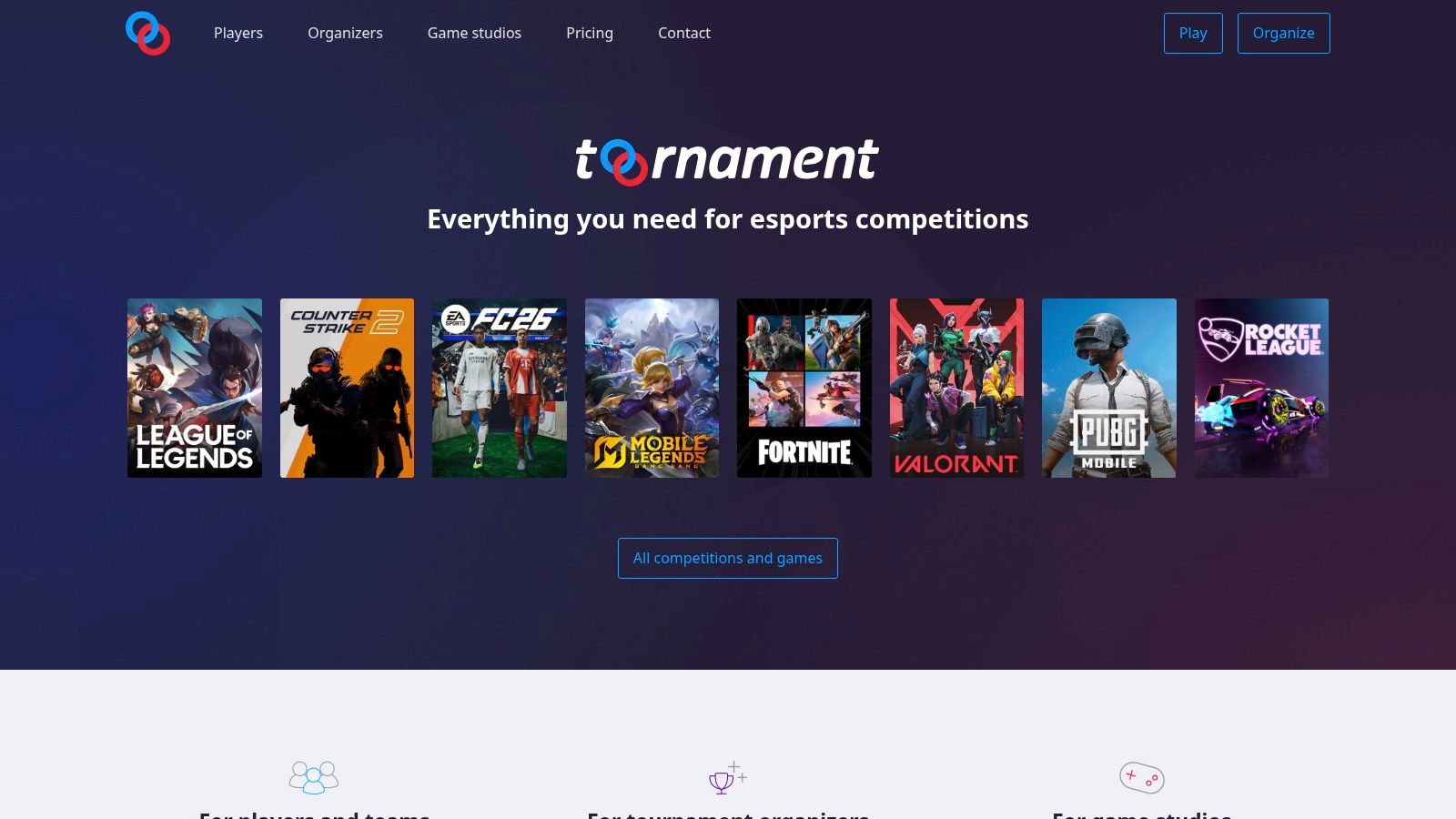
Toornament is a mature tournament operating system for organizers who care about format flexibility, staff permissions, structured registration, and branded presentation. It supports Single and Double Elimination, Swiss, Round Robin, seeding tools, staff roles, website-building features, embeddable widgets, and white-label presentation.
That combination changes the selection question. An organizer isn't only choosing where to record winners. They're choosing whether the public tournament experience should live inside a third-party community, inside an existing website, or across an embedded branded interface. Toornament is strongest when the event's identity and publishing surface matter.
A useful option for smaller organizations
Toornament added a Community plan in 2026 with a 0% Toornament fee on paid registrations. Payment processor fees still apply, so “zero platform fee” shouldn't be treated as zero event cost. Even so, that structure can make the platform attractive to small organizations that want paid registration without adding a platform percentage to every signup.
The access boundary sits around advanced functionality. API access, white-label tools, and other capabilities may require paid tiers, and some features depend on the plan selected. Ask which features are included before designing an event website or data workflow around them.
Practical rule: Choose Toornament when your publishing and format requirements are as important as your bracket, then confirm the plan supports both before launch.
Its documentation and organizer focus make it a sensible fit for structured events, especially when a community needs a repeatable operating model rather than a one-time admin workspace.
Website: Toornament
6. FACEIT
FACEIT is the specialist choice for organizers operating close to a major PC competitive ecosystem, especially around CS2 and publisher circuits. Its value isn't only tournament creation. It comes from the combination of a large player environment, competitive discovery, game integrations, anti-cheat infrastructure, organizer roles, permissions, and match notifications.
The platform supports tournament statuses and auto-launch options, which can reduce the number of manual steps between event readiness and match start. Organizer permissions and game integration controls also matter when multiple staff members manage a circuit or when a publisher needs tighter control over who can configure and operate an event.
Access is the deciding factor
FACEIT isn't a universal self-serve answer for every organizer. Many organizer capabilities are partner-gated, and access, pricing, and feature sets depend on the partnership arrangement. That makes availability a primary buying criterion, not a detail to investigate after selecting the platform.
A community organizer should establish whether they can create the event they want, use the required game integration, access discovery, and manage staff permissions before committing participants to the workflow. A publisher or established circuit may find the ecosystem a better match because official programs and competitive integrity are central to the platform's position.
FACEIT works best when the event needs access to its existing competitive audience and infrastructure. It works less well when the organizer wants an open, flexible tool for many unrelated games or a lightweight community tournament with no partnership dependency.
Website: FACEIT
7. Game.tv
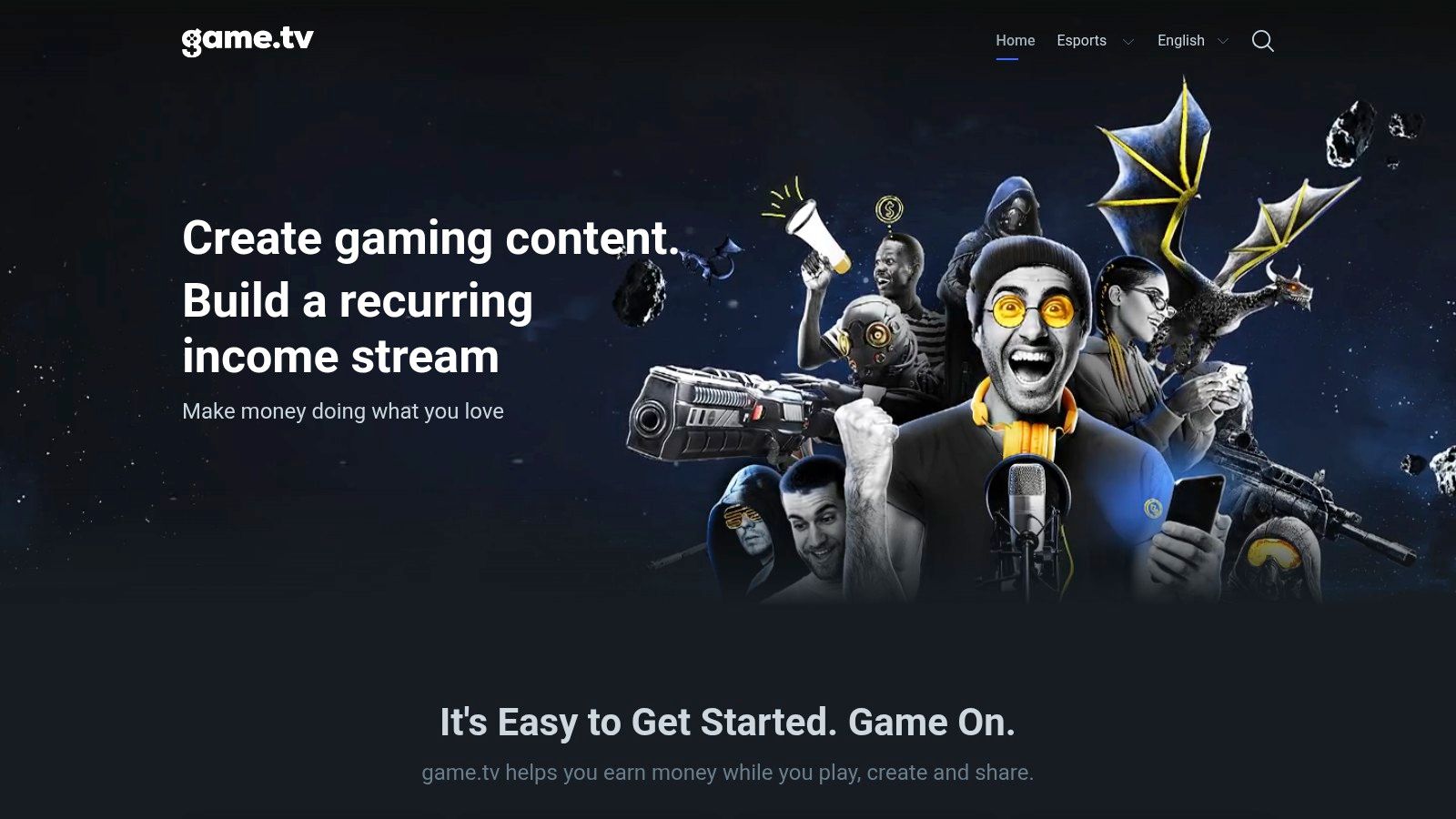
Game.tv approaches tournament administration from the mobile community outward. Its quick tournament creation workflow, app-native notifications, check-in and results flow, and localized player discovery make it a natural fit for mobile games, creator communities, Discord groups, and frequent small events.
Speed is the product decision here. A creator who wants to run bite-size competitions repeatedly may benefit more from fast setup and participant notifications than from advanced PC bracket controls. Discovery across mobile communities can also help an organizer reach players who already use a mobile-first environment rather than asking them to adopt a desktop tournament portal.
Don't force a mobile tool onto a PC format
Game.tv is best suited to mobile titles. Desktop and console support is limited compared with PC-focused platforms, so it shouldn't be selected merely because its setup flow looks easy. Check how your specific game handles match verification, player communication, and results before treating it as a full replacement for a PC competition system.
The platform's strength is the event loop, quick creation, app notifications, check-in, results, and discovery. That loop supports recurring community activity, where the organizer's main challenge is keeping players informed and returning. It is less suitable for complex PC or console competitions that depend on extensive staff controls, custom integrations, or detailed manual adjudication.
For mobile creators, Game.tv can be the right answer because it aligns the participant experience with the device players already use. For mixed-platform esports, a broader platform may reduce the number of exceptions staff must handle.
Website: Game.tv
8. Community Gaming
Community Gaming should be evaluated when prize distribution, escrow, payment methods, and compliance workflows are central to the event. It supports registration and brackets for online and offline competitions, paid entries, organizer revenue share, and automated prize distribution to linked wallets and payment methods.
That makes it different from a pure bracket tool. The organizer isn't only asking whether players can report a result. They're asking how prize money moves after the podium is confirmed, how participants connect their payment method, and how the platform handles a real-money event across different participant circumstances.
Model the complete prize cost
Community Gaming retains up to 5% of gross participant fees, and organizers also need to account for payment processor fees. The percentage applies to gross participant fees, so it should be included in the event budget before prize pools, staff costs, and marketing commitments are finalized.
The payout emphasis is especially useful for multi-event circuits. Automated distribution can reduce repetitive manual work, while event pages keep registration, rules, and standings in one participant-facing location. Still, payment systems can fail around age, geography, and entity-type edge cases, and amateur events often lose players when registration becomes too difficult or verification feels excessive. That broader analysis of esports tournament platform development challenges is a useful reminder to test the payout journey, not only the organizer dashboard.
Community Gaming is a strong candidate for prize-bearing competitions, but its fee and processor structure must be checked against the event's entry model.
Website: Community Gaming
9. Repeat.gg
Repeat.gg solves a different tournament problem: players don't need to appear at the same time for the competition to work. Its leaderboard and score-submission model suits asynchronous events in games such as Fortnite, League of Legends, Madden, and Battlefield. Players connect game IDs, submit or generate tracked scores, and compete within a defined leaderboard structure.
This format can remove pressure from fixed match windows. It can also reduce the effect of no-shows because participants have more flexibility around when they play. That makes Repeat.gg a better fit for broad community participation, seasonal series, partner events, and content calendars than for a traditional live bracket where every round must happen in sequence.
Choose scores over scheduled rounds
Repeat.gg's game ID connections and score tracking create a different trust model from live match reporting. Organizers should confirm how the chosen game supplies results and what happens when a score is disputed. The platform's tutorials and help center can make onboarding easier for new participants, but asynchronous competition still needs clear rules for eligibility, score windows, and invalid results.
The active seasonal and partner-event approach is useful for organizers who want a continuing event cadence rather than one championship day. It can keep players engaged without forcing every participant into a shared schedule.
Repeat.gg isn't primarily designed for live bracket management. If your format depends on pools, live lobbies, and round-by-round progression, use a bracket-focused platform instead. If your audience is distributed across time zones or has inconsistent availability, the leaderboard model may solve a problem that conventional tournament apps leave untouched.
Website: Repeat.gg
10. Matcherino
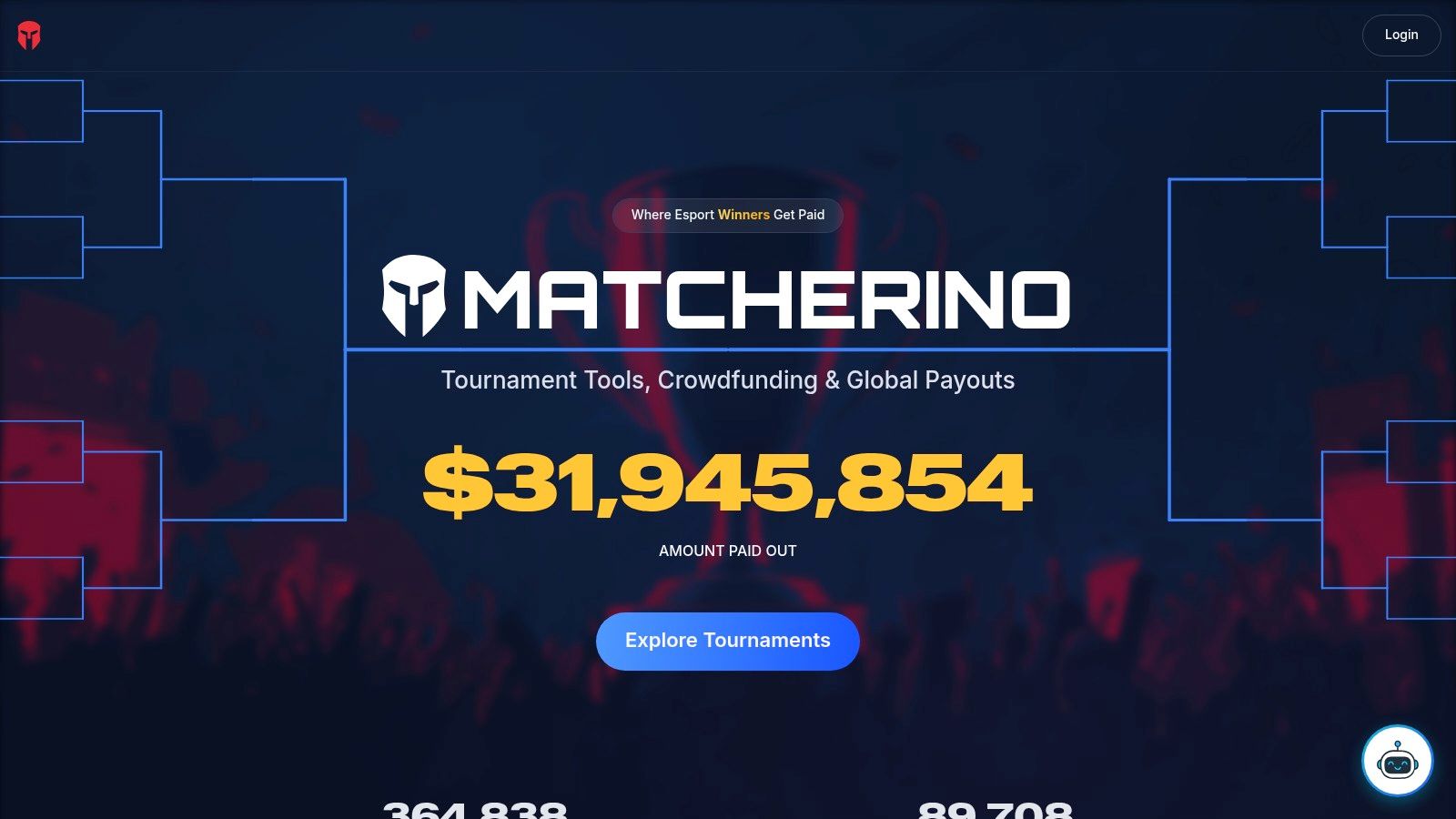
Matcherino is a prize operations and monetization layer for organizers who need more than registration and standings. It offers ticketing, prize-pool crowdfunding, sponsor quests, a rewards store, tournament operations support, and automated payouts triggered by bracket or podium inputs.
That positioning makes it particularly useful when the organizer's hardest job begins after the final match. Community and publisher events can use Matcherino to structure prize distribution while also giving sponsors and participants more ways to contribute to or engage with the event economy.
Pair it with the right bracket system
Matcherino often relies on an external bracket tool for live match flow. That isn't necessarily a weakness. It can be the correct architecture when the organizer already prefers Start.gg, Battlefy, Toornament, or another system for registration and brackets, but needs a dedicated process for crowdfunding, sponsor rewards, and payouts.
The tradeoff is integration and administration. Staff must understand how final standings move from the bracket platform into payout operations, who validates podium inputs, and which fees or maintenance charges apply under the current terms. A disconnected handoff can create more support work than a unified platform if responsibilities aren't assigned clearly.
Matcherino is therefore best judged as part of a tournament stack rather than as a standalone esports tournament app. Choose it when compliant prizing and sponsor participation are strategic requirements, then test the full path from ticket purchase to final payout.
Website: Matcherino
Top 10 Esports Tournament App Comparison
| Product | Core focus | Key unique features ✨ | UX / Quality ★ | Value / Price 💰 | Target audience 👥 |
|---|---|---|---|---|---|
| GamerPlug 🏆 | LFG + match vetting + tournaments | ✨ Clip-based profiles, rank sync (Apex/Fortnite/LoL), swipe Discover, Squads LFG, World ID | 4.5★, mobile/web, fast matches | Free 💰, creator/collegiate support | 👥 Competitive & casual gamers, TOs, creators |
| Start.gg | End-to-end tournament platform (FGC/grassroots) | ✨ Deep seeding/pools, mobile admin, merch/shop | 4★, powerful TO tooling | 💰 Fees on paid signups (~6%) | 👥 Grassroots TOs, FGC, event organizers |
| Battlefy | Publisher & brand-grade tournament pages | ✨ Per-match flow, flexible seeding, reliable at scale | 4★, enterprise reliability | 💰 Enterprise pricing (opaque) | 👥 Publishers, large organizers, official qualifiers |
| Challengermode | Studio/brand competition + monetization | ✨ Automated leagues, Spaces (subscriptions), in-game integrations | 4★, strong league tools | 💰 Negotiated / enterprise tiers | 👥 Game studios, brands, recurring leagues |
| Toornament | Tournament OS & white‑label widgets | ✨ Multi-format support, embeddable widgets, Community plan (0% fee) | 4★, mature organizer toolkit | 💰 Community plan 0% fee; paid tiers for advanced features | 👥 Small orgs, community TOs, web integrators |
| FACEIT | Premier PC competitive ecosystem | ✨ Large player base, anti-cheat, partner discovery | 4.5★, high-integrity competitive play | 💰 Partner-gated features / variable pricing | 👥 PC competitive scenes, publishers, circuits |
| Game.tv | Mobile-first quick tournaments | ✨ Fast create flow, app-native notifications, localized discovery | 4★, creator-friendly, mobile-centric | 💰 Free / mobile-optimized monetization | 👥 Mobile players, creators, Discord communities |
| Community Gaming | Payouts & compliant prize distribution | ✨ Automated payouts (crypto & fiat), escrow, revenue share | 4★, payout-focused reliability | 💰 Platform retains up to 5% + processor fees | 👥 Organizers running prize-bearing events |
| Repeat.gg | Leaderboard & asynchronous competition OS | ✨ Auto-track scores, leaderboard series, game ID connections | 4★, great for async events | 💰 Event fee model / freemium | 👥 Large-scale async events, content partners |
| Matcherino | Prize crowdfunding & payout ops | ✨ Ticketing, crowdfunding, sponsor quests, automated payouts | 4★, gold standard for prizing | 💰 Fees & maintenance; integrates with bracket tools | 👥 TOs needing compliant prizing, sponsors |
Choose the Tournament Stack That Fits the Job
The right platform depends on the failure you most need to prevent. If players struggle to find compatible teammates, prioritize GamerPlug because its profiles, Discover feed, Squads listings, chat, and tournament tools connect roster building with bracket participation. It fits community-oriented events where the organizer wants players to find gaming teammates instead of arriving with incomplete parties.
Choose Start.gg for grassroots administration and fighting game community events. Its registration, seeding, pools, scheduling, check-in, and reporting tools suit organizers who need detailed control over a live event and whose participants already recognize the platform.
Choose Battlefy for publisher-backed qualifiers and formal events that need clear rules, match pages, host selection, and a familiar participant flow. Its public pricing isn't obvious, so request the commercial details before building an event around it.
Choose Challengermode when you're building recurring leagues, community Spaces, subscriptions, or embedded publisher experiences. Its value increases when competition needs to operate as an ongoing program rather than a sequence of disconnected brackets.
Choose Toornament when structured formats, staff roles, embeddable widgets, and white-label publishing matter. Its Community plan offers a 0% Toornament fee on paid registrations, although processor fees still apply and advanced capabilities may sit behind paid tiers.
Choose FACEIT when access to its competitive ecosystem, game integrations, anti-cheat environment, or publisher partnership is available. Don't assume it provides open self-serve access to every organizer. Partnership requirements can determine the decision before feature comparisons do.
Choose Game.tv for mobile-first communities, creator-led events, and frequent small tournaments. Its quick setup and app-native notifications are valuable for mobile titles, but organizers running PC or console-first competitions should verify platform coverage before selecting it.
Choose Community Gaming or Matcherino when prize operations are central. Community Gaming emphasizes automated payment and payout workflows, while Matcherino adds crowdfunding, sponsor quests, ticketing, and payout operations that can complement an external bracket platform.
Choose Repeat.gg for asynchronous leaderboard competition. It fits players who need flexible participation and organizers who want score-based events rather than fixed live rounds. It isn't the natural choice for conventional bracket management.
Selection rule: Start with the tournament job, then check whether the platform's access model, payment flow, and game integrations support it.
Before committing, verify current fees, processor charges, partnership requirements, supported games, platform coverage, API access, staff permissions, verification rules, and format support. Pricing and product access can change, especially where plans are negotiated or features depend on partnerships. A listed platform fee also doesn't necessarily include processor costs, payout charges, or manual support time.
Run one small pilot event before moving a full league or prize pool. Test registration, roster changes, check-in reminders, match reporting, player communication, dispute handling, and payout completion with real participants. This reveals problems that a feature page won't show, including unstable player identities, account or tag changes, regional payment issues, and verification steps that cause players to abandon registration.
The broader esports tournament platform market has been estimated at $2.1 billion in 2025 and projected to reach $4.7 billion by 2034, with a stated 9.8% CAGR in the cited market overview. The same breakdown reports software solutions at 58.3% of the component segment, online tournaments at 67.2% of tournament-type revenue, and PC platforms at 44.7% of platform share. Those figures point to a category built around software, online operations, and repeatable platform workflows, but they don't identify one universal winner.
A second market estimate places esports tournament management platforms at $882.15 million in 2025, with a projection of $2.33 billion by 2032 and a stated 14.8% CAGR in this industry analysis. Cloud deployment represented 81.5% of the market in 2025 in that estimate, which reinforces the practical importance of browser-first access, always-on registration, and shared staff workflows. Treat these market figures as directional context, not as a substitute for testing the exact games, regions, payment methods, and event formats your organization uses.
Your final choice may be one platform or a stack. A community event might use GamerPlug for discovery and registration, a bracket system for advanced administration, and Matcherino for prize operations. The best esports tournament app is the one that removes your largest operational bottleneck without creating a new one at check-in, match reporting, or payout time.
GamerPlug combines a free LFG app, clip-based player profiles, verified ranks, squad listings, chat, and tournament hosting across PC, console, and mobile communities. If you want to find compatible players and run community brackets in the same gaming matchmaking app, visit GamerPlug and explore the platform.