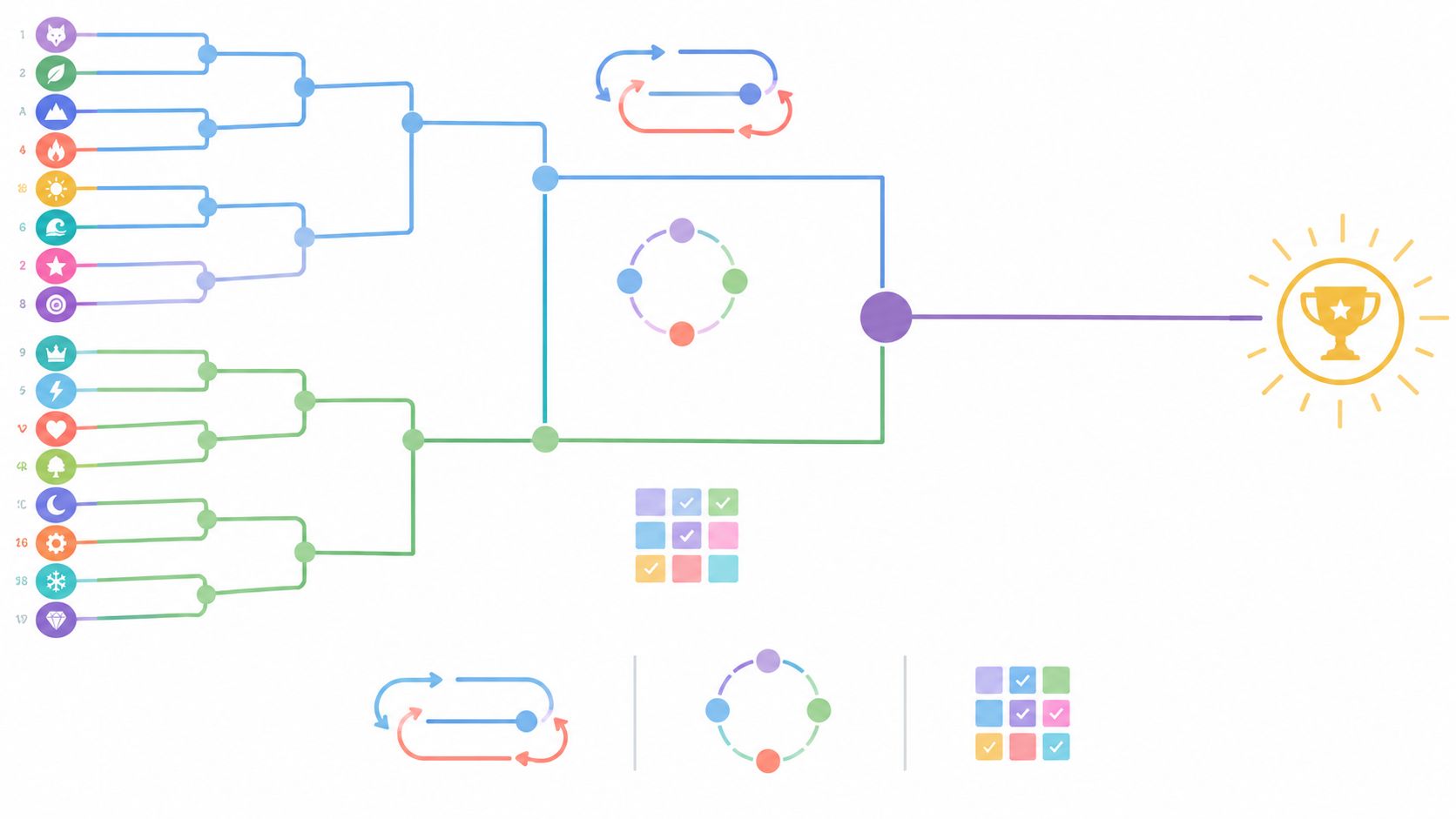
You're standing in the lobby, the player list is final, and someone asks the question every host hears at the worst possible moment. “Who plays who next, and what happens if they lose?” A tournament bracket answers that fast, because it's a structured map of competition that turns a pile of entrants into one champion by pairing matches, recording results, and moving winners forward.
A good bracket does more than look organized. It gives players a clear path, tells staff what comes next, and keeps the event from turning into a spreadsheet panic five minutes before round one. If you're learning how tournament brackets work, start with that idea first, because the bracket's real job is predictability.
Table of Contents
- What a Tournament Bracket Actually Is
- Main Tournament Bracket Formats
- Choosing Between Bracket Formats
- Seeding, Byes, and Match Progression
- How Brackets Run in Competitive Gaming
- Practical Tips for Running and Checking Brackets
- Understanding Brackets for Better Tournaments
What a Tournament Bracket Actually Is
A bracket is the tournament's roadmap. It shows who faces whom, which side of the field they're on, and how each result changes the next round. When the first match finishes, the bracket doesn't just store a score, it tells everyone where the winner goes and who they'll meet next.
The bracket's job is control, not decoration
That sounds simple until you run a community event without one. Then people ask for rematches, players lose track of match times, and two teams may show up expecting different opponents because no one has a shared reference point. A bracket removes that chaos by making the tournament's structure visible before the first game starts.
It also separates a tournament from casual matchmaking. In matchmaking, the next opponent is just “whoever's available.” In a bracket, every result has consequences, and those consequences are planned in advance. That's why brackets feel stricter than open play, but also fairer and easier to manage.
Practical rule: if a player can't tell where a win sends them, the bracket isn't finished yet.
That's the core reason brackets matter when the clock is ticking. They reduce confusion, keep staff aligned, and give players a way to read the event at a glance. Once you see a bracket as an operational tool, the different formats stop looking like jargon and start looking like choices.
Main Tournament Bracket Formats
A bracket format is a trade-off under pressure. If you choose speed, you give up recovery room. If you choose more matches, you ask staff and players to stay in the event longer. The right format depends on how much time, fairness, and competitive depth your event can support.

Single elimination is the fastest route to one winner
In single elimination, one loss sends a player or team out. That makes the path easy to read and easy to run, which is why it remains common in community events. If your lobby needs a clean finish and the clock is tight, this format usually makes the most sense.
The trade-off is unforgiving. A team can play one bad map, disconnect at the wrong time, or run into a top seed too early and be done. That gives single elimination its clarity, but it also means there is no room to recover from a rough start.
Double elimination gives everyone one recovery path
Double elimination lets a team lose once and keep fighting through a lower bracket. It fits events that want a stronger test of consistency and can handle more match flow. The cost is extra administration, because staff have to track two live paths instead of one.
That second path matters when the goal is to let a strong team recover from one mistake. A bad opening round does not end the run, but the bracket only works if the winners side and losers side are updated carefully. For organizers using GamerPlug's tournament format overview as a planning reference, that balance between fairness and workload is the main question to check.
Round robin rewards consistency over chaos
In round robin, everyone plays everyone else, or everyone in the group plays every other entrant in that group. That makes it useful when you want records to reflect the full field, especially in smaller pools. It also reduces the sense that one unlucky seed decided the whole event.
The drawback is the match count. Once the room gets bigger, the schedule grows quickly, and the format asks for time rather than speed. Round robin works best when your priority is a complete comparison and you can afford the extra games.
Swiss keeps the field active without full round robin volume
Swiss pairs players with others on similar records each round, so no one is cut off early and no one has to face every entrant. It helps when you want a competitive field that stays active without the volume of round robin. It also fits fields that do not line up neatly into a clean knockout tree.
The format can feel abstract to newer players because opponents change based on performance, not a fixed ladder. For staff, the key is to keep pairings consistent and explain why each match exists. Once that logic is clear, Swiss becomes a practical middle ground between speed and match quality.
Bracket Format Quick Reference
| Format | Loss Tolerance | Typical Matches | Best For |
|---|---|---|---|
| Single Elimination | One loss ends the run | Fewer than the other formats | Fast events, simple lobbies, tight schedules |
| Double Elimination | One loss with a second path | More than single elimination | Communities that want more fairness |
| Round Robin | No early elimination inside the group | Highest volume in small groups | Small pools, clear rankings |
| Swiss | No immediate elimination at the start | Moderate, depends on rounds | Mixed-size fields, balanced pairings |
A quick read like that helps you stop thinking in terms of “best format” and start thinking in terms of trade-offs. A format is only useful if it matches the event you are running.
Choosing Between Bracket Formats
Three questions usually decide the format before anything else does. How many entrants are there, how much time do you have, and how much forgiveness does the event need after an upset or a bad draw? If you answer those, the bracket choice gets much easier.
Match the format to the room you actually have
A small evening event with a strict start and end time leans toward single elimination. A weekend community tournament with teams who expect more matches can justify double elimination or Swiss. A small group where everyone wants a full comparison often fits round robin.
How to Pick the Right Bracket Format
| Player Count | Time Available | Recommended Format | Why It Works |
|---|---|---|---|
| Small | Short | Single Elimination | Fast, clear, easy to run |
| Small to medium | Moderate | Double Elimination | Gives one recovery path |
| Small | Longer | Round Robin | Best for full comparison |
| Medium to larger | Moderate | Swiss | Keeps pairings competitive without full round robin volume |
That table is the practical filter. It doesn't tell you what's elegant, it tells you what will survive under pressure. If you have eight Valorant teams and one evening, single elimination is the cleanest fit. If you have a more open weekend window and want teams to play more than once, double elimination or Swiss is the safer call.
Fairness and excitement don't always point to the same format.
That's the choice every host has to make. If your community wants drama and a fast finish, single elimination delivers. If they want a more complete ranking of who's strong, the formats that allow more than one match matter more than speed.
Seeding, Byes, and Match Progression
Even the right format can feel broken if seeding is sloppy. Seeding decides who goes where at the start, byes fill empty spots when the bracket size doesn't line up perfectly, and progression is the path a winner follows from round to round. If any one of those pieces is off, the bracket starts lying to players.
Seeding shapes the early rounds
Seeding is the process of placing players or teams so strong entrants don't collide too early unless that's intentionally part of the design. In practice, that usually means using skill ranking, prior results, or organizer judgment to spread out the field. Good seeding doesn't guarantee the “right” winner, but it reduces the chance that the first round becomes the hardest round for the top teams.
Bad seeding makes a tournament look random in the worst way. Two strong players can wipe each other out immediately, while weaker sides get a gentler route than they should have had. When that happens, the bracket may still be technically valid, but the event feels unfair.
Byes are spacing tools, not prizes
A bye means a player or team advances without playing that round. Hosts use byes to make the bracket fit the number of entrants they have, especially when the field doesn't land on a clean power of two. The point is structure, not reward.
If you have a bracket shape that needs a clean slot and the numbers don't fit, byes keep the bracket from breaking. That's why they should be assigned deliberately and explained clearly, because players notice when one side of the bracket seems to get a free pass.
Progression is a moving chain
A bracket only works if each result feeds the next one correctly. The winner doesn't just “advance,” they move into a specific next slot, and that slot already has a destination attached to it. In double elimination, progression is even more important because a loss reroutes a team instead of ending its run.
The cleanest way to check progression is to trace one player from start to finish before the event opens. If you can follow the path from first match to final without guessing, the bracket is probably set up correctly.
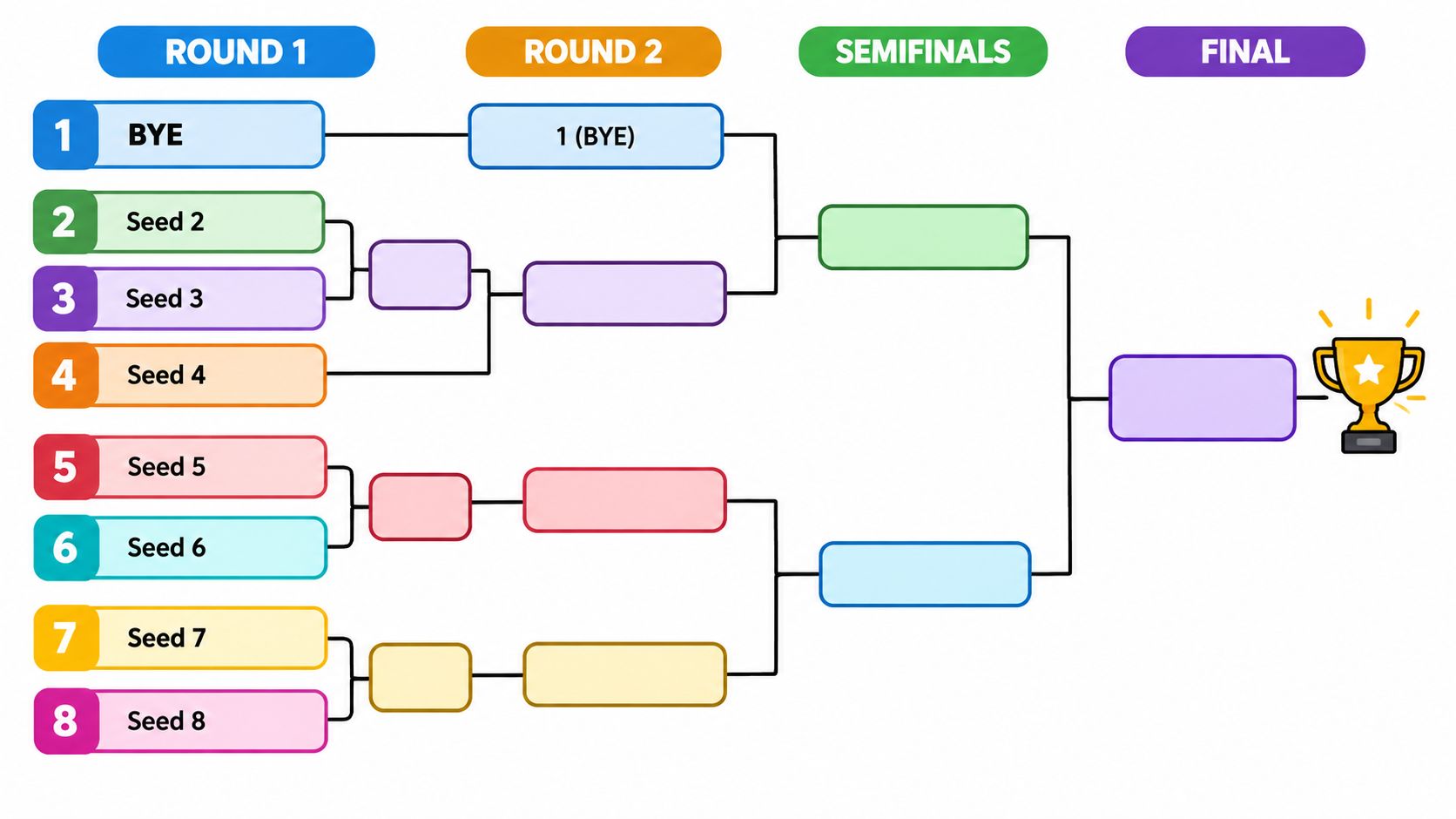
If the bracket path looks confusing to staff, it'll look worse to players.
That's why organizers should verify not just names and seeds, but the actual flow from round to round. A bracket is a moving system, and the movement has to be correct before round one starts.
How Brackets Run in Competitive Gaming
In games like Apex Legends, Valorant, League of Legends, and Fortnite, the bracket isn't just a diagram, it's the event's operating system. Hosts use it to confirm rosters, pair matchups, and keep everyone moving on schedule, while players use it to see what's next without waiting for a Discord ping that never comes.

Good bracket tools reduce the number of moving parts
The best tournament flow is the one that doesn't force staff to do everything manually. A solid bracket system can help with check-ins, pairings, result tracking, and live visibility, which matters most when multiple matches are happening at once. That's where platforms like GamerPlug's tournament hub fit naturally, since it supports bracket-based events and makes the active structure visible to participants.
For hosts, the big win is fewer gaps between “match ended” and “next match ready.” For players, the big win is knowing where to go and whether their next opponent is already set. When those pieces are visible, fewer people DM the admin asking what's happening.
Tournament operators need a clean workflow
Before round one, confirm the roster and make sure substitutions are handled before any result gets recorded. Once the bracket starts moving, score updates need to be fast and unambiguous, because delayed reporting can cascade into the next round. If your event uses one of the common formats mentioned above, the bracket only stays reliable if every result is entered in the right place.
That also means checking for match-time confusion before it starts. A team that thinks it has ten minutes and a team that thinks it has two will create a problem no bracket can solve by itself. The bracket should support the event, not become the thing everyone argues with.
The strongest bracket setups do one thing well, they make the event legible. When players can see their path and staff can keep progression clean, the whole tournament feels calmer.
Practical Tips for Running and Checking Brackets
Bracket mistakes usually happen before the first match, not during the final. The fix is simple, but it has to be deliberate, confirm the entrant list, lock the seeds, test the software, and write down tiebreaker rules before the bracket goes live. If you wait until players are already asking for updates, you're reacting instead of running.
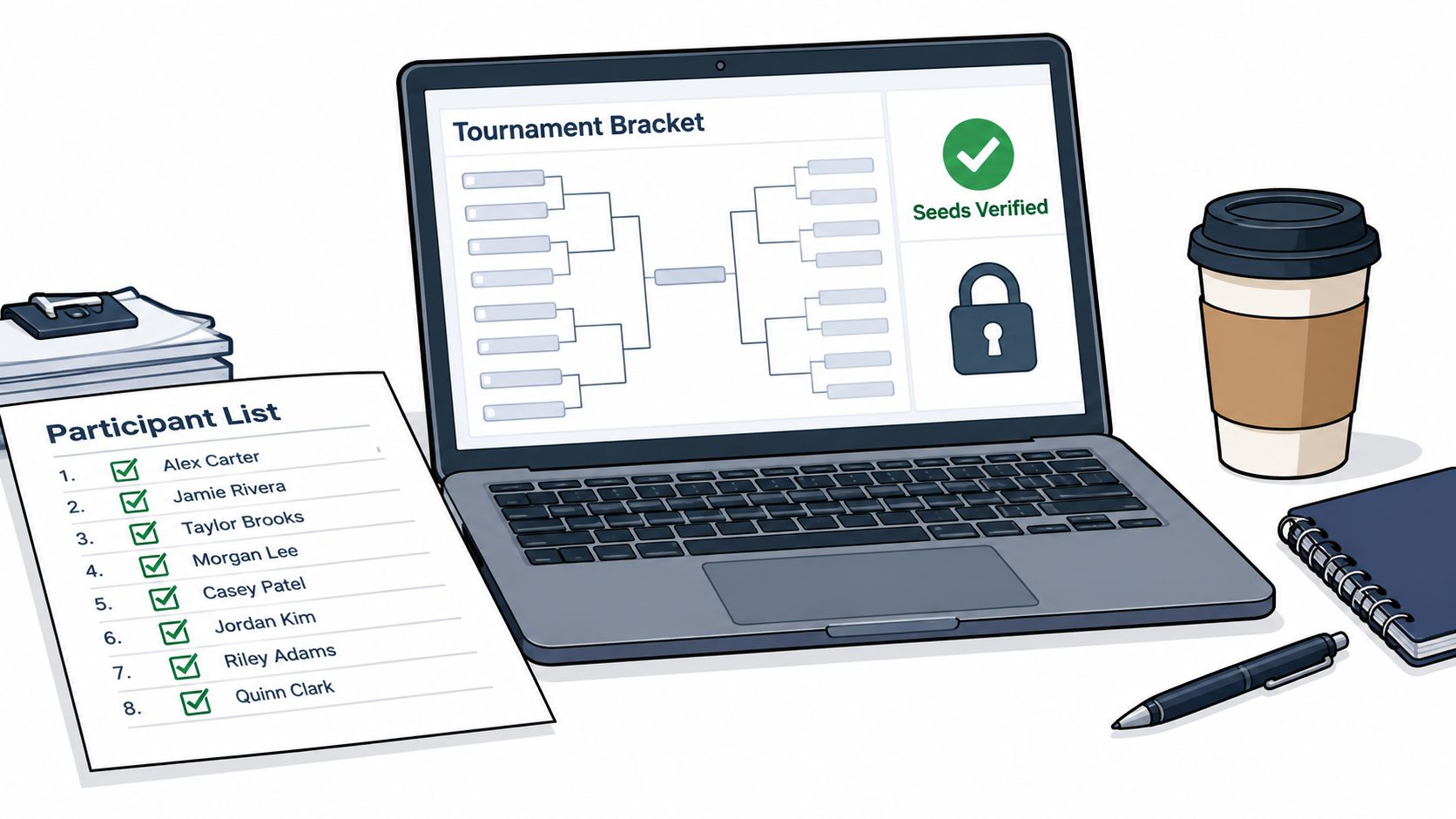
A simple pre-event checklist saves real time
Use a short launch checklist and don't skip steps because the room is already active. Confirm names, confirm seeds, confirm the format, and confirm who can approve score changes. If anything is still open-ended, the bracket is not ready.
- Check the entrant list: Make sure every player or team is present and spelled correctly.
- Lock the seeding: Avoid last-minute reshuffles unless your rules allow them.
- Test the bracket software: Open the event view, advance a sample result, and make sure the flow behaves as expected.
- Post tiebreaker rules: If the event can end in tied standings, tell players how it will be resolved before games begin.
Players need a different kind of discipline
Players should read the bracket as soon as it's posted, not after they miss a round. Look for your assigned opponent, the expected match window, and any movement that might happen if other matches run long. If the event is live, keep the bracket open and refresh it before assuming your next game has been called.
That habit matters because bracket errors aren't always software errors. Sometimes the issue is a player checking the wrong side of the tree or skipping a step in the winners path. A quick read prevents a lot of avoidable noise.
Keep score reporting boring and exact
When a match ends, report the result the same way every time. Use the same naming convention, the same channel, and the same approval process for disputes. That makes the bracket easier to trust, and trust is what keeps a community event from turning into a debate club.
For organizers who want a tool built around organized matchmaking and event flow, GamerPlug's gaming tournament app overview shows how bracket operations fit into a broader tournament workflow. Use it as a reference point, then keep your own process tight and repeatable.
Understanding Brackets for Better Tournaments
Good brackets aren't about paperwork. They're about choosing a format that fits the room, seeding it fairly, handling byes without confusion, and making sure every result moves the event forward cleanly. If you get those four pieces right, players spend less time asking questions and more time playing.
For hosts, the next step is simple. Run a dry test before the event, walk through one bracket path from start to finish, and verify that your tools match your rules. For players, the next step is just as practical, study the bracket early, know where your match sits, and treat every update as live until the round is closed.
If you're ready to run brackets without the usual scramble, try GamerPlug. It gives tournament hosts a way to browse, register for, and manage bracket-based events with formats like Single Elimination, Double Elimination, Swiss, and Round Robin, plus live leaderboards. If you're organizing a community night or an esports event, it's a straightforward place to keep match flow, rosters, and results in one spot.