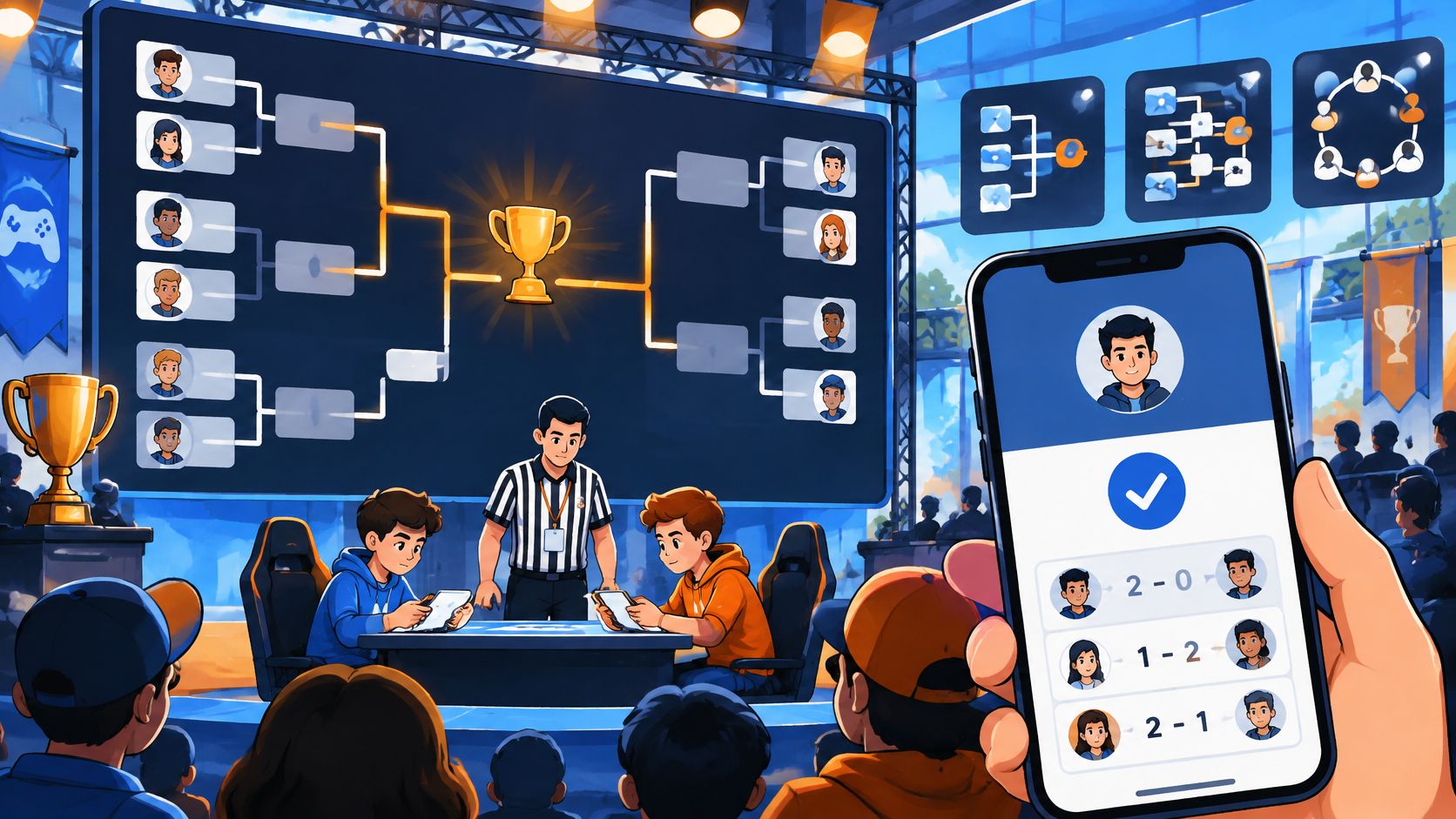
You're ten minutes from first match and the bracket's already wrong. Two players swapped seeds in chat, one captain hasn't checked in, someone's reporting a score in Discord while another team's still asking who they play. None of that's a game problem. It's an operations problem, and it gets worse every round you patch it by hand.
That's where a good tournament bracket app earns its place. Registration, seeding, check-in, score reporting, and progression need to happen in one visible flow, not across screenshots and pinned messages. If players can't see their next opponent on their phone, they'll ask you. If you can't update a result from your phone, the whole bracket waits on your laptop.
The ten picks below cover very different needs. Some are full tournament platforms with registration, staff roles, and game automation. Some are simple bracket makers that do one job cleanly. A few combine finding players, building rosters, and running the event in the same place.
Judge each one on the same fronts. Supported formats decide whether you can run single elimination, double elimination, Swiss, or round robin without workarounds. Check-in and roster tools decide how painful match day feels. Live leaderboards, streaming integrations, pricing, and mobile support decide whether spectators and players follow along. Get those right and the bracket stops being the event's weakest link.
Table of Contents
- 1. Gamerplug
- 2. Challonge
- 3. Brackify
- 4. Battlefy
- 5. Toornament
- 6. start.gg
- 7. Challengermode
- 8. Bracket HQ
- 9. BracketPro
- 10. FACEIT
- Top 10 Tournament Bracket Apps: Feature Comparison
- Pick Your Bracket and Start Playing
1. Gamerplug
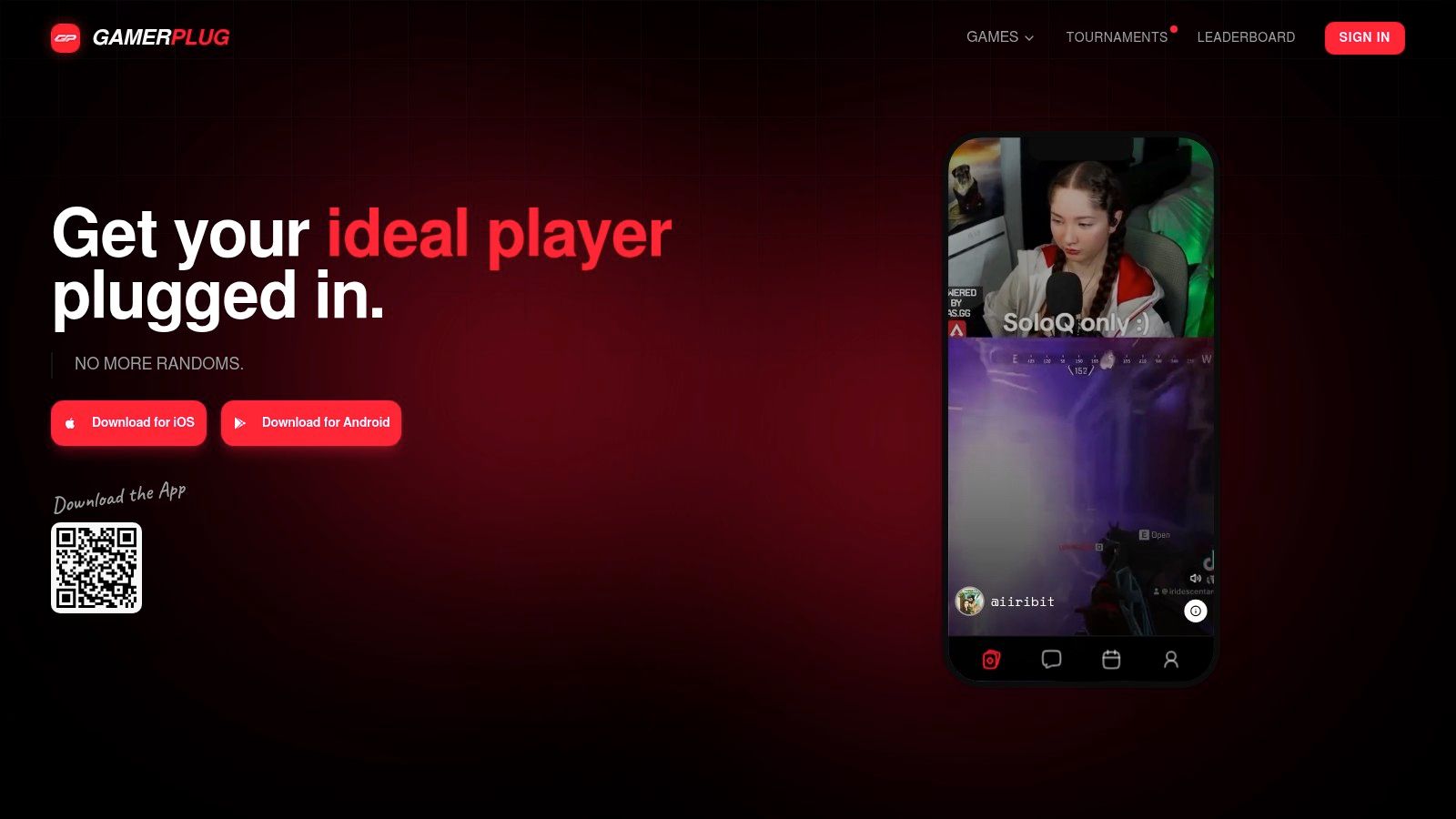
If your event needs players as well as a bracket, Gamerplug combines matchmaking and tournament tools. It's a free gaming matchmaking app for iOS, Android, and the web. Players can browse potential teammates before organizers build the roster, though the value depends on finding active users for the right game, region, and schedule.
Profiles feature gameplay clips, letting players review someone's play before inviting them. For Apex Legends, Fortnite, and League of Legends, ranks and stats sync from official game data, giving organizers a reference when seeding. Competitive integrity also depends on identity checks, evidence, and transparent sanctions. Research on esports cheating threats including aimbots and account hijacking discusses risks that bracket administration alone cannot address.
Building the roster before the bracket
Use Discover to look for compatible players, or post an LFG squad with the mode, rank range, platform, microphone requirements, and open slots. The app supports PC, PlayStation, Xbox, and Nintendo Switch across 19 competitive titles, including Valorant, Call of Duty, and Overwatch 2.
- Tournament tools: Brackets, registration, and live leaderboards for Apex, Valorant, League, and Fortnite
- Chat built in: Direct messages, squad threads, and tournament threads keep match discussions and disputes in the app
- Trust signals: Optional World ID badges and in-app reporting provide ways to support accountability
A bracket can be correctly managed and still face disputes over who played. Verified identity and an audit trail can help organizers address that problem, but they do not replace clear event rules.
There are trade-offs. Automatic rank syncing covers only three games, so organizers running other titles have less game-data support for seeding. Matchmaking also depends on local player activity. Gamerplug's site cites 5K+ players, but organizers should check whether their game and region have an active pool before building an event around the app.
2. Challonge
For a community night with registration and brackets to manage, Challonge puts the core setup in one place. Organizers can create brackets, collect signups, and use community pages without stitching together separate tools. If you need a refresher before picking a format, this guide to how tournament brackets work explains the options.
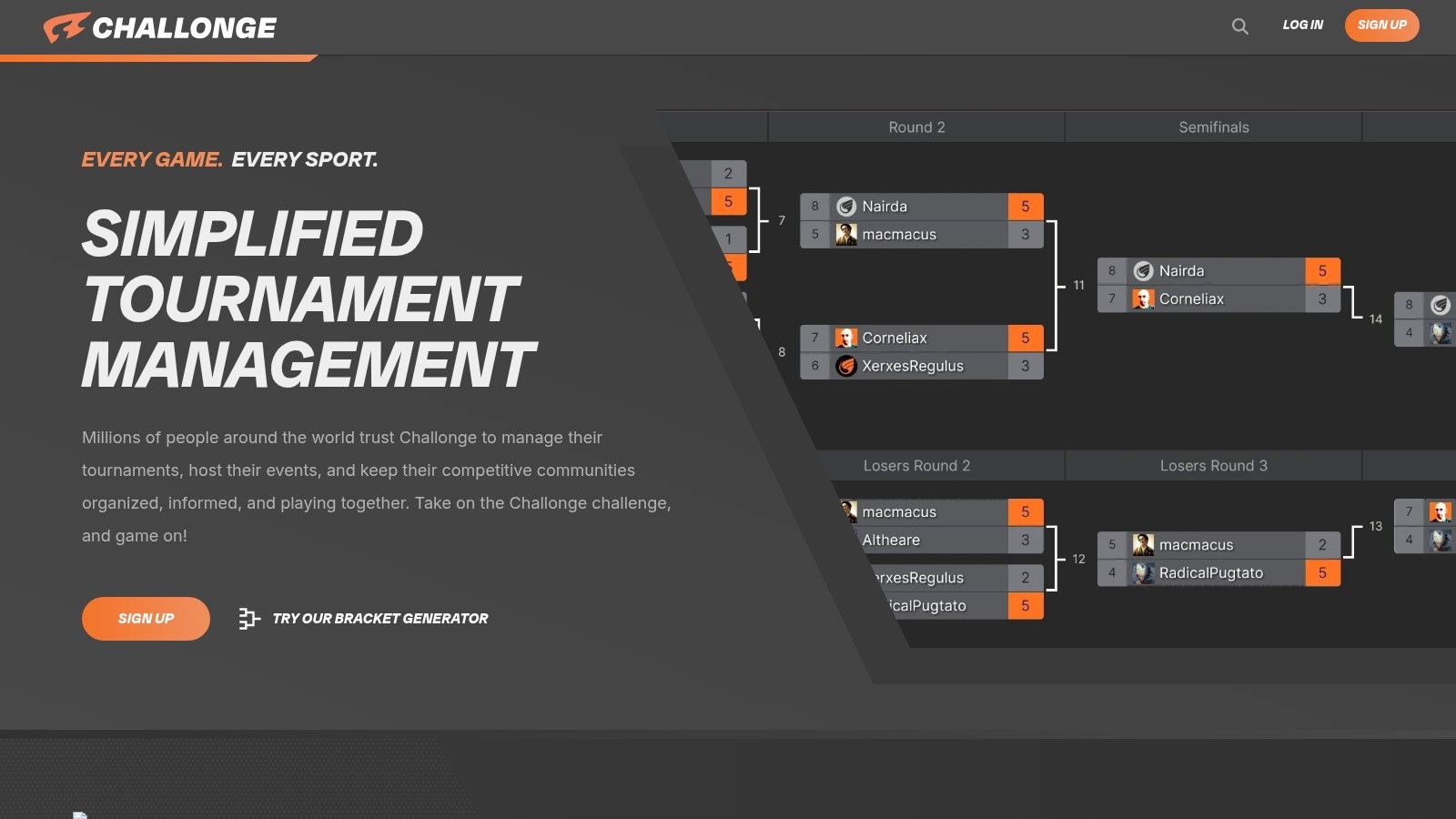
Challonge supports single elimination, double elimination, round robin, and other familiar formats. Paid events can accept Stripe payments, and you can embed brackets on your own site, a practical fit for communities that already have a home online.
Pricing and the free tier catch
The free Standard plan supports unlimited tournaments and communities. Premier is listed at $6.99 per month when billed yearly. On the free tier, tournaments are ad-supported and capped at 256 participants, according to the plan terms. Paid registrations also carry a Challonge service fee plus Stripe processing. Premier adds presentation and community features.
For smaller recurring events, the trade-off is straightforward: quick setup and core bracket tools, with ads and participant limits on the free plan. Challonge is a general-purpose option, so organizers needing game-specific automation or deeper integrity controls may find its tools limited. For a paid local, factor both service and processing fees into registration before opening signups.
3. Brackify
At a fighting-game local, players and spectators often check the bracket from their phones, not a desk. Brackify is built around that use: its iOS and Android apps handle bracket creation, registration, check-in, and live sharing. Spectators can follow a shared bracket without an account, reducing one more obstacle when matches are moving quickly.
The format options suit small events: single elimination, double elimination, round robin, and team battle. Brackets support 4 to 256 entrants with automatic byes, according to Brackify's feature overview. Before opening registration, organizers can check tournament bracket sizes explained to match entrant counts to a workable format.
Built for locals and streams
- Streaming tools: Discord bot, Twitch, and OBS support help organizers show live brackets during a broadcast.
- Discovery: Event discovery and notifications can help local scenes reach players beyond their regular group.
- Cost: Bracket creation and sharing are advertised as free.
The trade-off is focus. Brackify targets grassroots and fighting-game competition, so organizers running larger esports circuits may find fewer options for staff hierarchies. Its public review base is also smaller.
Test the event-day flow before relying on it. A Google Play review reports unresponsive pages, so run a dummy bracket with friends and check registration, check-in, and scoring on the devices players will use. If those steps work reliably for your group, Brackify is a practical mobile-first pick for locals.
4. Battlefy
Battlefy is what you graduate to when a bracket generator stops being enough. It handles event publishing, registration, participant management, seeding, and check-in as one workflow. Organizers get their own pages, staff roles, and embeds, which matters once you're running events with more than one admin.
Format support is broad. Elimination, Swiss, round robin, and free-for-all options cover most competitive structures, though some free-for-all brackets require organizer enablement. Players can filter discoverable events by game, region, platform, date, and format, which helps fill brackets beyond your own Discord.
Where automation helps
The standout is game-specific integration. Battlefy offers League of Legends lobby automation and automatic score fetching in supported regions, per its platform documentation. That removes the screenshot-and-trust step from score reporting, which is where disputes usually start.
- Organizer controls: Join codes and registration settings gate who enters
- Staff roles: Delegate bracket tasks without sharing one account
- Embeds: Put brackets on your own site or community hub
The downside is variability. Many events are run by independent organizers, so support and event quality shift from one tournament to the next. Setup also takes longer than a simple bracket-sharing tool. Battlefy rewards organizers who configure properly. It punishes anyone hoping to improvise.
5. Toornament
Toornament suits organizers building structured esports events, from a single competition to a multi-stage circuit. Its phases let you connect group play to playoffs, run Swiss or custom brackets, and manage registration, participants, matches, and standings within one event. Set the format before opening sign-ups, especially if players need to understand how a double elimination bracket works.
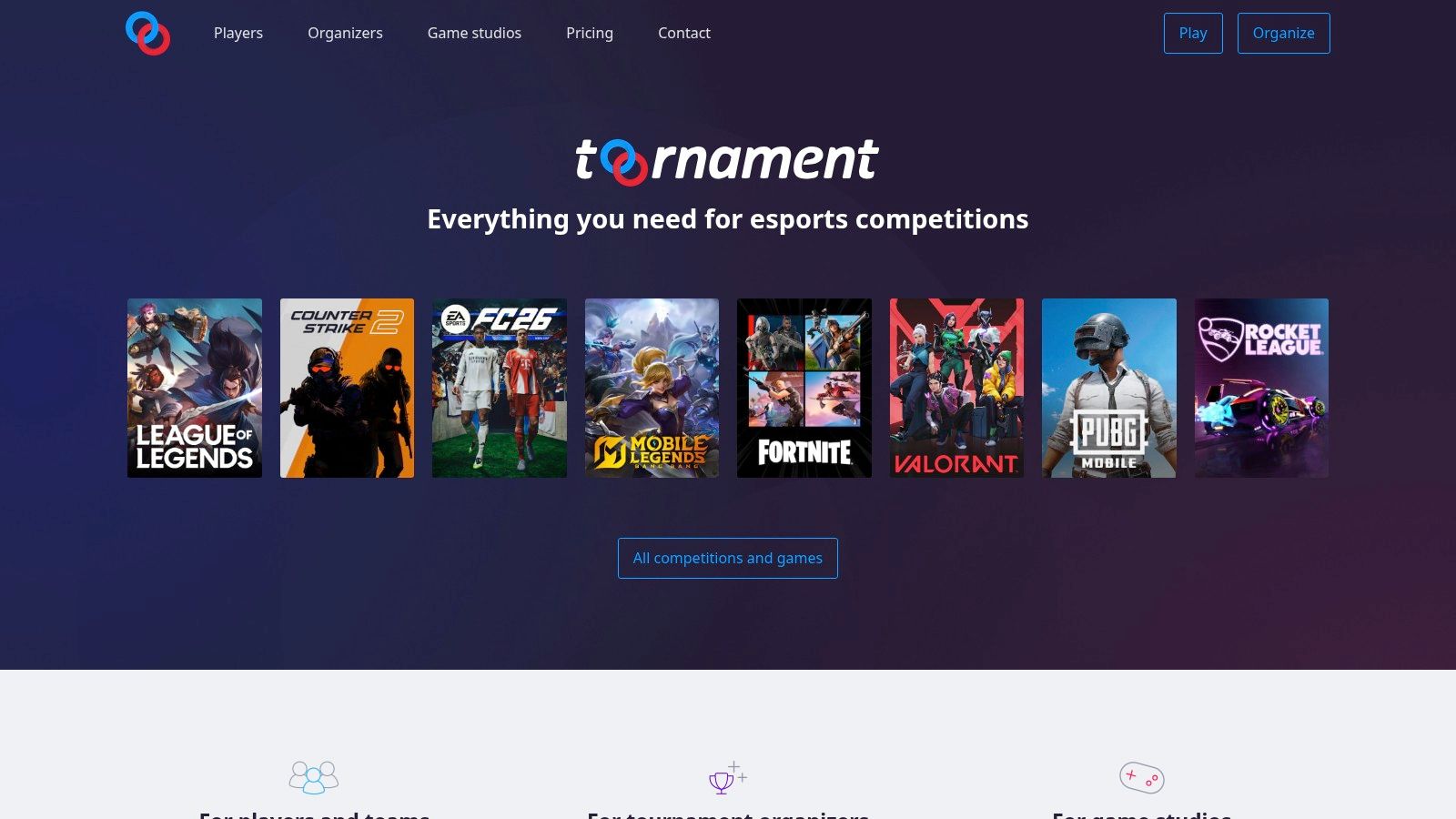
Toornament also offers game-specific guides for Apex Legends, Fortnite, PUBG, and League of Legends, useful when setting up events for those titles.
Beyond a single event
- Website builder: Create branded competition sites for leagues and sponsors.
- Circuits and rankings: Track results across connected events.
- Free organizer plan: A free plan is available; paid plans add capacity.
The trade-off is setup time. Toornament takes longer to learn than a basic bracket maker, and some structures and higher participant limits depend on your plan. Check current plan limits before announcing a large event, so registration capacity matches your format.
Choose Toornament for a season or recurring, branded competition. For a one-off Saturday bracket, its broader tools may take more setup than the event needs.
6. start.gg
At a local fighting-game event, players need to find their matches without crowding around the organizer's screen. start.gg brings tournament pages, registration, and brackets together, with community tools suited to recurring scenes. Returning players who already have accounts can sign up without learning a new system.
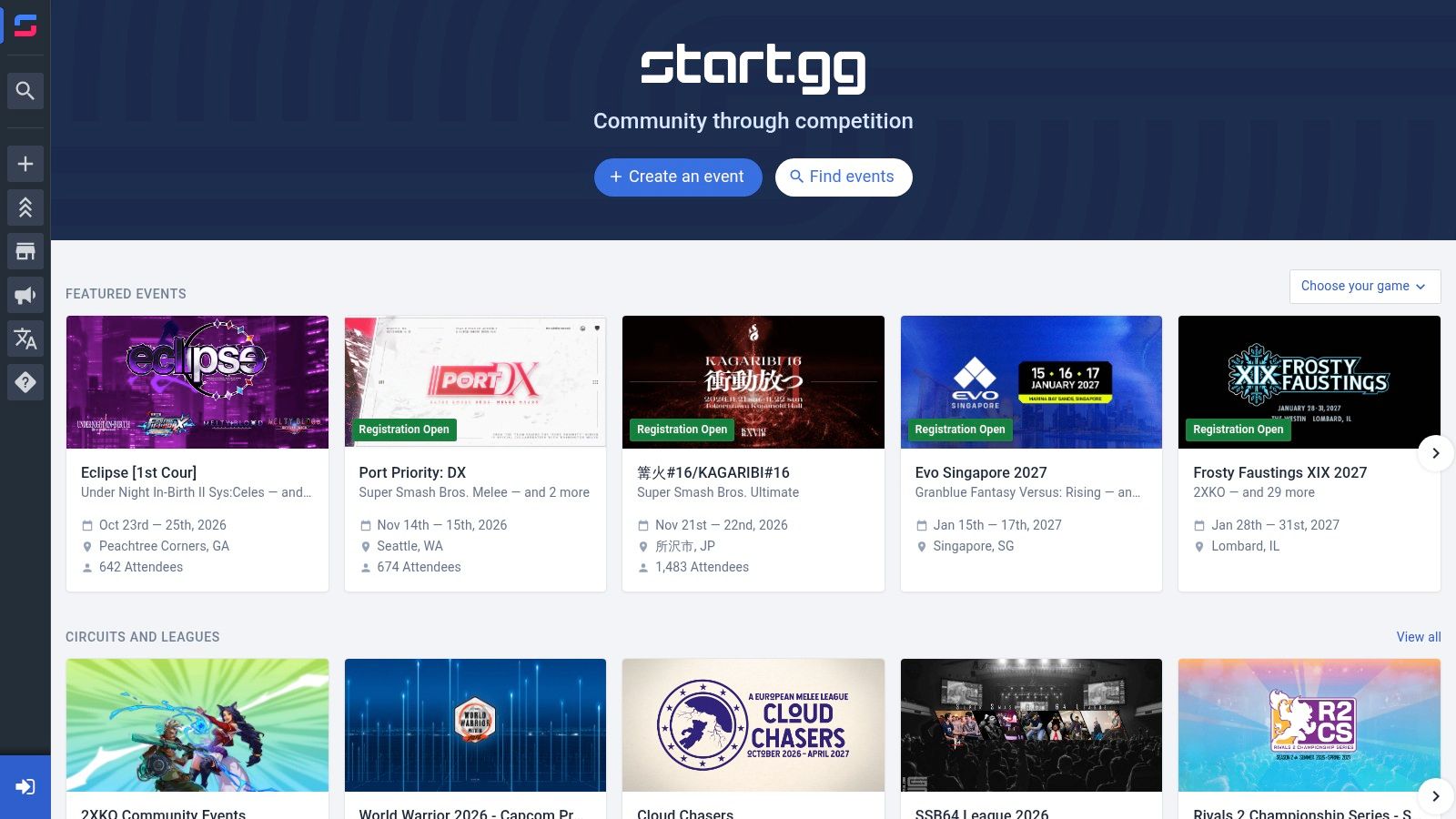
Hubs keep a community's events and signup pages together. Rankings and leagues give regulars a way to follow results across events, while the mobile app sends bracket and event notifications. On event day, those updates help players find their next match as they move between stations. Organizers still need to keep check-in and match reporting moving; notifications do not replace a clear workflow at the venue.
Event day rule: Players need timely bracket updates on their phones, not another reason to refresh a page.
The broad feature set takes more setup and browsing than a dedicated bracket app. Before charging entry, check start.gg's current fees for paid registrations and make sure they fit your event budget.
For recurring in-person tournaments, start.gg is a familiar choice when your community already uses it. If you're adding a new title, a Fortnite Ballistic guide for 2026 can help organizers understand the mode before building it into an event.
7. Challengermode
Challengermode treats the bracket as one part of a competitive ecosystem. Alongside tournaments, it runs leagues and ladders and includes a team finder, so players can build a roster and enter competition in the same place. For supported PC titles, that combination is efficient.
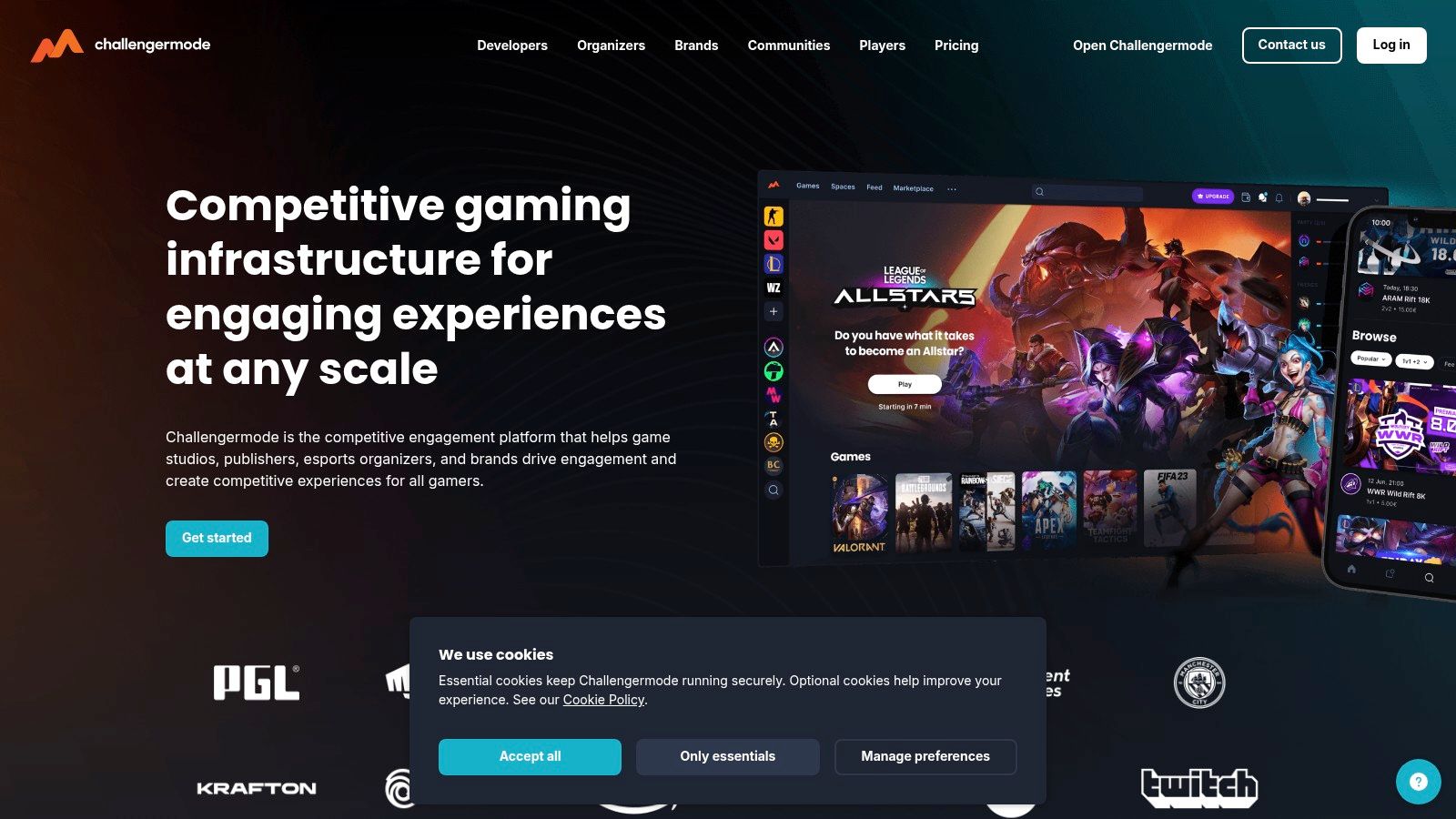
The automation is the draw. Challengermode provides automated lobbies for selected titles including League of Legends, CS2, Dota 2, and PUBG, according to its platform pages. Automated lobbies cut the manual work of creating rooms, inviting players, and chasing stragglers between maps.
Organizer controls worth noting
- Match administration: Check-in, seeding, and substitutes handled in platform
- Tournament chat: Match communication stays attached to the event
- Player access: Free competitions are available to players
Limits follow the integrations. Automation only exists where the game supports it, so casual console or custom-format events fit less comfortably. Organizer pricing may also depend on your project or package rather than a simple public subscription.
Choose Challengermode if your scene lives on PC and plays its supported titles. Outside that lane, a more neutral bracket tool will frustrate you less.
8. Bracket HQ
For a small cup or office pool, the main job is keeping match progress clear and easy to share. Bracket HQ focuses on online bracket creation, management, and sharing, without the setup demands of a broader tournament platform.
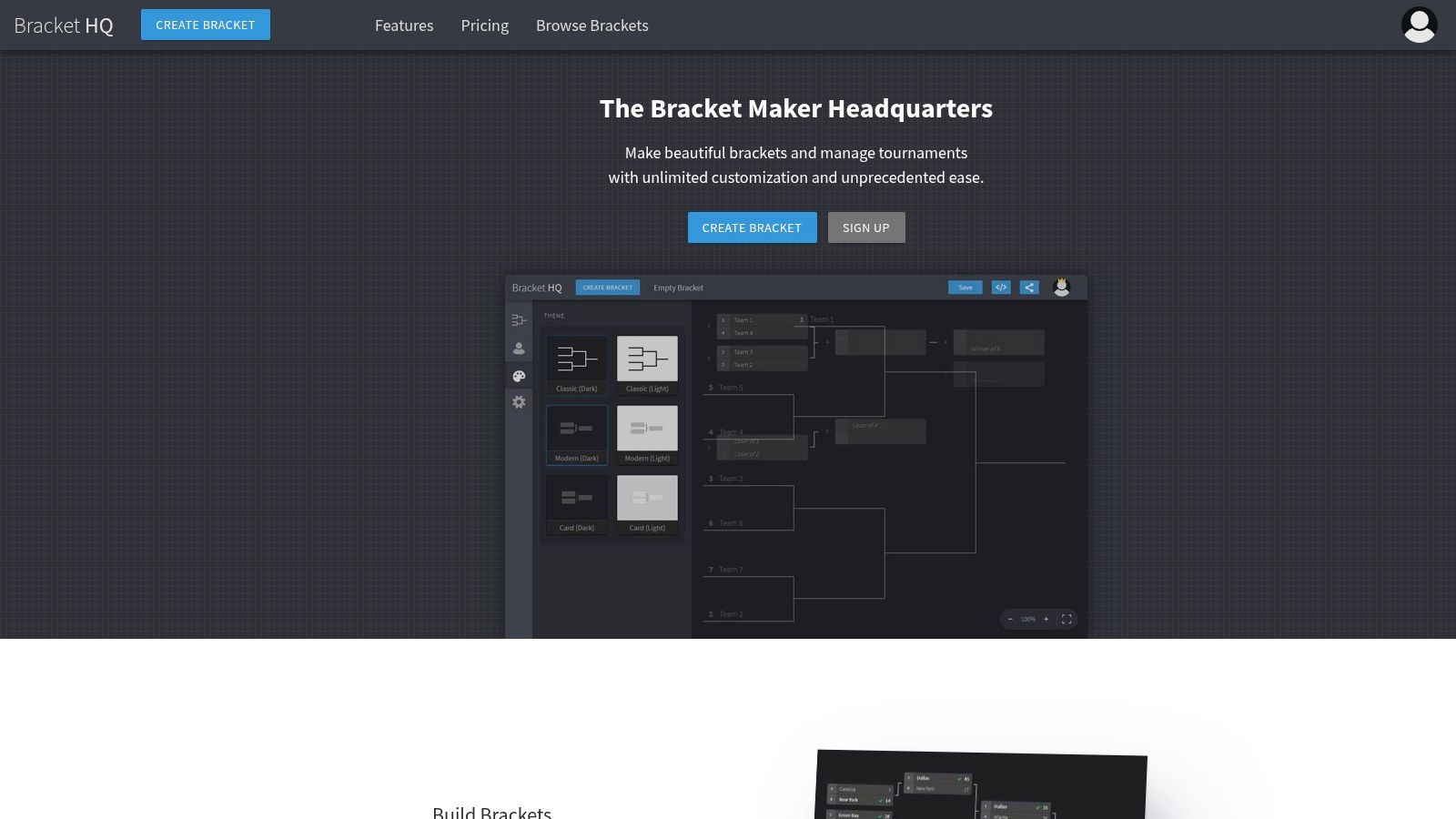
The free plan supports unlimited brackets of up to 32 participants, while the Pro plan raises the limit to 64 participants. Those caps suit casual events and smaller community tournaments, but organizers should check the limit against their actual field size before building the bracket.
What Pro actually buys
- Private brackets: Keep internal events out of public view
- Presentation options: Use additional themes for a cleaner display
- Logo-free exporting: Share cleaner images in social posts and recaps
The trade-off is a narrow feature set. Bracket HQ has no game integrations, broad event discovery, or roster tools, and the free tier includes ads. Registration and check-in will need to happen elsewhere, so plan for a separate workflow if players need to confirm attendance or submit rosters.
For organizers who already handle sign-ups outside the app, Bracket HQ keeps bracket setup simple and results easy to follow. Choose it when a focused bracket is enough, rather than a full tournament system.
9. BracketPro
BracketPro is an app-first bracket maker for organizers who run everything from their phone. You create the tournament, track scores, and share live progress, and spectators can follow through a browser link without installing anything, per BracketPro's site.
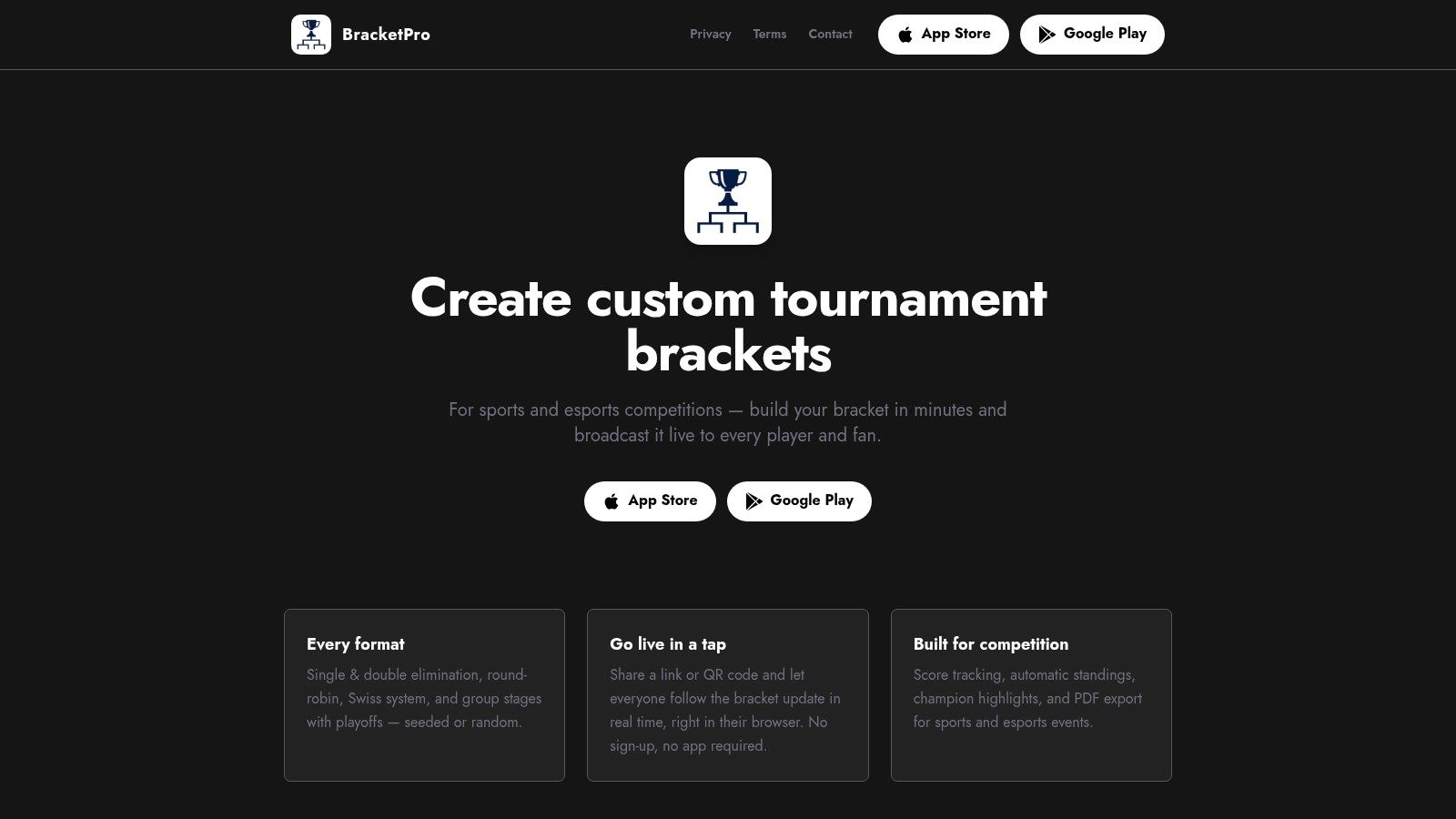
Format support is broader than most mobile tools. It covers single elimination, double elimination, round robin, Swiss, and group stages, with seeded or randomized bracket generation. That range lets one app handle a knockout cup one week and a Swiss qualifier the next.
Sharing is the strong suit
- Live browser links and QR codes: Post a code at the venue and players check scores themselves
- Standings and score tracking: Progress stays visible between rounds
- Champion highlights and PDF export: Useful for recaps and records after finals
The gaps are about transparency. Pricing and organizer limits weren't clearly listed in the reviewed materials, so confirm both in the app store before planning around it. It also isn't a full esports platform, so there's no team discovery or game-specific automation.
BracketPro fits school, club, and casual competitive events where mobile convenience beats deep integrations. Test the sharing flow first, since that's what your players will use.
10. FACEIT
FACEIT builds tournaments inside its existing competitive ecosystem. Organizers create events through organizer pages, configuring game, region, format, and game mode, with event pages covering teams, prizes, rules, and chat. Players discover and join without leaving a platform many already use daily.
That built-in audience is the main advantage. Tournament discovery puts your event in front of active competitors instead of relying only on your own promotion. Participants get notifications and match-room workflows, which keeps check-in and match startup inside one system.
Know the constraints first
- Game and region support: Your title has to be supported where your players are
- Organizer access: Some capabilities are limited to partnered organizers or depend on subscriptions
- Team management: Substitutes are available for some games
The flip side is lock-in. FACEIT isn't ideal for an independent shareable bracket that spectators can open without a platform account. If your players aren't already on FACEIT, you're asking them to adopt a platform for your event.
Run on FACEIT when your community already lives there and your game is supported. The match infrastructure does heavy lifting. If you need a neutral, link-first bracket for a mixed audience, pick something lighter from this list.
Top 10 Tournament Bracket Apps: Feature Comparison
| Platform | Best For | Core Strengths | Standout Edge | Price / Value |
|---|---|---|---|---|
| 🏆 GamerPlug | 👥 Finding compatible teammates and running esports events | ★ Player discovery, customizable LFG, chat, tournaments | ✨ Gameplay clips, synced ranks for select games, cross-platform support | 💰 Free; iOS, Android, and web |
| Challonge | 👥 Community tournament organizers | ★ Brackets, registration, communities, payment tools | ✨ Unlimited tournaments and communities on its free plan | 💰 Free Standard; Premier $6.99/month billed yearly |
| Brackify | 👥 Fighting-game locals and grassroots esports | ★ Brackets, registration, check-in, live sharing | ✨ Discord bot and Twitch/OBS tools | 💰 Bracket creation and sharing advertised as free |
| Battlefy | 👥 Organizers managing structured competitions | ★ Registration, seeding, check-in, event discovery | ✨ LoL lobby and score automation in supported regions | 💰 Pricing not specified |
| Toornament | 👥 Esports organizers building larger events or circuits | ★ Multi-stage formats, registration, standings | ✨ Branded sites, circuits, and ranking tools | 💰 Free organizer plan; paid plans available |
| start.gg | 👥 Fighting-game and recurring event communities | ★ Registration, brackets, hubs, rankings | ✨ Mobile app for event updates | 💰 Review current paid-registration fees |
| Challengermode | 👥 Competitive players and supported PC-game organizers | ★ Tournaments, leagues, ladders, team finder | ✨ Automated lobbies for selected games | 💰 Free competitions for players; organizer pricing varies |
| Bracket HQ | 👥 Small events needing a simple bracket | ★ Online bracket creation and sharing | ✨ Unlimited free brackets, up to 32 participants each | 💰 Free plan; Pro adds features and higher limits |
| BracketPro | 👥 Organizers who want a mobile-first bracket maker | ★ Multiple formats, score tracking, sharing | ✨ Browser viewing, QR sharing, and PDF export | 💰 Pricing and limits unclear |
| FACEIT | 👥 Players and organizers already using FACEIT | ★ Tournament discovery, teams, rules, match rooms | ✨ Event tools integrated into its competitive platform | 💰 Some organizer features depend on partnerships or subscriptions |
Pick Your Bracket and Start Playing
A tournament can look organized right up until players cannot check in, find their match, or report a score. Choose a tool around your event's format and audience first. Challonge suits community nights and small paid events that need a quick setup. Brackify and start.gg fit fighting-game locals, while Toornament and Battlefy support organizers running structured esports events. Gamerplug also includes roster building, which helps when finding players is part of running the tournament.
Check the event-day details before publishing. Confirm the format works without a workaround, players can check in and view matchups on mobile, and spectators can open a live bracket link without creating an account. Weaknesses here usually mean more organizer messages during matches. Then compare the remaining trade-offs: roster tools, live leaderboards, streaming integrations, and pricing. A feature matters only if your staff can use it reliably while the event is live.
Cross-platform events need clear rules. A shared lobby does not guarantee equal conditions. The 2025 cross-platform esports framework on fragmented ecosystems and accessibility identifies hardware limits, platform exclusivity, and interoperability as barriers. Ask for input methods, platforms, and regions at registration. Flag incompatible matchups before scheduling, and spell out cross-play rules rather than relying on a generic badge.
A quick setup checklist
- Lock the format early: Choose single elimination for speed, double elimination for a second chance, or Swiss and round robin when every match should count.
- Seed from real data: Use verified ranks or past results, not player claims.
- Test check-in: Run a dummy bracket through scoring, disputes, and finals before event day.
- Prepare the stream: Set up OBS or Twitch overlays early if supported, and assign someone to update scores during the broadcast.
Before you publish signups: Decide what proves a disputed score, who rules on it, and the deadline for raising it. Put those details in the rules page before event day.
Plan integrity alongside seeding. Decide how to confirm who played, what evidence players must submit, and when disputes close. Keep an organizer-visible audit trail so rulings stay consistent. Players can live with a scuffed bracket graphic; inconsistent enforcement is harder to accept.
Growing a successful event takes separate work. Consistent branding, recap clips, and creator partnerships can help build its audience. Guidance on scaling app acquisition through creators is relevant if you are building a community product around your events.
Choose a tool that fits your format and audience, then build a test bracket. Have two friends check in and report a score. That rehearsal will show whether the setup works better than a feature list can.
Gamerplug combines finding clip-backed teammates, building a squad, and running brackets with live leaderboards in one app. Use it if roster building and tournament management belong in the same workflow.