Stuck in the same division while a "same rank" duo keeps losing you the fight? The badge is not the match.
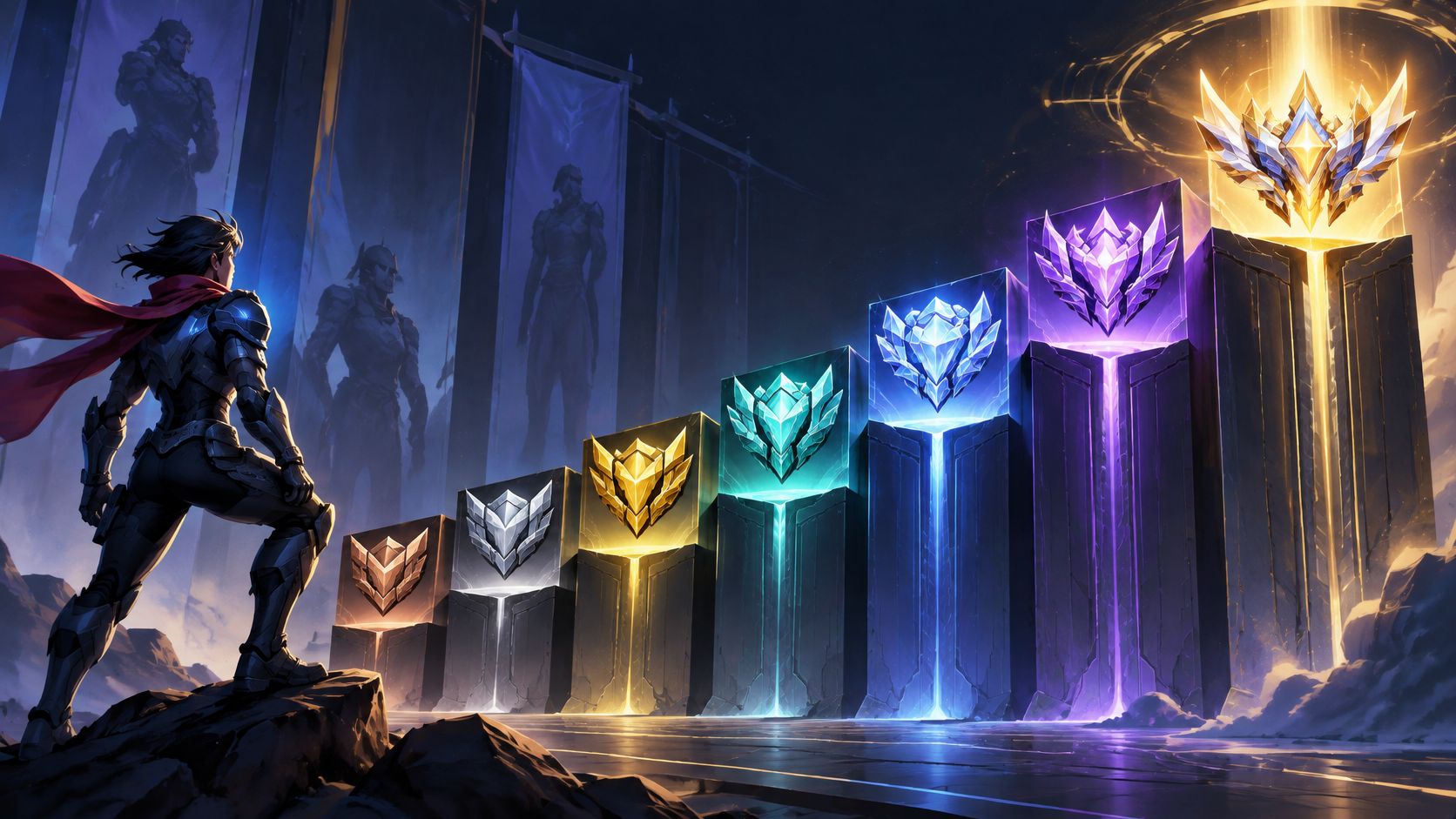
Rank lists usually stop at the sticker: Bronze, Silver, Gold, Platinum, Diamond, Master, Grandmaster, and the tier above that. That order is the public ladder. It says nothing about whether a teammate will peel, talk, or hold a cooldown. The same division can hide a different hero pool and a different kind of night.
Treat each tier as a climb map. Each one names the habit that stalls players there and a fix you can run tonight. Division 5 is the floor of a tier and division 1 is the ceiling. Role Queue keeps Tank, Damage, and Support on separate cards. Open Queue is its own rank. Skip old skill-rating charts. That public number is gone, and a reset can move your badge while your habits stay put. I would rather you know one cooldown cold than own a full hero grid you panic on. Use the tier notes to pick one habit to fix before your next queue.
If frames hitch in every fight, check your graphics drivers and in-game performance settings first. If the machine itself is due for replacement, myhalo's guide to gaming desktops is the practical buying pass.
Table of Contents
- 1. Bronze
- 2. Silver
- 3. Gold
- 4. Platinum
- 5. Diamond
- 6. Master
- 7. Grandmaster
- 8. Top 500
- Overwatch 2 Ranks in Order
- Climb With People, Not Randoms
1. Bronze
Bronze is the floor of competitive, and the stall is almost never "I need more heroes." It is cooldown panic, no map plan, and a new pick after every death.
Say you are on Support and you only play Kiriko for a week. You learn when Swift Step is up. You stop walking past your tank to chase a stagger. Deaths drop, and Bronze 5 starts moving, because you stopped donating the fight, not because your aim suddenly transformed.
What to change before the next queue
- Lock a tiny pool: Two or three heroes on the role you are queuing. Learn their cooldowns before you add another.
- Play the objective: If the fight is not on cart or point, you are giving the round away.
- Show the fight, not the badge: Post on Overwatch 2 with a Bronze to Silver range and a mic requirement. Attach about a minute of one clean fight so people can see your pace.
Practical rule: One hero you understand beats five heroes you panic on.
Duo if you can. One partner who will say "you overextended" after the round is worth more than a silent five-stack of strangers.
2. Silver
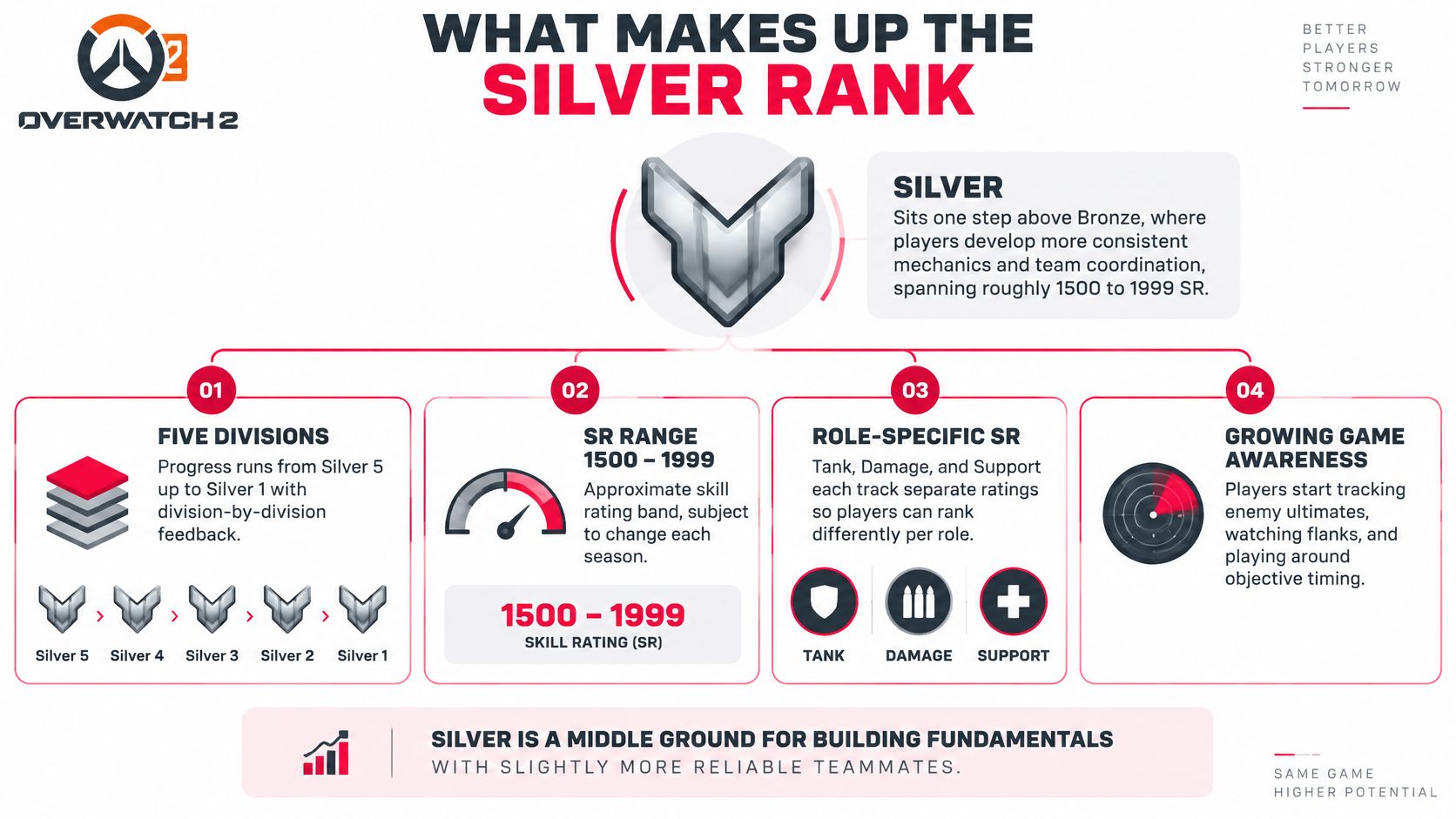
Silver is where duels start to look real and the round still falls apart between fights. You can win a 1v1. You still walk in with no idea whether the enemy Ana has sleep, or whether shatter is dry.
A Damage player who stalls here tunnels the first body and ignores the dart that just missed. Track that cooldown. Sleep down, you can step. Sleep up, you play the corner. A squad that shares one call, "sleep down" or "shatter dry," climbs divisions without anyone becoming a mechanical monster.
GameSpot's matchmaking write-up is the other trap. A lobby can be built so the teams look even while the badges on your team do not match, so a Silver player is not a spare part you can swap for any other Silver player. Hero pool and whether they talk decide the night.
- Call spent ultimates: After each fight, name what they used. The next fight gets predictable.
- Keep the stack close: Silver through Gold is a sane party. A much higher friend, or a much lower one, warps the game.
- Require a mic: Silence is the biggest tax at this tier. Find people who talk during the fight, not after the defeat card.
3. Gold
Gold is the first tier where rotating, peeling, and spending ultimates together is the normal ask. It is also where a huge share of the ladder sits, so the badge is common, not a trophy.
In the Season 12 snapshot from Blizzard server engineer Morgan Maddren's distribution, Gold was 36.7% of players and Gold through Platinum made up 63.6%, per Dexerto's rank distribution breakdown. You are in the crowd. The climb is stopping the mistakes that crowd still makes.
The tank who chases a solo kill off the point is the classic stall. Hold the corner with your supports. A support duo that banks both ultimates for the same fight, instead of solo-ulting a lost fight, wins more close maps than the duo with prettier aim.
Mark one clip where you left your team, then fix only that. Post a Gold listing with a mic requirement and a named mode, Role Queue or Open Queue, so you are not mixing playlists. If you want one partner instead of a new random every game, use a duo partner search and check that they like the same mode you do.
4. Platinum
Platinum is where aim is usually fine and the losses come from target priority and ultimate economy. Treat it as the middle of the ladder, not a secret elite club.
In Blizzard's July 2025 distribution, Platinum was the largest tier at 34.9% and Gold was 31.7%, so those two ranks held roughly two-thirds of ranked players, and Diamond was 14.9%, as Esports Insider's rank explainer lays out. That same coverage also lists Emerald among newer tiers, so a 2025 chart is not this week's percentile. A Gold to Platinum filter fishes the biggest pond. A Master-plus filter is a much smaller one, and you will wait longer.
The player who leaves is the flex who swaps when the enemy comp changes. Pick the two matchups you lose on repeat. Change the hero before the second fight, not in overtime.
Watch one team fight before you trust a badge. This short look at how a coordinated fight moves is a better standard than another highlight reel of solo kills.
Same rank is not the same fit. Ask what they play, and whether they will swap.
5. Diamond
Diamond games get faster, and the badge still is not the matchmaker.
Blizzard's matchmaking explanation draws the line. Overwatch 2 forms games with a hidden matchmaking rating. The tier and division are a display that converges toward that rating over time. The rating changes after wins, losses, and extended inactivity, and the size of the change depends partly on opponent strength and recent play. After placements, a reset, or a long break, two Diamond players can be in very different lobbies.
That is why a "Diamond only" stack still feels random. Pair the badge with role, platform, region, and a recent clip.
Say you notice both enemy supports are holding ultimates. You stop trickling and you play for a pick first. That adaptation is the jump, not a new mouse grip.
Split the week. One night is a single hero's engage timing. One night is ult tracking only. The ranked improvement tips are the review habit to steal. Keep a fresh clip up so a squad can see your pace before they invite you.
6. Master
Master is where raw mechanics stop being the excuse. You can aim. You still lose because the decision was late.
A team that drops one push, then changes the whole plan instead of running the same angle, is the team that comes back. A support who refuses to spend both ultimates on a fight you were never going to win is doing more work than the player who "pops to swing momentum" on a lost 2v5.
Review the decision, not the crosshair
Open a replay and pause at the death. Ask three things only. Were you in a spot your team could help? Did you have an ultimate you should have saved? Did you fight while a teammate was still walking back?
If the answers are bad, that is the VOD. Do not spend the hour on aim trainers when the mistake was the engage.
Find people who will play more than one night. Filter for a mic and for a rank close to yours, then attach a clip of a messy team fight, not a spawn kill. Serious squads want to see how you play when the plan breaks. A wide LFG fills faster and plays worse. A narrow one waits longer and scrims cleaner. I would take the wait.
7. Grandmaster
Grandmaster punishes players who stop adapting. The badge says you are right, and that belief costs more games than a shaky crosshair ever will. It shows up as the same comp on every map, the same engage, the refusal to swap after two lost fights.
A third-party distribution write-up from July 2025 puts Grandmaster at roughly 0.3% of players and Champion below 0.1%, per Fenix Bazaar's rank distribution note. That is a thin pool to recruit from. A "Grandmaster only" post that also demands one hero, one platform, and a two-hour window tonight sits empty. When you post a squad you set the game mode, rank range, platform and mic requirement, so loosen the field that costs you least. Keep the rank narrow and the hours wide, or keep the schedule tight and take a Master teammate who plays when you do. Demanding both is how the group dies in the browser.
The tape worth studying at this tier is ultimate economy. Watch how a high-level team answers a dry enemy support line, then steals the next fight. Copy the timing, not the skin.
Read one VOD for positioning only. Note where they stand when they have no ultimate, because that is the fight that gets thrown. Then name your role, your heroes, and your hours on the profile and keep a recent clip attached so a squad can confirm your pace in a minute. A vague "I flex" invite wastes the queue.
8. Top 500
Top 500 is not the next division after Grandmaster. It is a separate leaderboard.
Blizzard's Season 9 competitive update put the named ladder in this order: Bronze, Silver, Gold, Platinum, Diamond, Master, Grandmaster, and Champion, added in February 2024. Each of those tiers launched with five divisions, 5 through 1. Top 500 stays a separate elite board, not a normal tier. At launch you also stayed unranked until an update after seven wins or 20 losses. Season 9 brought placement matches back. Read the current season's rules before you argue from an old screenshot.

What holds people off the board is inconsistent blocks of games, not a missing tech. A player who wins a regional event off a steady ranked block, then reviews with a fixed scrim schedule, is doing the boring work. Hero roulette between scrims throws the sample away.
Build a weekly block and write down one decision per map. Post a Top 500 listing with a mic requirement and a real schedule, including the days you cannot play. Reliable people beat a famous badge that never shows up.
Overwatch 2 Ranks in Order
What separates a Gold player from a Platinum player? The badge changes, and the mistakes change with it. The named ladder runs Bronze, Silver, Gold, Platinum, Diamond, Master, Grandmaster, then Champion. Top 500 is a separate leaderboard, not a division you grind through. There is no public skill rating to chase, so judge your rank by what breaks first in your games.
| Rank | Divisions | Defining Skill | What Holds Players Back | Fix to Queue Tonight |
|---|---|---|---|---|
| Bronze | Five: Bronze 5 to Bronze 1 | Core mechanics and role basics | Habits change every match: sensitivity, hero pool, and engage timing | Pick one role and two heroes. Run a short aim warmup before queue. |
| Silver | Five: Silver 5 to Silver 1 | Mechanics and basic awareness | Trading kills instead of trading space with the team | No solo engage before a tank or support is in position. |
| Gold | Five: Gold 5 to Gold 1 | Rotations, role jobs, and ult economy | Autopilot. Players know the basics and stop reviewing why fights are lost | Name the first mistake in one lost fight after each session. |
| Platinum | Five: Platinum 5 to Platinum 1 | Counterplay and positioning | Consistency swings with lobby pace. Players copy counters without understanding the setup | Track avoidable deaths and cut one per game. |
| Diamond | Five: Diamond 5 to Diamond 1 | Precise decisions and team coordination | Burnout and long sessions. Small coordination gaps get punished | Play ranked in blocks and stop after two straight losses. |
| Master | Five: Master 5 to Master 1 | Advanced strategy and meta adaptation | Pressure mistakes. Players overfix comps instead of cleaning up their first decision | Pick one win condition per map and call it before the gate opens. |
| Grandmaster | Five: Grandmaster 5 to Grandmaster 1 | Elite mechanics, decisions, and coordination | Thin margins and expectations. More queue hours stop buying improvement | Schedule scrims and VOD review. Keep the hero pool tight. |
| Champion | Five: Champion 5 to Champion 1 | Top-end execution and consistency | Leaderboard pressure and matchup depth. One predictable pick gets farmed | Limit yourself to two heroes you can play into every common matchup. |
| Top 500 | Separate leaderboard, no divisions | Sustained performance at the top level | Inconsistent blocks of games, not missing tech | Block two fixed nights and review one map decision per session. |
I would not chase the next tier until the fix in your current row stops being the reason you lose.
Climb With People, Not Randoms
Knowing Overwatch 2 ranks in order is the map. The climb is still a team sport. A random queue hands you a badge and a stranger. A consistent squad hands you a role, a mic, and a schedule that survives a loss streak.
I would not grind a new tier alone if you can avoid it. Post for the tier you are in tonight. Set the rank range one step to either side, name the mode, name the platform, and require a mic if you need calls. On GamerPlug, the poster chooses the game mode, rank range, platform, and whether a mic is needed. Squad requirements are checked against players' real stats, so someone cannot type a fantasy rank and walk into the lobby. Every profile opens on gameplay, and you can swipe through real clips before you invite anyone.
That clip check matters more as the ladder thins. A high badge is rare. A clip of how they take a corner tells you if they fit your pace. Casual stacks can use a wider range and a friendlier tone. Cross-play parties should still match platform and region, or you spend the night fighting input and ping instead of the enemy team.
Wide filters fill faster and play sloppier. Narrow filters wait longer and scrim cleaner. Pick the one that matches the tier you wrote down, then stop remaking the group every loss.
If your wired pad drops inputs mid-fight, fix that before another VOD. CTF Mobile Phones troubleshoot wired controller connection is the unglamorous check that saves a night of blaming your aim. GamerPlug is free on iOS, Android, and the web, and it covers Overwatch 2 alongside other competitive games. You set the lobby rules, you watch how someone plays, and then you queue with people who can make the next tier.
GamerPlug is a free LFG app for Overwatch 2 players who want a squad that matches their tier, role, and schedule instead of another silent random queue. Profiles open on real gameplay clips, and squad posts let you set rank range, mode, platform, and a mic requirement before anyone joins. Visit Gamerplug and post your tier's listing tonight.