
It's Friday night, you've got two controllers and one TV, and your friend only has an hour before they have to log off or head home. You load a LEGO game expecting instant co-op, then hit the problem. One title is local-only, another needs an online invite, and a third won't let your Switch friend join your PlayStation lobby at all.
That's why LEGO games multiplayer picks shouldn't be ranked by franchise or nostalgia alone. You need to match the multiplayer type to your actual setup, whether that's same-screen play on the couch, a persistent online world, or Steam Remote Play Together as a workaround. These seven picks are sorted by how multiplayer works and how many players they fit. If your group also likes slower nights between LEGO sessions, you can compare narrative games for game night before you lock in a plan.
Table of Contents
- 1. LEGO Fortnite Odyssey
- 2. LEGO Party!
- 3. LEGO Voyagers
- 4. LEGO Fortnite Brick Life
- 5. LEGO 2K Drive
- 6. LEGO Worlds
- 7. LEGO Jurassic World
- Multiplayer type, player cap and platforms for each LEGO pick
- Pick Your Co-op Style and Get Your Squad Ready
1. LEGO Fortnite Odyssey
If your crew wants a world that keeps going after one session, start with LEGO Fortnite Odyssey through Fortnite. It's a free survival-and-building sandbox where you gather resources, build a village, recruit villagers, explore, and fight enemies together. This isn't a level-by-level campaign. It's ongoing online co-op built around shared progression.
How Multiplayer Works Here
- Up to eight players: You can play in one shared world with a proper group, not just a duo.
- Crossplay: Supported consoles, PC, and mobile can play together, which removes the usual platform argument.
- Key Holder access: The world owner invites friends and can grant trusted players access to keep building.
- Cooperative loop: Building, crafting, exploration, and combat all support dividing jobs across the group.
The scale is real. TechCrunch reported LEGO Fortnite reached approximately 2.45 million concurrent players shortly after release, which tells you this format pulled in far more than a niche LEGO audience. The trade-off is friction at the door. Worlds are private by default, so nobody drops in without an invite, and you'll need an Epic account and internet access.
I'd pick Odyssey for a regular online crew that wants a long-term base. Skip it if your group only has one couch and no patience for accounts.
2. LEGO Party!
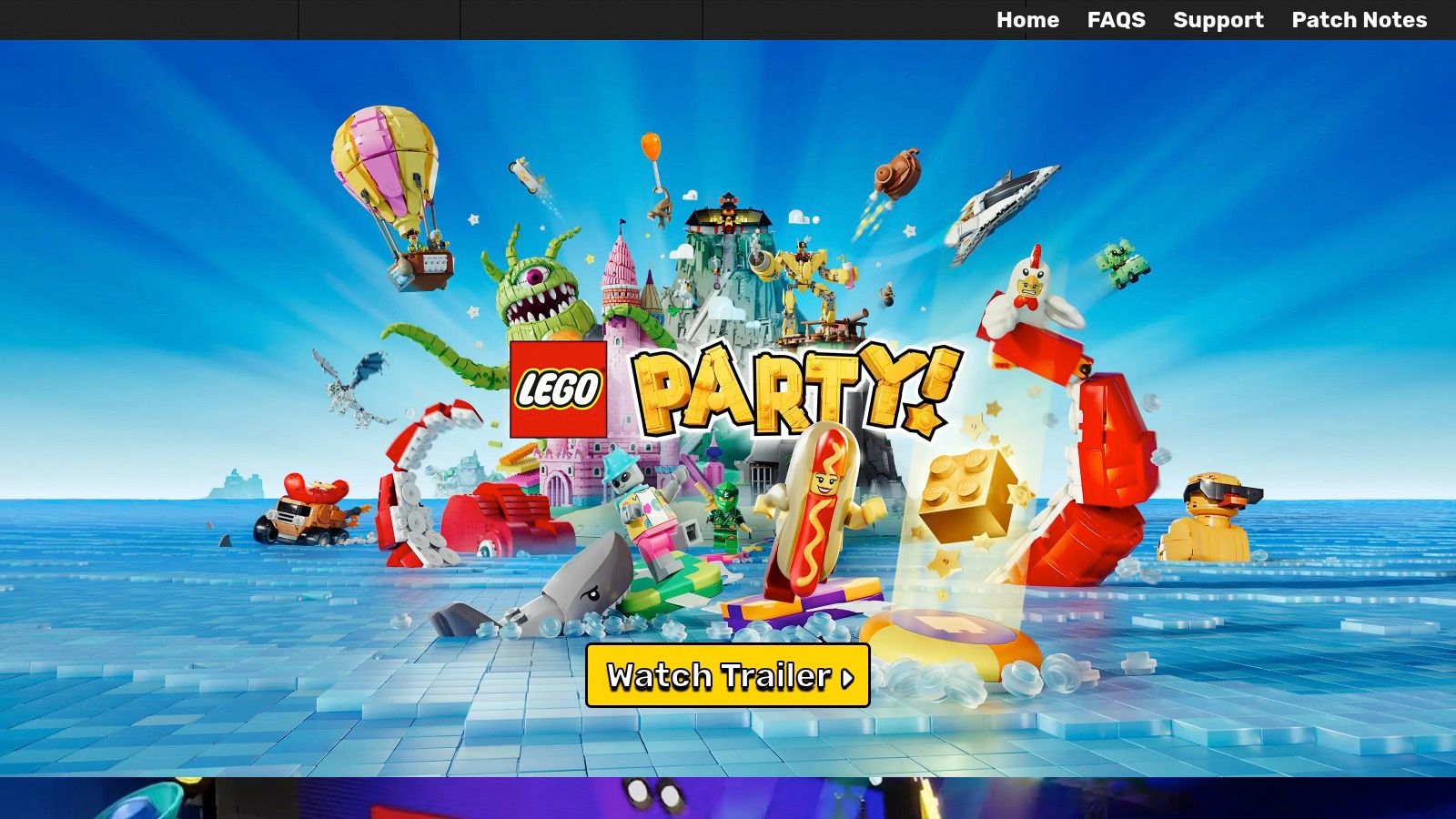
LEGO Party! is the cleanest pick for a mixed group that doesn't want tutorials, skill gaps, or a 20-hour story. It's a board-style party game with quick mini-games, built for shouting at the TV and stealing wins at the last second. You can play on the couch or take the same chaos online.
The setup is flexible in the way game night needs. It supports up to four players locally or online, includes cross-platform online play, and packs 60 mini-games across LEGO-themed boards. That makes it easy to fill a lobby when two people are in the room and two are at home on different systems.
Practical rule: Pick the party format when your group has uneven skill levels. Short mini-games reset the score pressure every few minutes.
The downside is obvious, and you shouldn't buy around it. There's no story campaign to sink into, so players who want character progression or puzzle levels will bounce off fast. It's also a paid title, with pricing that shifts by platform and sale. If you're building a rotation of games to play with friends online, this is your low-commitment slot. I'd choose it for families, casual friends, and anyone who'd rather compete in bursts than cooperate through a campaign.
3. LEGO Voyagers
Some LEGO games add co-op. LEGO Voyagers is built from it. You and one partner control LEGO bricks, roll through platforming challenges, and solve puzzles that need both of you paying attention. There's no squad to hide in and no solo mode to fall back on.
Built for Exactly Two Players
That narrow focus is the strength. Recent coverage points to a trend toward focused two-player co-op, and a PCMag review of LEGO Horizon Adventures sits in that same design conversation. Voyagers supports local same-screen and online play on PlayStation, Xbox, Switch, and PC, so a long-distance duo and a couch duo get the same core game.
- Friend's Pass: One owner can invite a second player into the full co-op experience without a second purchase.
- Shared puzzles: Progress depends on communication, timing, and physically helping each other through obstacles.
- Story-led pace: It's more contained and directed than an open-world sandbox.
The Friend's Pass matters more than a bigger player count for most duos. You don't have to convince your partner to buy a game they may only play with you.
Buy it for a couple, a parent and child, or two friends who talk while playing. Don't buy it hoping to play alone later. It requires a second player, by design.
4. LEGO Fortnite Brick Life
Brick Life is what you load when nobody wants objectives barked at them. Inside Fortnite's LEGO-styled city of Brick Bay, you explore, socialize, take jobs, customize a home, and join activities like races. It's social role-play, not a survival campaign and not a set of co-op missions.
Through Fortnite, Brick Life supports much larger groups than Odyssey across supported PC, console, and mobile platforms. That changes the feel completely. You're not building a private village with a tight crew. You're hanging out in a busier world where friends drift between jobs, homes, and races on their own schedule.
Large lobbies are great for a hangout. They're a poor substitute for a campaign if your group needs a shared goal every session.
The free access helps, especially for bigger friend groups where asking everyone to buy a game kills the plan. Everyone drops into the same shared city through an online invite rather than a couch setup, so group size is the main constraint, not spare controllers. If your crew already meets in Fortnite, keep your Fortnite squad options on GamerPlug in mind when you're short a few regulars. Chat and some features depend on Fortnite account settings and platform, so check those before a family session.
Pick Brick Life for relaxed social nights and younger groups that prefer role-play over combat. Choose Odyssey instead if you want progression, danger, and building that matters between sessions.
5. LEGO 2K Drive
If your group measures fun in laps and ridiculous custom builds, LEGO 2K Drive is the racer to check. The LEGO listing spells out the setup: split-screen local play for couch sessions, online groups up to six, and crossplay across PlayStation, Xbox and PC. Nintendo Switch joins online races on its own island, since it is excluded from crossplay.
That split is the buying decision. Two players can share a screen, Play With Friends handles invite-based online races, and team play runs as 3v3. It fits a mixed console crew on PS, Xbox and PC, but falls apart for any plan built around a Switch friend.
Check These Requirements First
- 2K account: required for online play, plus internet access.
- Platform subscription: console online play may need your system's paid online tier.
- Server support: online support can change over time, so check current status before buying mainly for online races.
Before you buy copies for a mixed-platform crew, compare everyone's setup against cross-platform compatibility rules and pick the version that keeps the whole party together. I'd recommend 2K Drive to competitive friends who like building absurd vehicles between races. Skip it as a forever online hub, and don't buy Switch expecting crossplay.
6. LEGO Worlds
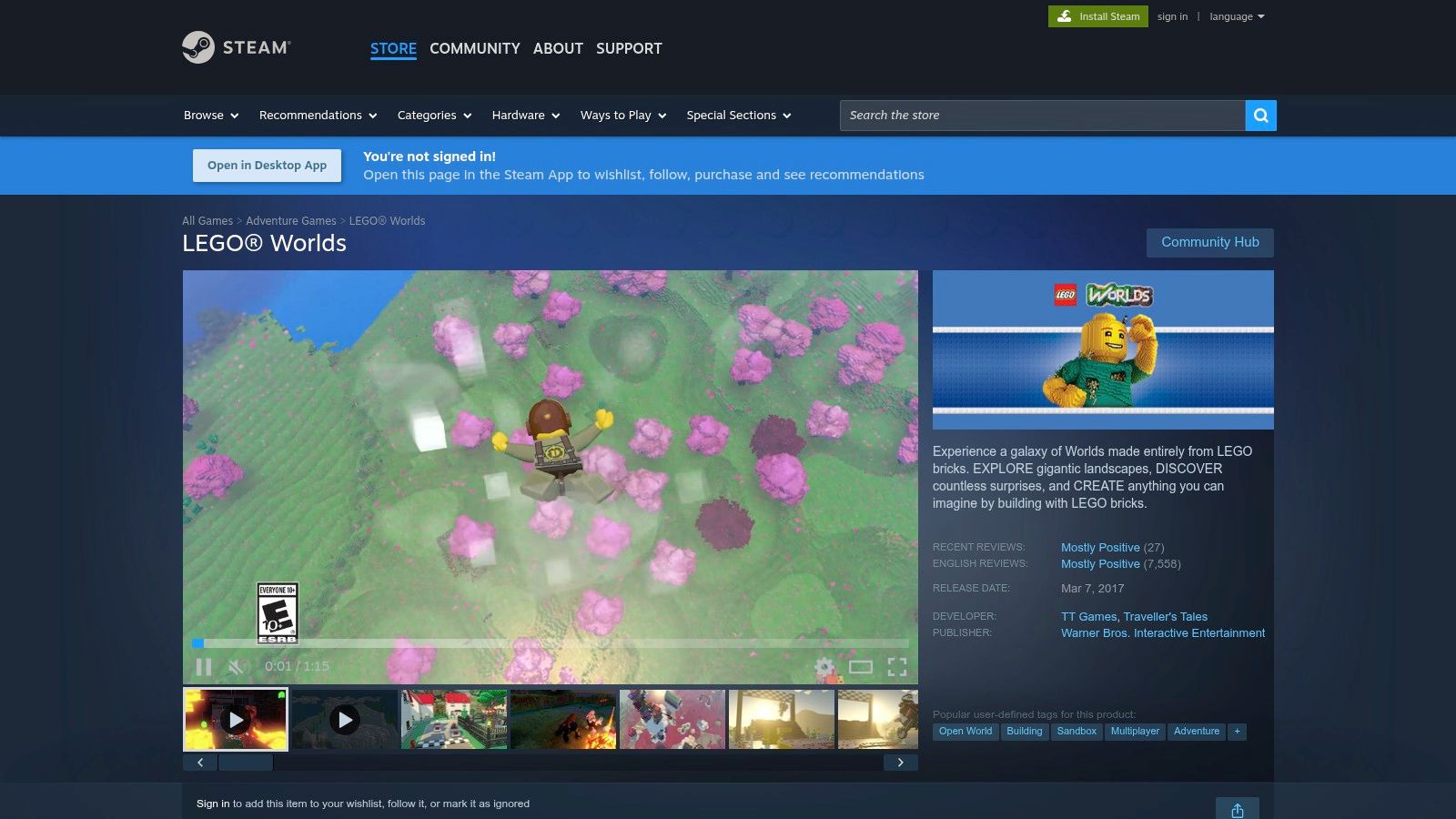
LEGO Worlds on Steam is the sandbox purist's option. You explore brick-built environments and create without a licensed movie plot pushing you to the next level. For builders, that freedom is the point. For players who need missions and direction, it's also the main risk.
PC gives you the widest multiplayer toolkit here. The Steam version lists online co-op and online PvP, shared or split-screen play, and Steam Remote Play Together. That means you can build with a friend online, share a screen locally, or invite a remote friend into a local-style session through Steam.
Set expectations on population before you buy it for spontaneous online play. Steam Charts recorded LEGO Worlds averaging 74.44 concurrent Steam players in December 2024, with a monthly peak of 170, so you should bring your own partner rather than count on busy public activity. Steam user feedback is also mixed overall, which fits a game with creative freedom and some rough edges.
My call: Buy Worlds for a known building partner, not for meeting active strangers. The tools reward planned sessions.
It's best for patient creators who enjoy experimenting together. If your group asks what you're supposed to do next every ten minutes, pick a guided campaign instead.
7. LEGO Jurassic World
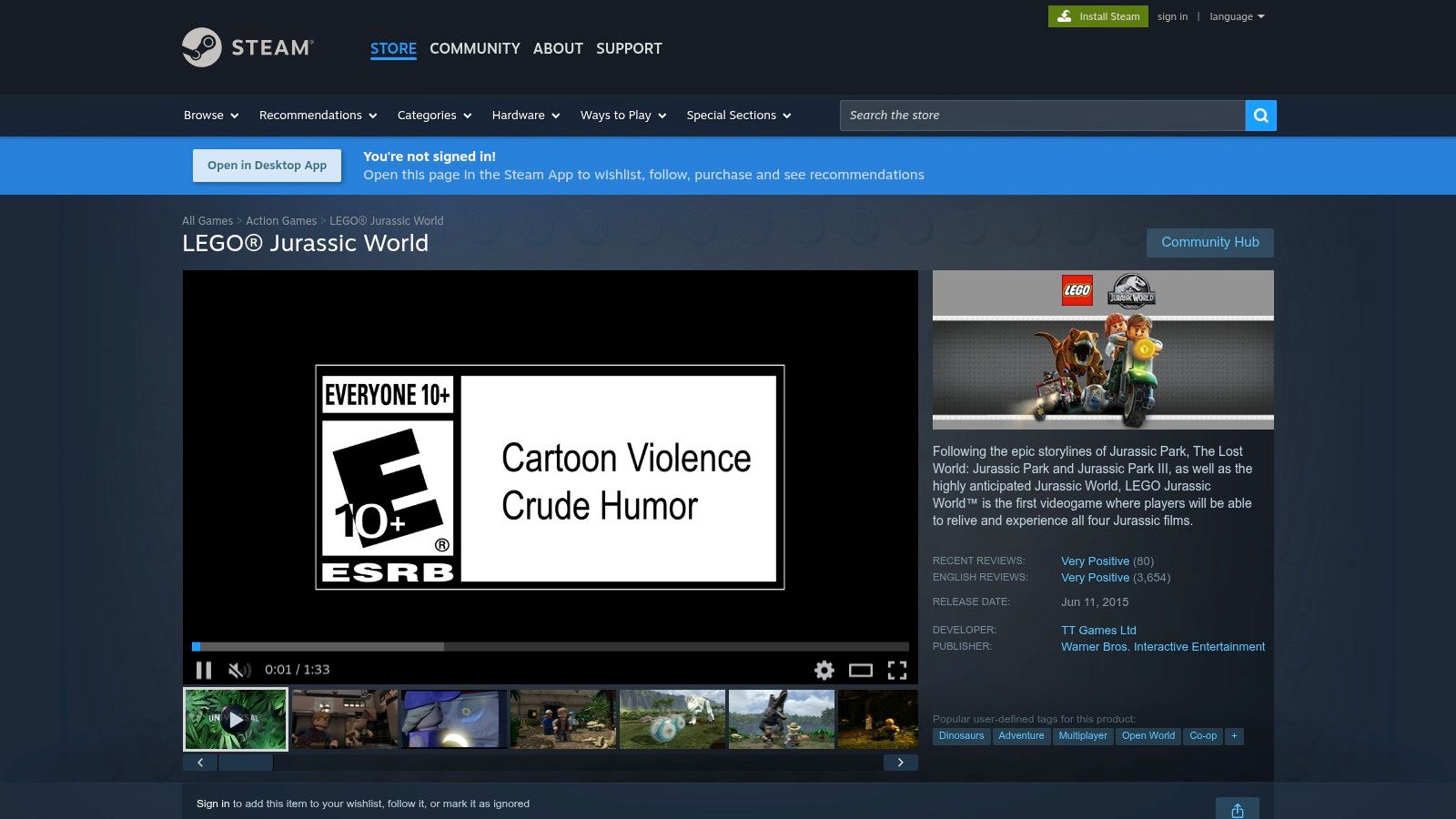
This is the old-school answer, and sometimes old-school is exactly right. LEGO Jurassic World on Steam adapts four Jurassic films into LEGO levels, puzzles, hub areas, and playable dinosaur sections. You smash, build, switch characters, and solve simple co-op puzzles in the familiar licensed LEGO rhythm.
Be precise about the multiplayer, because buyers can get caught off guard. The standard mode is two-player local or shared-screen co-op. There is no built-in online co-op in the game itself. On PC, Steam Remote Play Together can let a remote friend join as if they were holding the second controller in your room.
That workaround works, but it isn't the same as native online play. Your connection is the host setup, your friend depends on your session, and console players don't get that Steam option. The game is also more linear and older-school than Fortnite Odyssey or LEGO Worlds.
Steam users rate it positively overall, and the dinosaur gameplay gives it a theme kids and film fans instantly understand. I'd pick it for a couch duo, a parent playing with a child, or anyone who wants a contained movie campaign. Don't pick it for a long-distance console group.
Multiplayer type, player cap and platforms for each LEGO pick
Match the multiplayer type column to your room first, then check the cap against your group size.
| Item | Multiplayer type | Player cap | Platforms |
|---|---|---|---|
| LEGO Fortnite Odyssey | Online co-op, shared world | Up to 8 | Supported consoles, PC, mobile |
| LEGO Party! | Local and online; cross-platform online | Up to 4 | Major consoles, PC |
| LEGO Voyagers | Local and online co-op | 2 | PlayStation, Xbox, Switch, PC |
| LEGO Fortnite Brick Life | Online social role-play | Up to 32 | Supported PC, consoles, mobile |
| LEGO 2K Drive | Local split-screen and online; crossplay | Up to 6 online; 2 local | PlayStation, Xbox, Switch, PC |
| LEGO Worlds | Online co-op and PvP; shared or split-screen play | 2 | PC (Steam) |
| LEGO Jurassic World | Local co-op; Steam Remote Play Together | 2 | PC (Steam), consoles |
Four of these run native online play: Odyssey, Brick Life, Party!, and 2K Drive. Distance doesn't matter for that group as long as everyone's platform is covered. Voyagers and Jurassic World are two-seat couch games at heart, and only Voyagers adds a true online option. Jurassic World reaches remote players through Steam Remote Play Together on PC, which ties the session to the host's setup.
Pick Your Co-op Style and Get Your Squad Ready
Start with your room, not the box art. If you've got two players on one couch, LEGO Voyagers gives you puzzles designed only for a duo, while LEGO Jurassic World gives you a familiar film campaign with shared-screen play. Voyagers also works online with a Friend's Pass, but Jurassic World needs Steam Remote Play Together for remote play on PC. That single distinction should decide the purchase for most long-distance pairs.
Bigger groups need a different filter. LEGO Fortnite Odyssey fits a regular crew that wants a persistent world, jobs for everyone, and reasons to come back tomorrow. Brick Life fits the opposite mood, where the group wants to socialize, decorate, race, and wander without a strict mission structure. LEGO Party! sits between them for four-player competition that a mixed-skill group can learn in minutes.
- Best for a duo: Voyagers for designed co-op, Jurassic World for a movie campaign.
- Best for an online crew: Odyssey for progression, Brick Life for social hangouts.
- Best for competition: LEGO Party! for mini-games, 2K Drive for racing.
- Best for builders: LEGO Worlds, if you're bringing your own partner.
Check the boring details before anyone spends money. Confirm crossplay by platform, because 2K Drive excludes Switch from crossplay. Confirm accounts and subscriptions too, since Epic, 2K, and console online services can block an otherwise perfect plan. LEGO has supported social play for decades, and the LEGO Group's 25th anniversary recap reported more than 80 commercial games and over 200 million copies sold globally by December 2020. The audience is there. Your job is picking the format your friends can join.
If you're still short a teammate, GamerPlug is a social platform for gamers where you can find a squad and build a community around the games you already play. Match the game to your group first, then fill the empty controller slot with someone who wants the same kind of session.
Ready to turn that empty LEGO co-op slot into a regular crew? On Gamerplug, you can post a squad listing with your game, platform, session style, and mic preference, then check real gameplay clips before you invite anyone. Join free on iOS, Android, or the web and find LEGO partners who match your schedule, not just a random username.