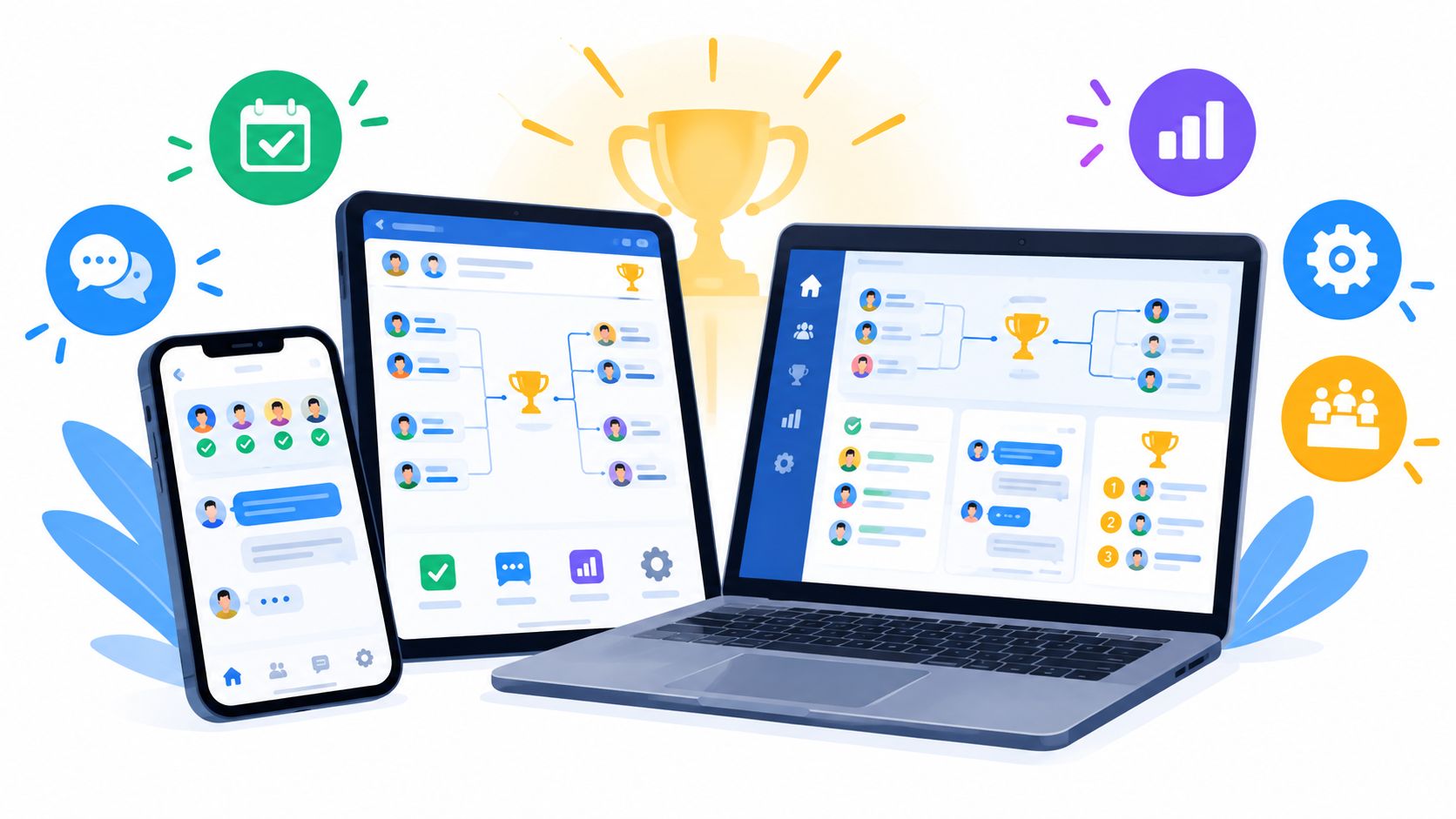
The worst advice in esports is that one gaming tournament app should run every event. A quick community cup, a recurring creator bracket, a fighting game major, and a multi-stage circuit all break in different places, so the right pick depends on the actual workflow, registration, bracket setup, check-in, match admin, payouts, reporting, and how much admin pain your crew can tolerate. If you need teammate discovery, tournament hosting, and live leaderboards in one gamer-first app, GamerPlug is the one to watch.
The cleanest way to judge these platforms is simple. Look at who signs up, how brackets get built, how check-in works, who resolves disputes, how payouts move, and whether the community already lives there. Some tools are built for fast brackets, some for serious organizer plumbing, and some are really just gamer communities with tournament layers on top. The list below cuts through the hype and tells you what each one does well.
Table of Contents
- 1. GamerPlug
- 2. Battlefy
- 3. Challonge
- 4. Toornament
- 5. start.gg
- 6. FACEIT
- 7. Game.tv
- 8. Community Gaming
- 9. Z League
- 10. Checkmate Gaming
- Top 10 Gaming Tournament Apps Comparison
- Match the App to the Event, Not the Hype
1. GamerPlug
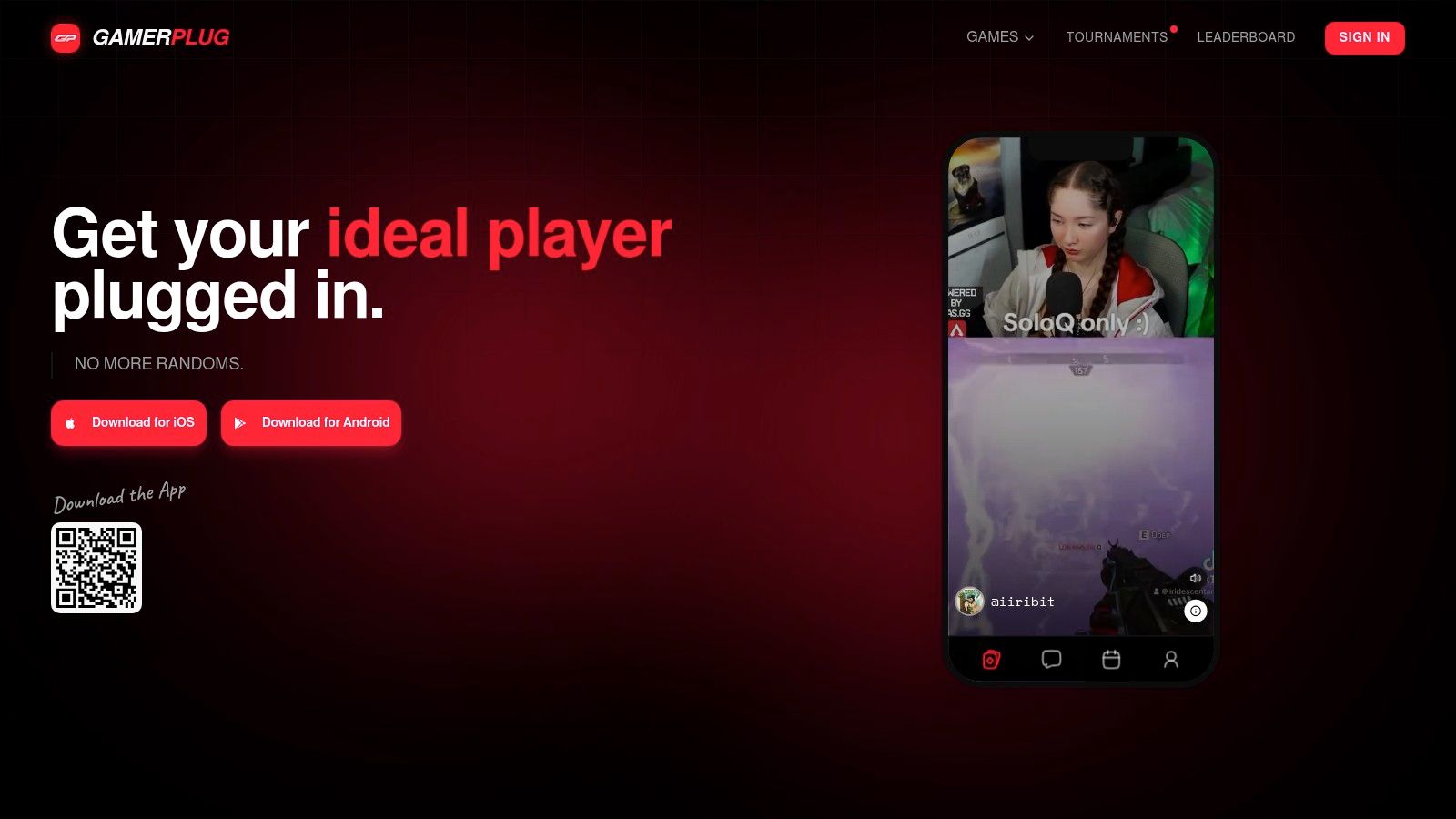
GamerPlug is the most player-first option here because it starts with the people, not the bracket. It centers finding gaming teammates, checking real profiles, and then moving into Single Elimination, Double Elimination, Swiss, and Round Robin brackets inside the same app. That fits events where roster quality and sign-up flow matter as much as match structure.
Where GamerPlug hits hardest
The trust layer is the main reason to use it. Profiles are clip-first, ranks can sync from official APIs for Apex Legends, Fortnite, and League of Legends, and players can filter by skill, playstyle, mic usage, and availability before they join a squad. For organizers, that cuts down bad fills and makes the jump from LFG app to live event participation a lot cleaner.
It also supports PC, PS5, Xbox, and Switch, plus 19 competitive titles, so mixed-platform communities are not boxed into one ecosystem. The built-in chat, swipe-style discovery, and live leaderboards fit recurring events, creator cups, and grassroots groups that want player matching and tournament hosting in one place. For a closer look at how the event side works, see how to find gaming events and tournaments on GamerPlug.
Practical rule: use GamerPlug when roster quality matters as much as bracket flow. If the event falls apart when the wrong players join, the profile and verification layer does real work.
Where it creates friction
The trade-off is straightforward. It is newer, so active pools can be smaller in some games and regions than long-established tournament ecosystems. Automatic stat sync is limited to Apex, Fortnite, and LoL, so other titles may need more manual verification.
That makes it a better fit for grassroots events, recurring community cups, mobile-first social play, and organizers who want teammate discovery plus tournament hosting in one gamer social app.
Website: GamerPlug
2. Battlefy
Battlefy is the right pick when an organizer needs a proven tournament backbone and not a flashy front end. It handles single and double elimination, Swiss, round robin, and FFA or battle-royale brackets, plus join codes, custom fields, region locks, and manual seeding by points. That gives brands, publishers, and community admins enough control to run different event formats without rebuilding the process each time.
Battlefy also fits title-specific operations better than many general bracket tools. Its integrations and partial lobby automation help in supported games, and the organizer tools are mature enough for public events where check-in and communication need to stay tight. It works well for leagues that rotate bracket shapes and need the same admin flow across multiple events.
The friction shows up fast when a title is not fully integrated. Then the organizer is back to manual lobby work, and match handoff slows down during busy rounds. Experienced admins can handle that. Smaller community teams usually cannot.
For organizer teams that want a more structured event flow, Battlefy is the platform for events that already know the bracket logic and need the system to stay steady under pressure. For a closer look at organizer operations, see online tournament organizer workflows on GamerPlug.
Best fit: publisher circuits, brand events, and larger community brackets with mixed format needs.
Website: Battlefy
What Battlefy is really good at
- Flexible bracket types: works across standard competitive formats and battle-royale-style event structures.
- Organizer control: join codes, custom fields, and region locks keep registrations cleaner.
- Proven tournament plumbing: solid for events that need structure more than social discovery.
3. Challonge
Challonge is the fastest way to get a bracket live without making the organizer wrestle a heavy esports stack. It's built for quick setup, simple bracket tools, Stripe ticketing, embeds, and API access, which makes it a natural fit for college clubs, local events, and one-off online cups. If you need the tournament live today, not after a long onboarding cycle, Challonge does the job.
The platform's biggest win is clarity. You can run unlimited tournaments and events on all plans, and the higher tier supports larger brackets, up to 512 players per bracket on Premier, which is more than enough for many local or school-led events. The embed and API options also make it easy to bolt brackets onto a site instead of forcing players into a separate portal.
What it doesn't do well is esports automation depth. Compared with the more specialized platforms, it has less native support for score pull, lobby automation, and game-specific tournament ops. That means a larger admin load during match day, especially if your team wants less tab-switching and fewer manual updates.
Challonge is a clean answer for organizers who value speed over complexity. It won't run a high-touch circuit by itself, but it will keep a simple event moving without much drama.
Best fit: local brackets, campus events, simple online cups, and organizers who want lightweight registration and embeds.
Website: Challonge
4. Toornament
Toornament is for organizers who need a full tournament suite, not a bracket page with extra buttons. It supports multi-tournament circuits, advanced seeding, a website builder for white-label event pages, API access, and advanced formats, so it suits studios, semi-pro organizers, and circuit teams that need branded presentation on top of event operations.
The website builder matters because it lets you present events as a real brand destination instead of a generic portal. That works well for publisher-run programs and recurring competitive series. The API layer gives teams room to connect registration, reporting, and event data across multiple workflows, which helps when one event has to feed the next.
The trade-off is straightforward. Some of the useful functions, including TV mode, advanced custom fields, and API or site tooling, sit behind paid plans. Serious organizers can justify that, but you should budget for it before building your workflow around the platform.
Toornament is strongest when the event has sponsors, branding, and repeated stages. It gives you structure without forcing you to rebuild the entire stack every season. For organizers who need control over public presentation and backend admin at the same time, it fits that job well.
Toornament is a strong pick for structured programs that need consistency across several events. It is less casual-friendly than lighter tools, but that is the point.
Best fit: white-label event pages, multi-stage circuits, semi-pro organizers, and game studios.
Website: Toornament
5. start.gg
start.gg still owns a lot of the fighting game conversation because it's built for the way the FGC runs events. Registration, pools, seeding, scheduling, payments, and mobile alerts all live in the same system, so players and organizers don't have to duct-tape five tools together. That makes it one of the most practical platforms for weeklies, regionals, and majors.
The app support is a big part of the appeal. Players can get match alerts and follow event flow on mobile, which reduces missed sets and the usual “where's my pool?” chaos. For organizers, the mature toolset handles the whole event lifecycle without making check-in feel like a separate project.
The trade-off is cost. start.gg is known to add a transaction or registration fee on paid entries, and that can change how you structure tickets, venue fees, and player pricing. If you run frequent paid events, you need to check the current rates before launch so you don't squeeze your margin or surprise entrants.
For FGC orgs, it's still one of the easiest systems to trust because the player base already knows how to move through it. If your venue relies on smooth front-door registration and pool management, this is a strong pick. For a related tournament migration example, see BF Vyrox Summer Cup moved to FACEIT on GamerPlug.
Best fit: fighting game locals, majors, venue-based registration, and events that live or die on pool flow.
Website: start.gg
6. FACEIT
FACEIT is built for the grind. It's strongest in FPS communities where players want ladders, hubs, clans, missions, leagues, daily tournaments, and weekly competitions instead of one-off event pages. If your community wants constant competition and a visible progression path, FACEIT fits that rhythm better than a generic bracket app.
The platform's structure is its real value. Tournament pages spell out eligibility and prizing clearly, and the points economy keeps players coming back instead of dropping out after one event. That makes it a better fit for recurring shooters like CS2 than for a casual club that only runs a tournament once in a while.
There is a catch. Some queues and events sit behind Premium or Plus tiers, so access depends on what you buy and where you're playing. If your community spans regions or you're building an open event, you need to verify the current subscription rules before making FACEIT your default.
For FPS admins, FACEIT reduces a lot of the “what now?” chaos because the ecosystem already expects repeat play. It's less about one giant bracket and more about keeping competitive players active week after week.
Best fit: CS2 and FPS communities, recurring competitions, ladders, and progression-based play.
Website: FACEIT
7. Game.tv
Game.tv is built for mobile-first communities that want to run events often without a lot of organizer overhead. The app-first setup makes tournament creation fast, so creators and clubs can get brackets live without wrestling a heavy admin stack. For communities that live on phones, that matters.
Its real strength is event cadence. Game.tv works well for public tournaments, automated flows, and repeat community play, so it fits organizers who care more about keeping players active than staging a one-time prestige bracket. Creators also get a cleaner content loop because each event can feed the next one.
The tradeoff is scope. Desktop and console support are not the center of the product, so it is a weak choice for broad cross-title operations. Monetization and event settings can also change by region, so admins need to check the local configuration before they build around it.
Game.tv works best for mobile audiences that want quick entry, fast brackets, and frequent repeats. For creator-led communities and casual-to-competitive clubs, it stays easy to keep in rotation.
Best fit: mobile tournaments, creator-led events, club competitions, and frequent public brackets.
Website: Game.tv
8. Community Gaming
Community Gaming is the payout-first platform on this list. It supports automated on-chain payouts and Stripe fiat payouts, buy-in events, leaderboards, match rooms with chat, and programmatic prize distribution, so it solves the part of tournament ops that most apps leave awkward or manual. If money movement is the hard part, it shines.
That makes it useful across more than one event type. Grassroots communities can use it for cash competitions, and larger organizers can use it when they need payout rails that work across regions without a ton of extra admin. The mix of fiat and crypto payout paths is the core differentiator.
The friction is cost and policy. A platform fee can apply, and payout rules need to be checked per event because the fine print matters more when real money is moving. If you're running anything with entry fees or rewards, don't assume the default setup is the final setup.
For organizers who care about fast distribution and modern payout options, Community Gaming is a serious tool. It's less about being the prettiest tournament frontend and more about making sure winners get paid without a mess.
Best fit: buy-in events, cash tournaments, cross-region prize distribution, and payout-heavy communities.
Website: Community Gaming
9. Z League
Z League fits organizers who want casual entry without throwing skill balance out the window. It uses division-based, skill-adjusted tournaments, kill-race and casual formats, an in-app LFG layer, and a credit economy with daily rewards. For battle royale and FPS communities, that mix keeps lower-pressure events competitive instead of chaotic.
The LFG layer is the admin saver. Player discovery and event entry sit in the same app, so people do not have to jump between Discord, a bracket tool, and a squad finder just to show up. That cuts early drop-off and makes mobile-first signups easier to manage.
Z League still has limits. Supported titles and tournament depth can change, and the experience can feel uneven depending on the device or event setup. If you are running a serious series, test the full flow first, from registration through match flow, before you build around it.
Z League works best for quick, accessible tournaments where fairness matters more than advanced admin controls. It is simple for players to grasp fast, and that is the point.
Best fit: casual BR and FPS events, skill-adjusted competition, and mobile-first communities.
Website: Z League
10. Checkmate Gaming
Checkmate Gaming, or CMG, is for competitive shooter communities that want daily matches, not a once-a-week bracket. It focuses on daily brackets, ladders, 1v1 to 4v4 formats, buy-in events, cash matches, and Elite-member tournaments, with its strongest presence in the Call of Duty scene. That built-in audience matters, because players already understand the pace and rules.
CMG works best for recurring shooter play. If your community wants repeat matches, ladder climbs, and cash or bragging-rights stakes, it gets the job done without extra ceremony. It fits console and shooter groups that care more about direct competition than white-label customization.
The tradeoff is narrow scope. CMG is tied closely to CoD and shooter culture, so it does not serve as a broad tournament layer for every title. It handles ladders and cash matches well, but organizer teams that need cross-game flexibility should look elsewhere.
For communities that want action every day, CMG is the straightforward pick. It keeps match supply high and the format easy to understand, which is exactly why it works.
Best fit: Call of Duty communities, shooter ladders, cash matches, and recurring competitive play.
Website: Checkmate Gaming
Top 10 Gaming Tournament Apps Comparison
| Platform | Core features & USPs ✨ | UX & Quality ★ | Price / Value 💰 | Best fit 👥 |
|---|---|---|---|---|
| GamerPlug 🏆 | Clip-first profiles (90s), auto rank sync (Apex/Fortnite/LoL), Discover swipe, Squads LFG, built-in tournaments, trust/WorldID | ★★★★★, evidence-based matches, fast fills, mobile+web | 💰 Free; creator & affiliate programs | 👥 Competitive & casual 18–34, TOs, creators |
| Battlefy | Scalable bracket engine, game automations, org tools | ★★★★, proven at scale for publisher/brand events | 💰 Enterprise / bespoke pricing | 👥 Brands, publishers, large TOs |
| Challonge | Fast setup, Stripe ticketing, embeds & API | ★★★, simple, quick for local/college cups | 💰 Free (ad-supported) + Premier paid tier | 👥 Local clubs, college orgs, small TOs |
| Toornament | Multi-event circuits, white-label site builder, API automation | ★★★★, enterprise-grade, extensible | 💰 Paid plans for advanced features | 👥 Semi-pro TOs, studios, white-label events |
| start.gg | Pools/seeding, registration, scheduling, mobile app & alerts | ★★★★, mature FGC tooling, reliable for weeklies→majors | 💰 Free tools; transaction fees (~6%) | 👥 Fighting game communities, TOs |
| FACEIT | Ladders, hubs, leagues, points economy, Premium events | ★★★★, large FPS base, frequent comps | 💰 Free + Premium/Plus subscriptions | 👥 FPS communities (CS2 etc.), competitive players |
| Game.tv | Mobile-first tournaments, creator/club automation, automated flows | ★★★, high event cadence, mobile-friendly UX | 💰 Free to join; monetization varies by region | 👥 Mobile-native players, creators, clubs |
| Community Gaming | Fiat & on-chain payouts, buy-ins, leaderboards, match rooms | ★★★, fast payouts, flexible payout rails | 💰 Platform/event fees (≈≤5%) | 👥 TOs needing global payouts, cash-event communities |
| Z League | Division-based tournaments, in-app LFG, credit economy & daily rewards | ★★★, casual-friendly, frequent BR/FPS events | 💰 Free + in-app credits/entries | 👥 Casual BR/FPS players, mobile users |
| Checkmate Gaming (CMG) | Daily brackets, ladders, buy-ins, cash matches, dispute support | ★★★, deep CoD/console shooter focus | 💰 Buy-ins + Elite subscription tiers | 👥 CoD/console shooter communities, competitive console players |
Match the App to the Event, Not the Hype
Pick GamerPlug when you want teammate discovery, trust signals, chat, and flexible brackets inside one player-first workflow. Choose Battlefy or Toornament when the event needs scalable organizer operations, more structure, and room for automation or branding. Go with Challonge when the job is a clean bracket and you don't want the setup to drag. Use start.gg for FGC registration, pools, and venue flow, because the platform already matches how that scene runs.
For recurring shooter competition, FACEIT and Checkmate Gaming make the most sense. FACEIT is the stronger fit for structured FPS ecosystems and progression, while CMG is the better home for Call of Duty-style ladders and cash matches. If your audience lives on mobile and wants constant events, Game.tv is the obvious creator-led option. If payout rails are the bottleneck, Community Gaming is the move. If you're running casual-friendly battle royale brackets with teammate discovery baked in, Z League is the easy entry point.
Don't launch anything before you verify current pricing, regional availability, supported titles, automation depth, and payout terms. That matters more than glossy feature lists. A platform can look perfect on paper and still create a mess if its check-in flow, region settings, or payout rules don't match your event.
Before you go live, lock down the basics. Make sure your registration fields are tight, your seeding rules are clear, your check-in timing is posted, your dispute process is written down, your communication channel is set, your result reporting path is obvious, and your payout responsibility is assigned to one person. If all of that is clean, the tournament feels smooth. If it isn't, the best app in the world won't save the bracket.
GamerPlug gives you the teammate-finding side of a gaming tournament app plus the tournament tools players use. If you want a gamer-native place to build squads, host brackets, and keep the whole flow in one app, check out GamerPlug and see how it fits your next event.