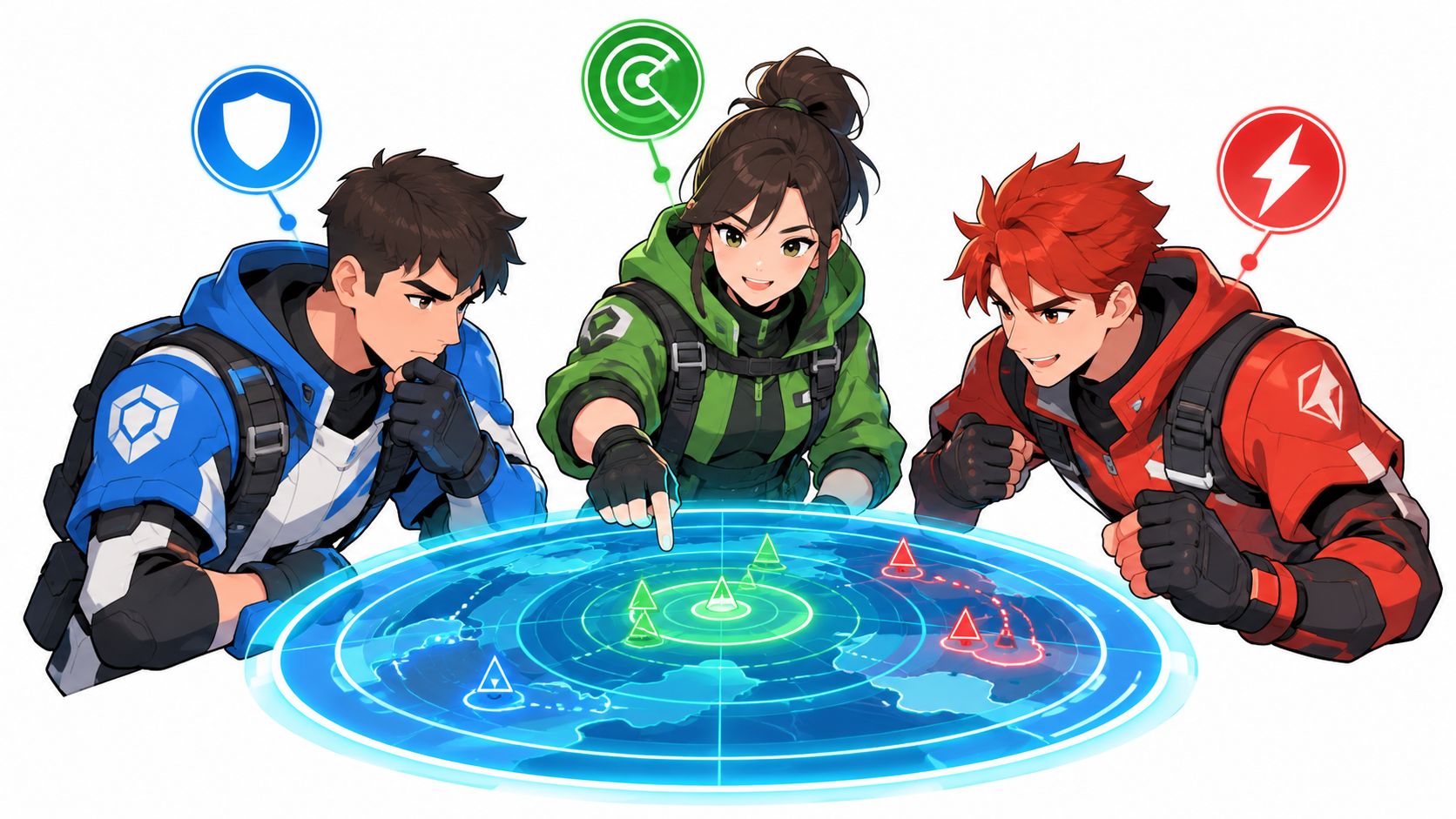
You queue up with two friends, load into ranked, and the match starts looking fine. Then one teammate chases damage, another swings a building on timing that never got called, and the third rotates alone because nobody said who was anchoring the back line. The death screen doesn't feel like an aim problem. It feels like three players trying to act like a team without ever agreeing on what the team is supposed to do.
That gap is the whole story of Apex Legends teams. The game rewards clean movement, fast calls, and shared timing more than it rewards three talented players who all want different fights. The strongest squads are usually not the flashiest ones, they're the ones that stay aligned when the ring tightens, the third party arrives, and one player has to make the boring but correct call.
Table of Contents
- The Match Moment Every Apex Squad Gets Wrong
- How Apex Legends Teams Actually Function
- The Three Roles That Hold a Squad Together
- Popular Team Compositions and What They Demand
- Using the Ping System as Your Real Voice Chat
- Why Roster Stability Beats Raw Mechanics
- A Pre-Queue Checklist for Building a Real Squad
- Finding Teammates Who Already Match Your Playstyle
The Match Moment Every Apex Squad Gets Wrong
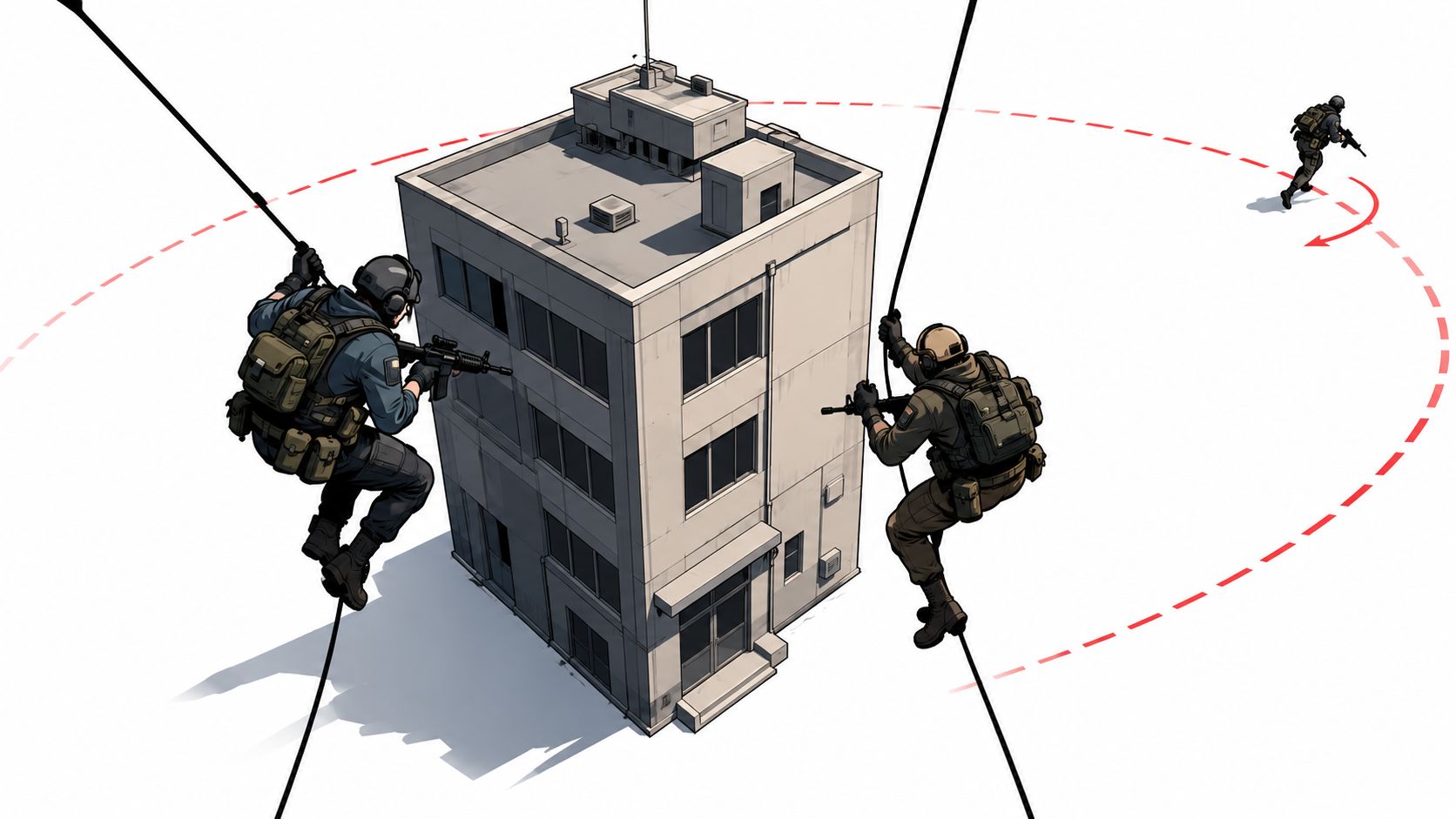
The fight starts with a little confidence and ends with confusion. Two teammates swing the same building, both thinking the other one is covering the angle, while the third is already moving to a safer spot because nobody said to hold. By the time the first knock lands, the squad has split into three isolated problems.
What actually breaks
The entry player usually overextends first. They feel pressure, see a weak target, and keep pushing because nobody has clearly told them whether the anchor is close enough to trade. The IGL often reacts too late, then falls back on short pings when voice comms would've saved the fight.
Meanwhile, the third player hears one set of footsteps on the left and bullets coming from the right. That is the core trap in public lobbies and amateur brackets, the team assumes everyone is watching the same lane, at the same time, for the same reason. They are not.
Apex punishes that assumption hard. Once one player commits without syncing the other two, every “almost won that” turns into a clean collapse. The lesson is simple, and it shows up again and again in bad rounds, the team didn't lose because of aim, it lost because the players never agreed on coordination.
Practical rule: if two people are fighting and the third isn't already in position to help, the squad is late before the first knock happens.
How Apex Legends Teams Actually Function
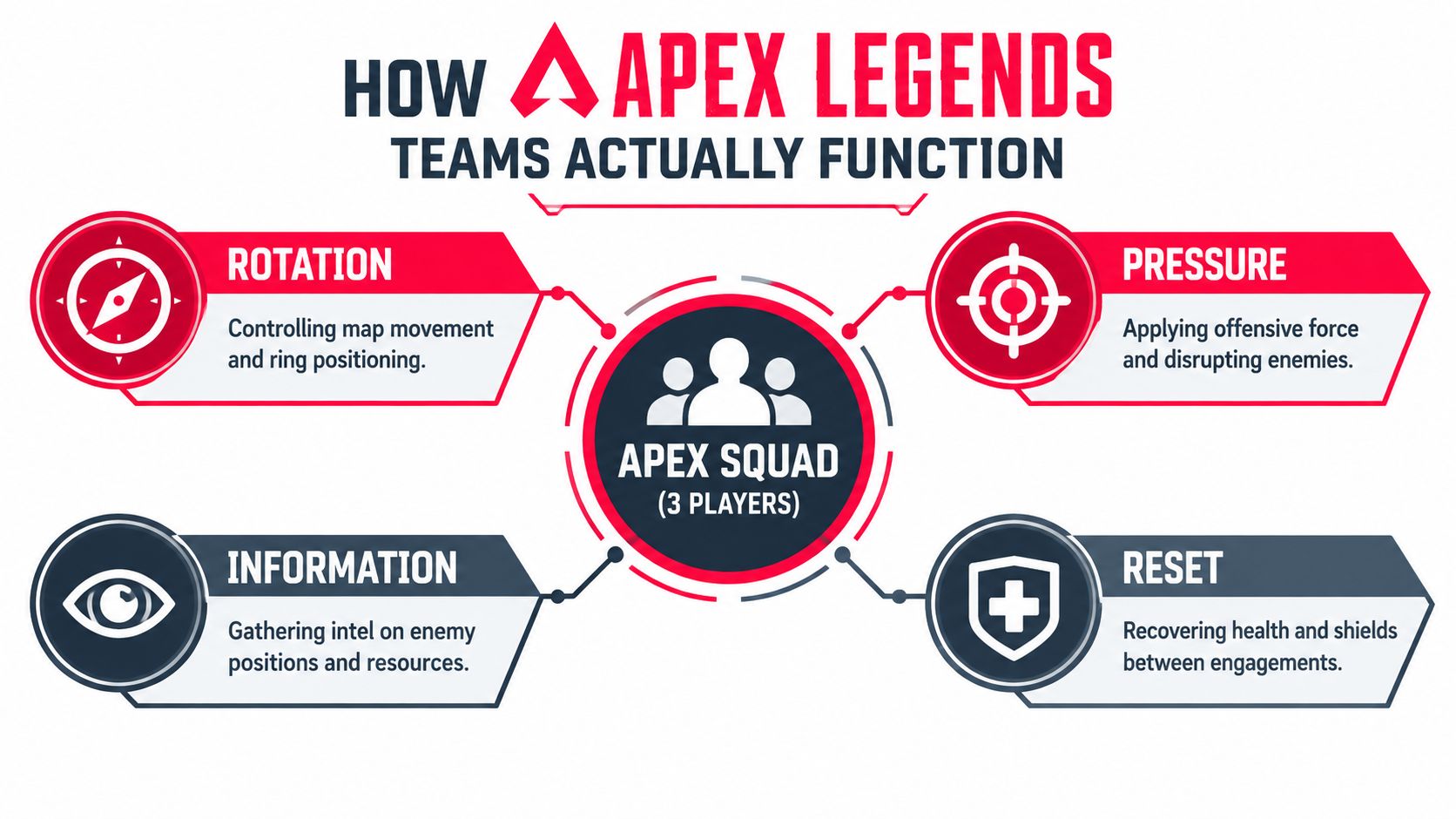
Apex is built around three-player squads, so every team has to cover more than raw gun skill. The cleanest way to think about it is through four jobs every squad needs somewhere on the roster, rotation, pressure, information, and reset. If one of those jobs is missing, the team starts improvising under stress, and that's where mistakes stack up.
The four functions
Rotation decides when the team moves and where it wants the next fight to happen. Good rotation means arriving with cover, angles, and room to work, not sprinting in late after a ring update has already made the map expensive. Pressure is the damage and threat that makes the other squad move on your terms instead of theirs.
Information is everything that tells the trio what's happening before they get touched, enemy location, approach angle, height control, and whether a third party is already near. Reset is the ability to stop a bad fight from becoming a wipe, break line of sight, heal, revive, and come back with the squad still intact. If a team can't reset, every trade turns into a gamble.
A squad doesn't need three players doing the same thing. It needs one player taking space, one player creating damage, and one player making the next decision possible.
A simple self-check helps here. Before queueing, ask whether your trio has these four functions covered in some form, or whether two of you are trying to be the same damage player while nobody is thinking about position or recovery. That's the difference between a group that can survive a messy fight and a group that falls apart the second a squad looks back at them.
Here's a visual summary of the structure.
The Three Roles That Hold a Squad Together
Once a trio knows its four functions, those functions usually land on three human roles. The names can shift a bit from team to team, but the structure is familiar, IGL, entry, and anchor. The point isn't to lock a player into a box, it's to make sure somebody owns each decision type instead of everybody guessing.
What each role owns
The In-Game Leader runs the big calls. That player decides where to land, when to rotate, whether the team takes a fight, and when to leave a bad position before it gets worse. Their calls should be short and direct, because the rest of the squad needs timing, not a speech.
The entry player goes first when the team needs pressure. They crack armor, create space, and turn a neutral fight into a numbers advantage. Their comms are often the simplest ones in the squad, things like one cracked, one down, or need help now.
The anchor stays the most stable. They watch the back line, track whether a second squad is coming in, and keep the team alive long enough to reset if the first push stalls. That role often talks less, but when it speaks, the information matters because it protects the whole squad from being surprised.
| Role | Primary Function | Signature Call |
|---|---|---|
| IGL | Macro decisions and fight selection | Rotate now |
| Entry | First contact and pressure | Cracked one |
| Anchor | Backline stability and reset control | Second team behind |
Role assignment stays messy until the team says it out loud. The first real win is naming who does what, because then bad habits have somewhere to land instead of leaking into every fight.
Popular Team Compositions and What They Demand
Most players obsess over the legend screen and skip the harder question, who on the team can execute the plan that comp demands. A composition is not just a list of abilities. It's a promise about pacing, discipline, and how much forgiveness the squad gets when things go wrong.
Four common comp styles
A Wraith, Caustic, Octane rush comp asks for fast timing and a team that's willing to commit early. Its strength is forcing chaos before the other squad can settle in, but it falls apart if one player hesitates and the push loses shape. That comp fits trios that trust each other's timing and don't panic when fights get ugly.
A Wattson, Gibraltar, Lifeline bunker setup asks for patience and clean positioning. It's built to survive pressure, hold ground, and outlast opponents who are trying to break in. If one player drifts too far forward, the whole point of the comp disappears.
A Valkyrie, Seer, Bloodhound scan comp puts a premium on information and controlled movement. The squad gets value when the players stay disciplined enough to use intel before the fight starts, not after they've already rushed into it. If the team ignores the data and plays it like a pure brawl comp, it wastes the main advantage.
A Catalyst, Ballistic, Revenant zone-control setup rewards denial and late-ring pressure. It tends to work best for squads that can hold shape under stress and force enemies into awkward paths. The failure mode is easy to spot, one impatient push turns a disciplined hold into a scattered retreat.
| Composition | Win Condition | Role Split | Common Failure |
|---|---|---|---|
| Wraith, Caustic, Octane | Third-party pressure and quick collapse | Fast entry, flexible support, active IGL | Pushes lose sync |
| Wattson, Gibraltar, Lifeline | Sustain and survival in tight spaces | Anchor-heavy, reset-focused, patient leader | Over-aggression breaks setup |
| Valkyrie, Seer, Bloodhound | Info control and safe movement | Scout-led, measured pressure, careful rotation | Ignores intel and overcommits |
| Catalyst, Ballistic, Revenant | Late-ring denial and space control | Defensive core, adaptable entry, rotation-first lead | One bad chase fractures the hold |
The important part is this, comp choice follows player skill distribution, not the other way around. Copying a pro lineup without matching the discipline behind it is how squads recreate the same mid-fight collapse from the opening section.
Using the Ping System as Your Real Voice Chat
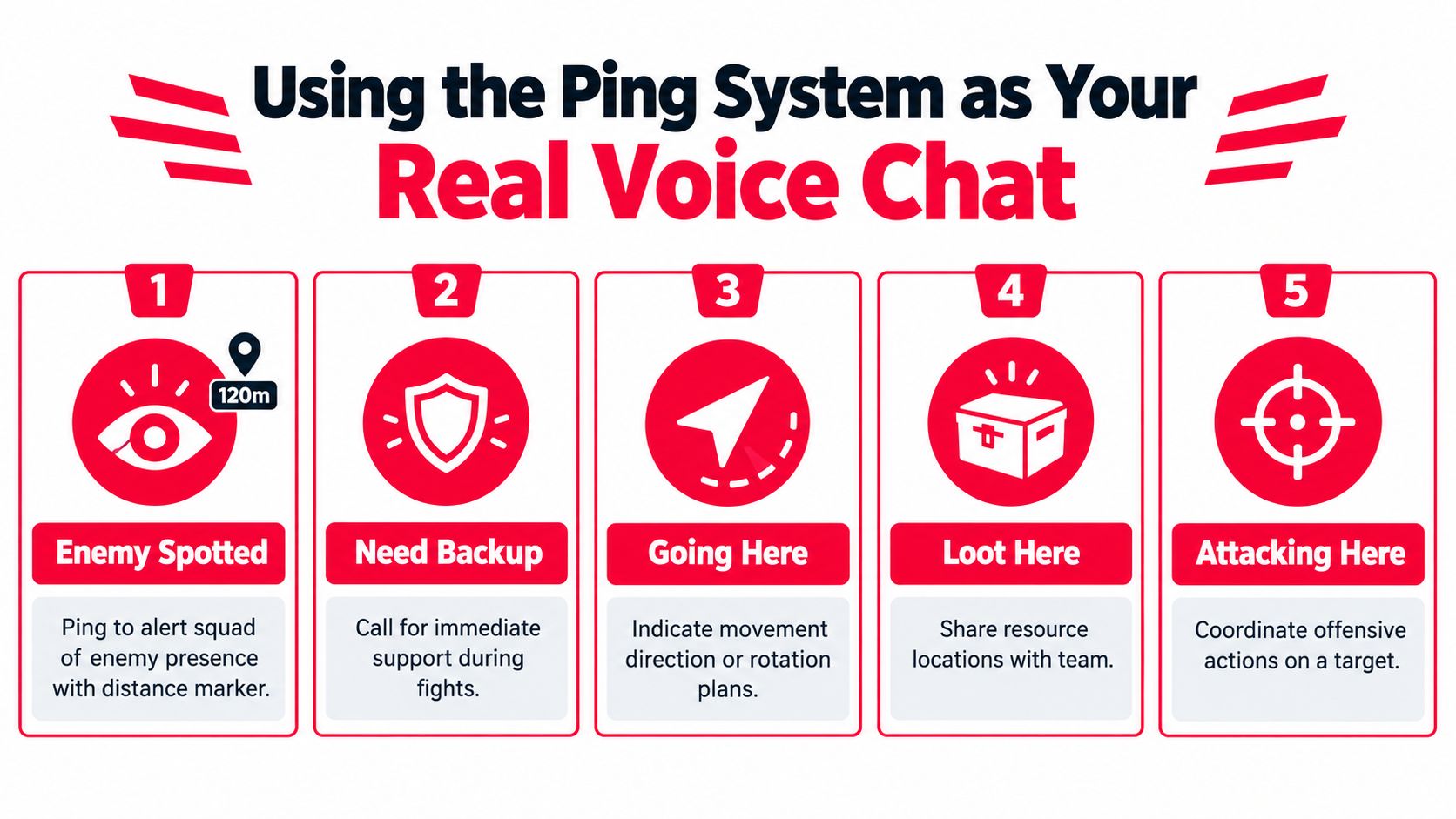
Ping is not a replacement for voice, it's the layer that keeps your call from disappearing the second a fight gets loud. In a good squad, the ping wheel gives your teammates a shared timestamp, so nobody has to guess whether you meant now, soon, or after the reload finishes. That matters when one player is already cracked and the rest of the squad is trying to decide whether to commit or hold.
The pings that carry real meaning
The first useful ping is enemy spotted with distance attached, because it tells the squad where contact starts and how much time they have. Weapon threat pings help when the fight starts before everyone has clear visual, especially if you're identifying a shotgun, sniper, or other threat that changes the shape of the push. Push intent should be used once, clearly, when the team is ready to move.
Defensive hold is the ping that says stop and stabilize. Use it when your squad needs to heal, reload, or wait for a better angle instead of forcing a bad trade. Loot priority matters after a third party or a quick wipe, because the team that sorts armor and ammo first usually leaves the area cleaner.
A simple pattern helps more than spam. Try using a short sequence like spotted, push, or rotate, hold, heal. If a squad agrees on that rhythm before the match starts, the pings stop feeling random and start acting like a second voice channel.
Why Roster Stability Beats Raw Mechanics
Raw aim wins isolated moments. Roster stability wins seasons. A trio that plays together enough to understand each other's habits will usually outperform a group of sharper randoms, because the stable team isn't relearning spacing, tempo, and trust every single match.
That matters even more in Apex because the game keeps shifting underneath the players. New legends, balance changes, and map changes reset habits, and a team that already knows how it wants to move can adjust faster than a squad that's also trying to learn each other's tendencies from scratch. Stability doesn't remove the need to adapt, it reduces the amount of friction that comes with adaptation.
The competitive scene shows the same pattern. Top Apex teams have built long records across multiple tournaments, and the broader ALGS timeline has produced a mix of championship winners across seasons and regions, including DarkZero in 2022, TSM in 2023, GoNext in 2025, and Oblivion in 2026 according to Esports Charts' team rankings and the ALGS record on Esports Charts. That spread says the scene rewards teams that can stay together long enough to build chemistry, not just squads that peak in one bracket.
If your trio changes every few sessions, the biggest enemy isn't the meta. It's the time lost rebuilding trust.
That's why the best squads look boring from the outside. They don't need to rediscover each other every queue, so they spend more time improving actual decisions instead of rehashing who should have called the rotate.
A Pre-Queue Checklist for Building a Real Squad
A lot of Apex frustration disappears before the match even starts. The difference usually comes from whether the trio has agreed on the basics, or whether everyone is planning to “figure it out in game” and hoping that counts as structure. A five-minute setup saves a lot of messy mid-fight improvisation.
Run these five checkpoints
- Lock the IGL first. One player has to own the final call, or the squad will split on timing the moment pressure hits.
- Assign entry and anchor second. If nobody knows who starts the fight and who stabilizes it, every push becomes a coin flip.
- Confirm the legend pool covers all four functions. The team doesn't need every legend, it needs enough tools to rotate, pressure, gather info, and reset.
- Agree on two fallback callouts. If voice gets messy, everyone should know what “hold” and “reset” mean without debate.
- Pick three pings you'll use every round. Keep the signal simple so the squad doesn't drown in wheel spam.
For a practical helper on squad setup and finding players with matching habits, Gamerplug's Apex Legends squad-matching page lets players line up teammates by skill level and preferences. If your trio also wants to sanity-check comms and stability issues, the platform's guide on Apex packet loss is useful reading before ranked.
A short drill helps too. Spend 60 seconds in the firing range calling a rotate, taking a fake crack, and running a revive sequence. If the team can't sound clean there, it won't magically sound clean when a real squad is third-partying your backside.
Finding Teammates Who Already Match Your Playstyle
The fastest way to waste time is to treat every LFG group like a blind date. You queue, test chemistry in ranked, and only then discover that one person wants to hard frag while another wants to play anchor and the third never talks until they're already knocked. A clip-based profile cuts through that because it shows how someone plays, not just what rank they typed into a bio.
A tool built around esports team finder workflows works best when you tag the basics clearly. Give a short gameplay clip, name the role you want, and label your preferred style as aggressive, balanced, or defensive. Add your schedule window, because the cleanest trio in the world still falls apart if nobody is online at the same time.
What to filter for
Look for legend pool overlap first, so you don't match with someone whose comfort picks clash with your setup. Check rank range so you're talking to players close enough to your pace to learn from each other without turning every session into a carry. Pay attention to ping cadence, because a player who communicates early usually saves more fights than someone who types after the wipe.
A simple vetting process works well. Watch the person's three best calls, queue three casual games together, then decide whether to keep building with them. That approach turns teammate search into a repeatable process instead of a guessing game.
The goal is long-term fit. If your squad can spend less time rebuilding trust and more time refining roles, you stop treating each match like a chemistry test and start treating it like practice.
If you want a faster way to build a squad that already matches your role, pace, and schedule, Gamerplug is built for that exact problem. It helps players find teammates with real clips and verified ranks, which makes Apex squad building a lot less random. Use it when you're tired of carrying silent lobbies and want a trio that can line up before the drop ship leaves.