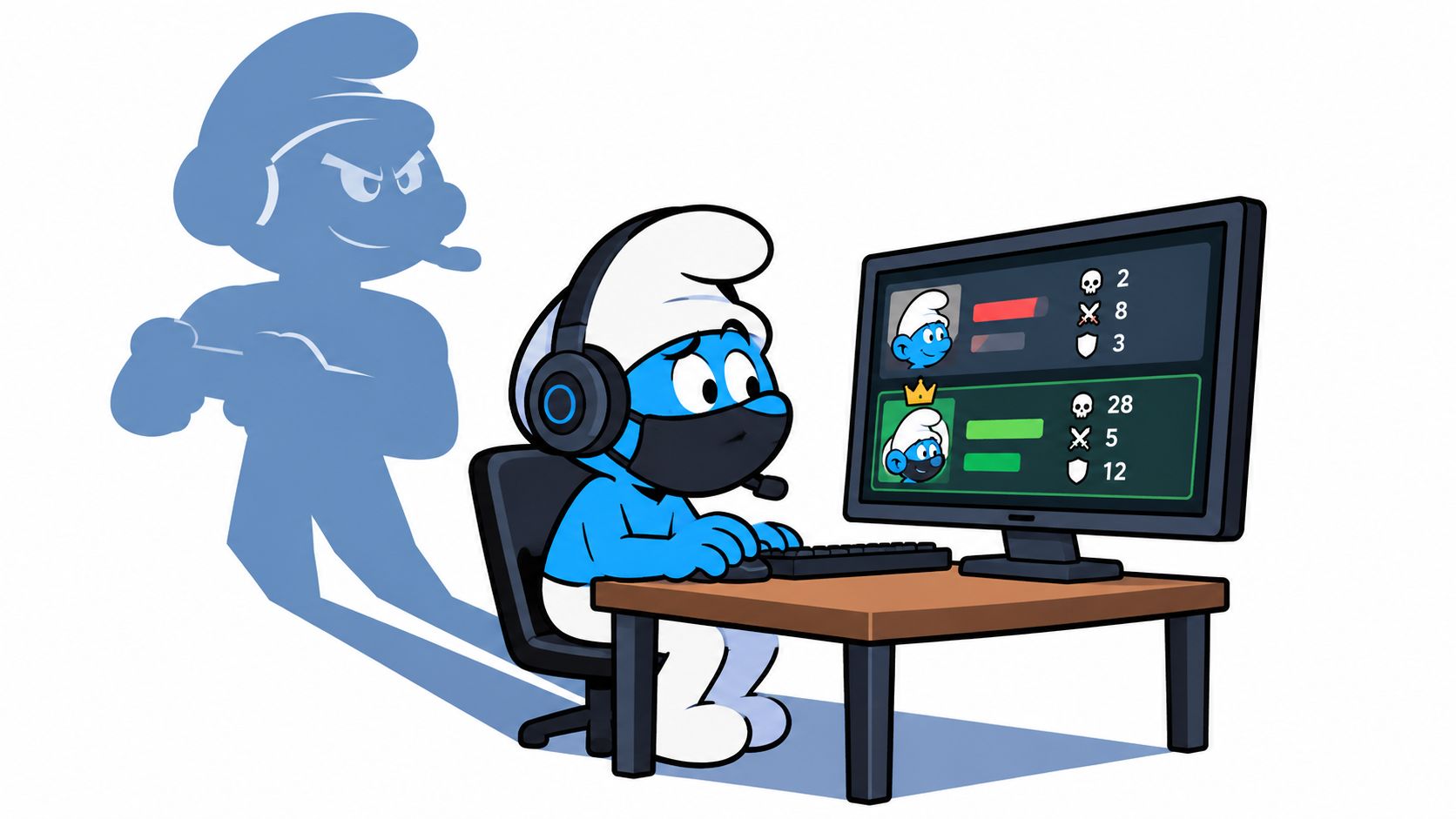
A smurf account is an alternate account used by a skilled player to play below their true rank. You've felt it in ranked already, when your Diamond lobby suddenly has one player who looks calm, tracks heads instantly, and ends fights before your team even finishes arguing about the buy round.
You call out the weird movement. Your teammate says their “Gold friend is just having a good game.” Then the scoreboard shows a player with mechanics nobody in the lobby can match, and the match stops feeling like a fair test of skill. That's the smurf problem in plain English.
Table of Contents
- The Lobby That Tells You Something Is Off
- What a Smurf Account Actually Means
- Why Experienced Players Create Smurf Accounts
- How Smurfing Breaks Ranked Matchmaking
- How Major Publishers Detect and Punish Smurfs
- Spotting Smurfs in Your Own Games
- Building a Healthier Ranked Experience in 2026
The Lobby That Tells You Something Is Off
The first clue usually isn't a single crazy play. It's the whole rhythm of the match. In Apex, a supposed mid-rank player takes clean off-angles, snaps to armor swaps without hesitation, and rotates like they already know the circle. In Valorant, they hold a crosshair at the exact head height you'd expect from a much stronger player, then swing with a calm that makes everyone else look panicked.
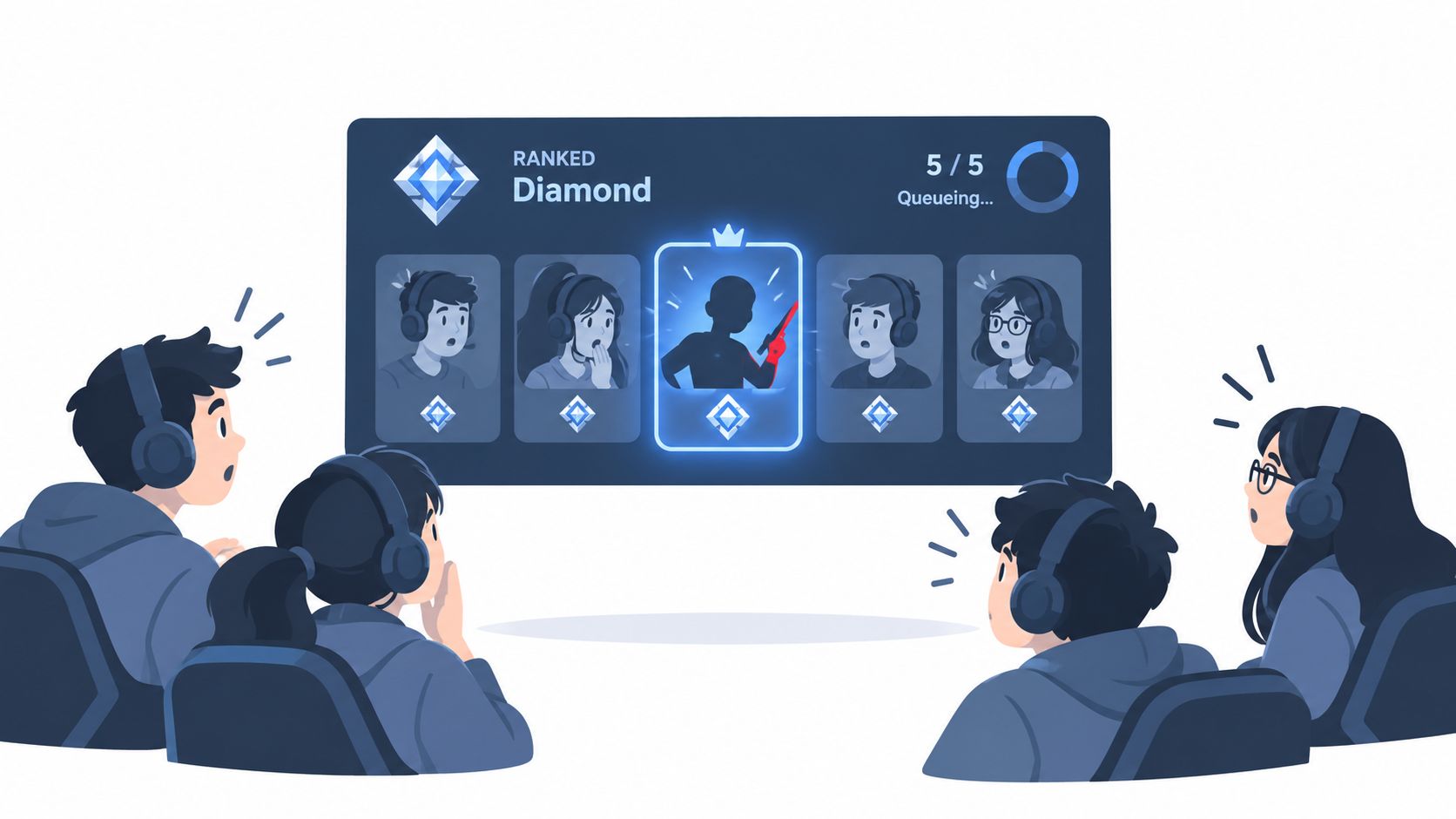
That's why smurfs stand out. The movement is too controlled, the pings are too clean, and the round ends before the opponent team can recover. In League of Legends, the same pattern shows up when a player with a “fresh” profile is already wave-managing, tracking jungle timing, and taking fights with the confidence of someone who's been doing it for years.
Practical rule: if one player's decision-making looks a full tier ahead of the lobby, treat the account as suspicious until proven otherwise.
The argument you'll hear is always the same, a stack insists the player is just cracked today. But a smurf account isn't just a lucky game or a new player on an alt. It's an alternate account used by a more skilled player to enter matches below their real ability, which is exactly why the lobby feels broken instead of merely uneven. The rest of the article gets into how that works, why it keeps happening, and what publishers and communities are doing about it in 2026.
What a Smurf Account Actually Means
The word smurf didn't start as a matchmaking term. In the late 1990s, two brothers playing Warcraft II reportedly used alternate names based on the Smurfs characters so they could keep playing without their reputation following them, and the slang spread from there into older ladder scenes and eventually modern shooters and MOBAs. By the time ranked systems became the default in games like Counter-Strike, Halo, League of Legends, and Valorant, the meaning had hardened into something much more specific, a strong player hiding behind a new account.
How the system gets fooled
Ranked games usually rely on some form of MMR, ELO, Glicko, or TrueSkill style rating logic. The exact math changes from game to game, but the idea is the same, the matchmaker looks at your history, estimates your skill, and tries to place you with players around that level. A fresh account resets that history, so the system has to guess again.
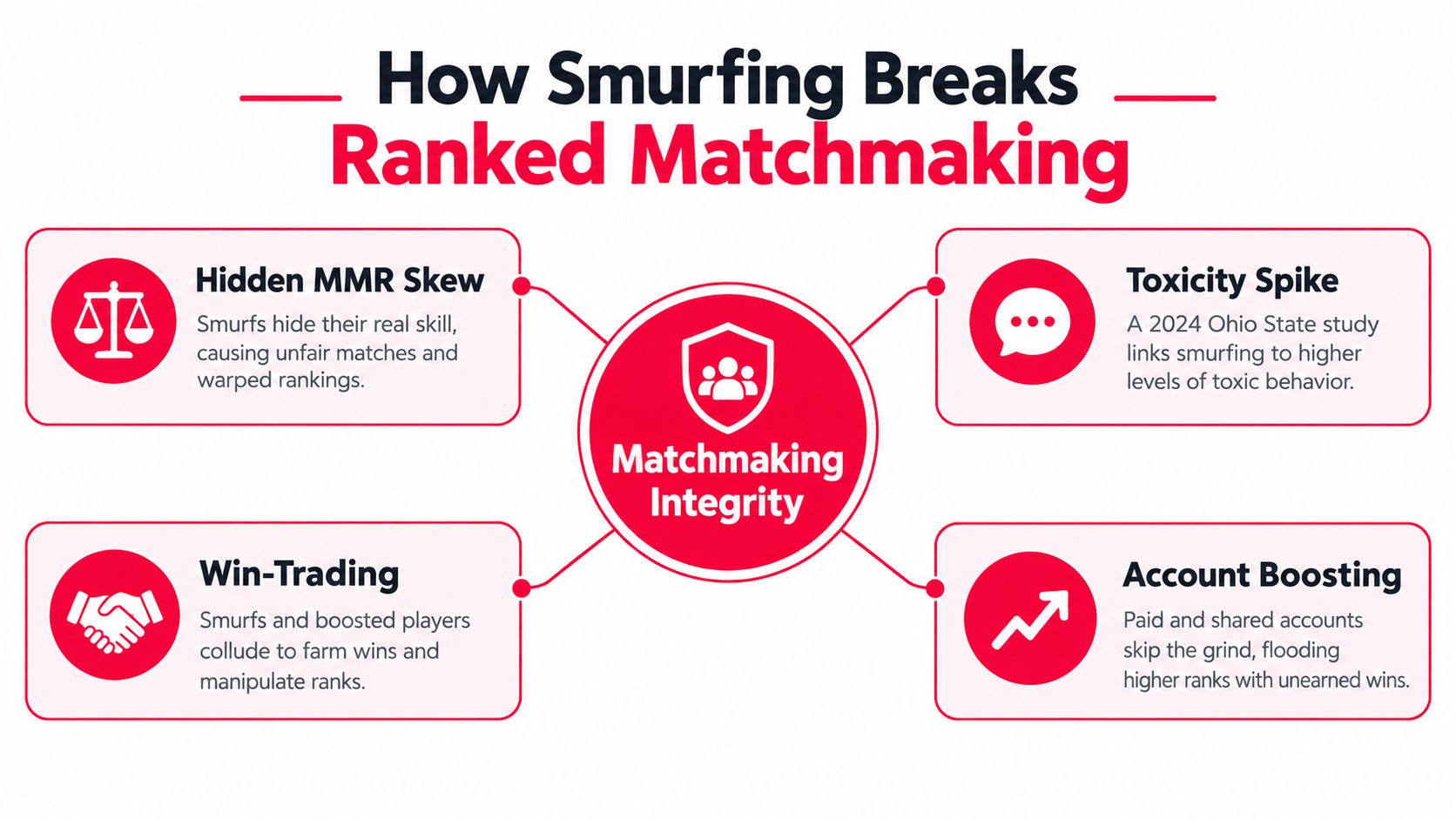
That reset is the opening smurfs exploit. They enter placement games or early ranked games with a hidden skill level the system can't fully see yet, then start winning against people the matchmaker thought were peers. The visible rank lags behind the actual player skill for a while, and everyone in that lobby pays for the gap.
A few terms get mixed up a lot:
- Smurfing means a strong player intentionally using a lower or fresh account to face weaker opponents.
- Account boosting means helping someone else climb, often by playing on or alongside their account.
- Elo boosting services are paid versions of that idea, where someone else grinds the rank for you.
- Throwing is the opposite of smurfing, a player intentionally underperforming on purpose.
Smurfing isn't “I made a second account because I'm learning a new role.” It's “I already know how to win here, and I'm using the reset to do it against lower-skill lobbies.”
That distinction matters because a new player on a second account isn't the same problem. The smurf account is defined by the skill mismatch, not by the existence of the account itself. Once you understand that, the rest of the ranked ecosystem starts making a lot more sense.
Why Experienced Players Create Smurf Accounts
The reasons cluster pretty cleanly. Some players are avoiding pressure. Some are chasing clips. Some are trying to profit. And a few are just being petty.
Common reasons players create smurf accounts
| Motivation | Typical Player | Example Scenario |
|---|---|---|
| Ranked anxiety | A regular player burned out by losses | They want a fresh start after a streak of bad games and use a new account to escape the pressure of their main. |
| Content creation | Streamers, pros, and creators | They run a “Road to” series, farm highlights, or show off off-role mechanics on a secondary account. |
| Account selling or boosting | Sellers and paid boosters | A high-ranked player plays placements or pushes a profile before handing it off. |
| Privacy and anonymity | Pros and semi-pros | They want to queue without exposing their main name or making scrim habits obvious. |
| Griefing or harassment | Toxic players | They create disposable accounts to dodge consequences and keep ruining games. |
The emotional side is real. Some players are tilted, embarrassed, or tired of being recognized on their main, so they buy or make a fresh account and tell themselves it's harmless. Others treat smurfing like content, especially when they want clean highlight clips or a “from Bronze to Master” style series. That's not new, and it's part of why the behavior sticks around.
The darker end is worse. If the goal is griefing, deranking, or targeted harassment, the smurf account becomes a disposable weapon. That's the version most teammates hate, because it's not about skill expression, it's about making someone else's ranked night worse.
For players trying to organize serious parties instead of rolling the dice on randoms, an LFG app for finding teammates is a cleaner answer than queueing into mystery lobbies and hoping the “new” account on your team is legit.
How Smurfing Breaks Ranked Matchmaking
A smurfed lobby is where the rank on screen stops matching the player inside it. The Ohio State research summarized in the brief found that in a study of 328 gamers who played more than 24 hours per week, 69% admitted they occasionally smurfed and 94% believed other players sometimes smurfed, and players perceived smurfs as more toxic than other players. That matters because once players expect hidden skill, every ranked match feels less trustworthy. Ohio State research on gamer smurfing
What the matchmaker sees versus what the lobby gets
The matchmaker sees a fresh or low-experience account and expects a fair placement. The lobby gets someone who already understands spacing, timing, recoil, rotation, and when to force a tempo swing. In Apex, that can look like a “new” player deleting teams with movement and tracking that should not belong in the bracket. In Valorant, it is the player who reads rounds like a veteran and wins duels before the fight has really started.
That mismatch bends the ladder in both directions. Legit players get stomped, while weaker accounts get carried through games that should have taught the system something useful. In League of Legends and Dota 2, that means lane pressure, macro calls, and objective control are no longer clean signals of rank. The result is a ladder that looks normal on paper and feels warped in practice.
Because the visible rank lags behind real skill, the lobby sits far from the normal CS rank distribution the matchmaker assumes. A matchmaker built on rank signals cannot do its job well when one account is hiding a much stronger player.
The side effects spread fast. Queue quality drops when players stop trusting the ladder. Role anxiety spikes in games like Valorant because people start wondering whether the enemy badge is honest. Close losses feel suspicious, even when the system only had partial information to work with.
The recognition signs from earlier all point at the same thing. Hidden skill the matchmaker cannot see.
Useful lens: if ranked play is supposed to separate similar skill levels, a smurf turns those results into bad signals for the system and for everyone in the lobby.
The biggest loss is trust. Once players stop believing the rank means what it says, every close game starts to feel broken.
How Major Publishers Detect and Punish Smurfs
Publishers have moved from “we know this is bad” to layered enforcement, because single-signal bans are easy to dodge. Riot, Valve, and Activision each take different routes, but the direction is the same, more verification, more behavioral signals, and more friction for fresh accounts that act like veterans.
Different games, same enforcement pressure
Riot's approach leans heavily on account confidence and ranked integrity. Valve has long used reputation and queue restrictions in its own ecosystem, and Dota 2's public stance on smurf bans shows how seriously publishers treat the issue when it starts warping high-level play. Activision has also built anti-abuse systems into its competitive stack, especially where skill-based matchmaking and account trust need to work together.
| Publisher / Games | Detection Method | Penalty / Enforcement | Notable 2025-2026 Update |
|---|---|---|---|
| Riot, League of Legends and Valorant | Ranked signals, account behavior, and escalation on suspicious patterns | Restrictions on ranked access and account penalties | Smurfing is increasingly handled as a trust issue, not just a naming issue. |
| Valve, Dota 2 | Behavior and matchmaking integrity systems | Mass bans and queue-level enforcement | Valve stated it permanently banned 90,000 smurf accounts active over a prior period, showing scale-heavy action. Valve action in Dota 2 and Riot smurf detection |
| Activision Blizzard, Call of Duty and Overwatch 2 | Anti-abuse detection and matchmaking tuning | Competitive penalties and match-quality interventions | Enforcement keeps shifting toward layered detection instead of single-account punishment. |
The trend that matters for players is escalation. Phone verification, stronger identity signals, and behavioral review are becoming the default because they raise the cost of disposable accounts. A ban that only hits one account doesn't solve a player who can spin up another one and keep going.
The broad lesson is simple. Publishers are no longer treating smurfing like casual ladder drama, they're treating it like an integrity problem that damages every player who queues.
Spotting Smurfs in Your Own Games
The easiest tell is the account itself. Fresh profiles, tiny match histories, and strange early win streaks are all worth a closer look, especially in Apex, Valorant, League of Legends, and Dota 2. None of those signs prove anything alone, but together they paint a clear picture.
What to watch for in the lobby
- Fresh account badge or hidden history: A profile with almost no visible match record often deserves scrutiny.
- Mechanical mismatch: The crosshair, movement, recoil control, or camera movement looks way cleaner than the rank suggests.
- Unusual early performance: Placement games with perfect reads, extreme KDA swings, or effortless clutch timing are a red flag.
- Confident shotcalling from a “rookie”: A supposed beginner who already knows objective timing and rotations is worth questioning.
The best response is boring, and that's fine. Use the in-game report tools, flag suspicious behavior, and don't waste time arguing in chat. The report matters more than the debate. In games where profiles are partially visible, check for the simplest mismatch, low account age with veteran-level execution.
If your goal is to avoid the problem before the queue starts, verified teammate systems help more than venting after the loss. A service like Gamerplug uses verified ranks and gameplay clips so players can filter squadmates before they ever load in, which is a practical way to reduce the number of mystery accounts in your group.
If a player looks like they belong two ranks higher, act on the pattern, not the excuse.
That mindset keeps you from normalizing bad lobbies. Smurfs rely on teammates shrugging and moving on.
Building a Healthier Ranked Experience in 2026
A healthier ranked scene needs more than bans. It needs systems that make fake trust expensive and real trust visible. That means stricter new-account verification, hardware and behavioral signals, and rank-locked queuing for fresh accounts, because account-level punishment alone doesn't stop a player who treats throwaway profiles like spare ammo.
The social layer matters too. Players have already started building verified-rank communities, small-circle LFG groups, and third-party rank checks to screen out obvious smurfs before queueing. That's not a perfect fix, but it closes the gap when matchmaking can't tell the difference fast enough. It also changes the culture, because people stop treating smurfing like a normal flex and start treating it like a trust failure.
Practical move: build parties from verified teammates first, then queue. You'll spend less time guessing who's real and more time playing matches that actually test your rank.
There's also a broader reporting habit to build. If a lobby feels off, report patterns, not just salt. If a publisher publishes transparency on enforcement, support that model instead of rewarding the games that keep the problem opaque. And if your squad still laughs off smurfing as “just a game thing,” push back on that casually toxic attitude, because it's the same normalization that keeps broken lobbies alive.
For players who want to improve their own ranked habits while avoiding fake lobbies, these ranked improvement tips pair well with verified teammate discovery. The goal isn't just climbing, it's making sure the games you play still mean something. When the ladder feels trustworthy, every win and loss teaches you more, and that's the part ranked is supposed to do.
If you're tired of guessing whether the next teammate is real, use a system that shows you more than a username. Gamerplug helps players find ranked teammates with verified profiles, gameplay clips, and filters that make it easier to build squads you can trust. Visit Gamerplug if you want a cleaner way to find gaming teammates instead of gambling on random lobbies.