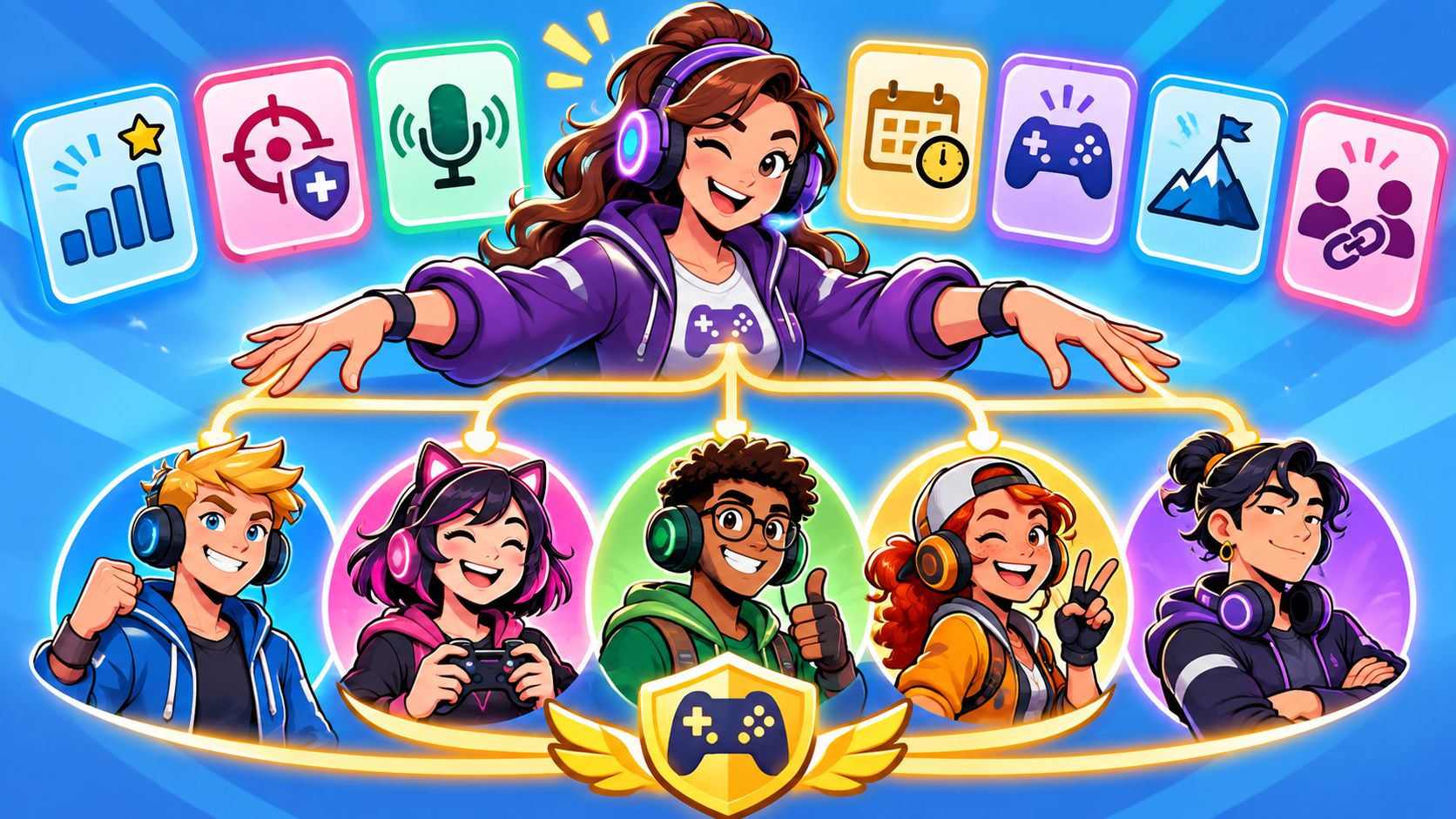
You're assembling a ranked party, and everyone says they're ready. Then you discover the support plays at Diamond level, the carry is still learning Bronze lobbies, someone won't use voice, and your most aggressive teammate has to leave halfway through the session. The game hasn't loaded, but you're already negotiating problems that should've been settled before anyone clicked Ready.
Random queues don't fail only because someone misses shots. Players arrive with different expectations about roles, comms, effort, and time. A good teammate for a relaxed Fortnite session might be a terrible fit for your ranked Valorant grind. Neither player has to be bad for the pairing to feel awful.
Matchmaker game questions work best when they expose a specific mismatch, not when they turn party chat into a job interview. Ask what you need, share your own answer, and leave room for a useful follow-up.
- Fix technical problems separately. You can work to boost gaming performance in 2026, but smoother gameplay won't settle conflicting expectations.
- Screen for the session you want. Rank, communication, availability, and attitude should make sense together.
- Make disagreement cheap. Finding out you're incompatible before queuing beats arguing during overtime.
Table of Contents
- 1. What is your current rank or skill level, and how can it be verified?
- 2. What is your preferred play style or role?
- 3. Do you use a microphone for voice comms?
- 4. What is your team-play and tilt-tolerance preference?
- 5. When do you usually play, and what time zone are you in?
- 6. Which platform do you play on, and are you open to cross-platform play?
- 7. Which game modes are you looking for?
- 8. What are your gaming goals: competitive grind, casual fun, tournaments, or content?
- How the 7 Matchmaker Questions Compare
- Turn These Questions Into Your Squad Checklist
1. What is your current rank or skill level, and how can it be verified?
Your new duo says they're Diamond. They mean their peak rank from a previous season, on a different role, before a long break. You mean their current ability in tonight's ranked lobby.
Ask about current rank, context, and evidence together. A badge without context leaves too much room for misunderstanding.
Copy-ready question: What's your current rank in this game, are you still in placements, and can you share a current profile or match history?
Check the claim without turning it into an interrogation
For a League of Legends duo, confirm the account, current queue, and intended role. A support main learning jungle deserves a different conversation from someone playing their established role.
- Check recency. Ask whether placements, inactivity, or a role change make the displayed rank less representative.
- Use appropriate evidence. Prefer official profile information where available. Treat gameplay clips as context, not proof of consistent performance.
- Set a workable range. Recruit within the game's party restrictions, then decide how much skill variation your squad welcomes.
A guide to rank verification can help you distinguish a profile claim from information you can check.
Say you're finding Apex Legends teammates for a serious climb. A player slightly outside your preferred tier who communicates clearly may suit you better than someone with the exact badge who refuses to coordinate.
Verification checks a claim, not someone's character. Don't treat it as a guarantee against smurfing, poor conduct, or an off night. Never ask for login credentials or private account access.
2. What is your preferred play style or role?
Both players lock their comfort pick. Both expect resources, protection, and someone else to make the boring decisions. Your duo has plenty of confidence and no agreement about who enables whom.
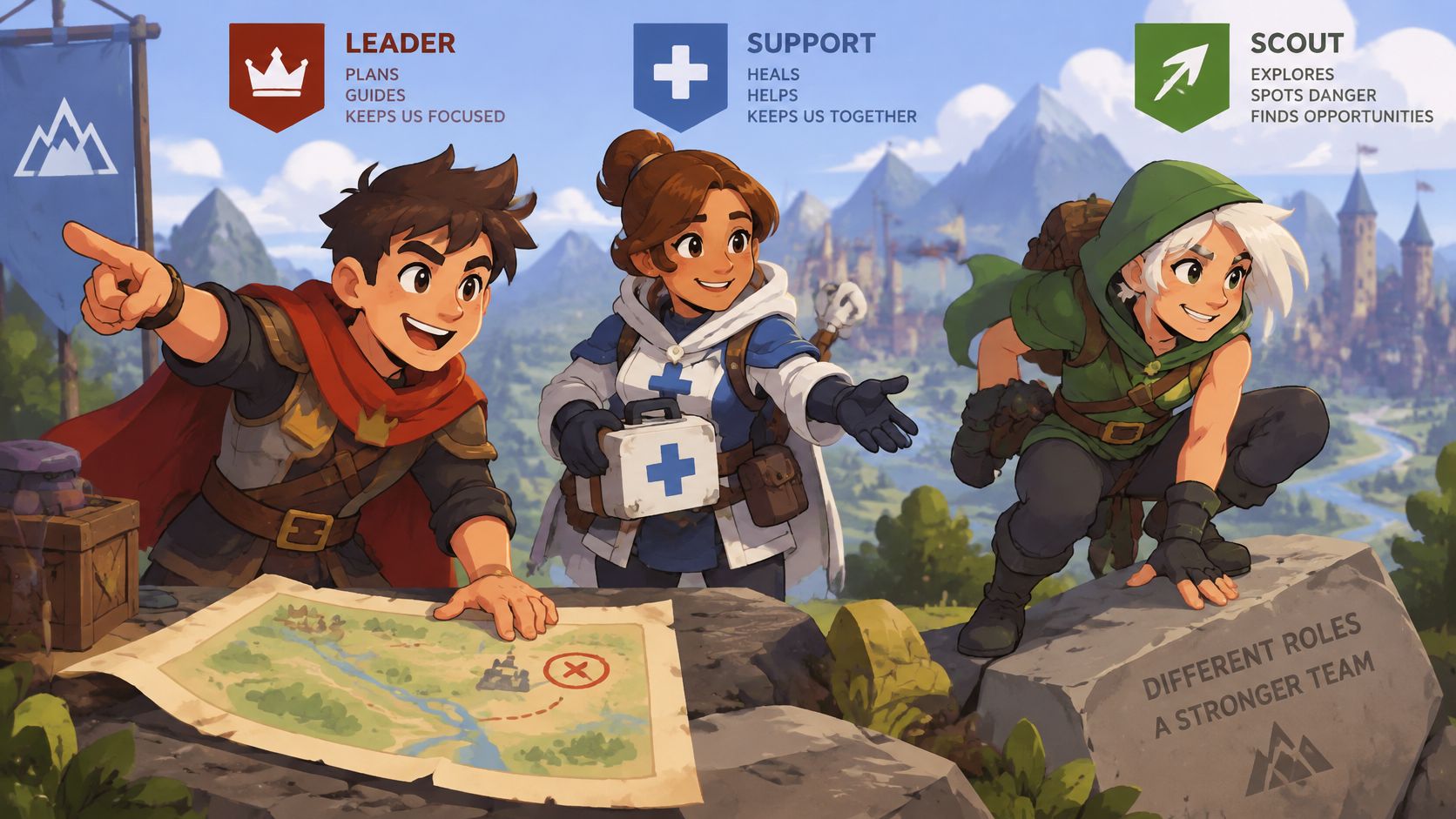
Ask what the player does, not just what role they select.
Copy-ready question: How do you like to contribute, what role do you want tonight, and what can you comfortably switch to if that role's covered?
A Microsoft Research matchmaking study distinguished skill-oriented and socially oriented player preferences. That's a useful reminder to ask separately about competitive expectations and social fit rather than assuming rank tells you everything.
Translate role labels into decisions
An aggressive Apex player might initiate fights after scouting an escape route. Another might chase every cracked shield without checking where the squad is. Both can describe themselves as aggressive, so ask what happens when a push looks risky.
For a League of Legends pairing, clarify whether your carry wants a lane partner who pressures early or someone who prefers safer scaling. Neither preference is automatically wrong, but expecting opposite plans creates friction.
Practical rule: Recruit for the job your squad needs filled, not the most impressive role description.
A useful answer sounds like this: I prefer entry, I'll follow the agreed engage call, and I can play utility when someone else takes that spot.
Watch for fake flexibility. Someone who offers to fill but resents every assignment isn't giving you a dependable backup. Agree on the starting arrangement before champion select or character selection, then revisit it when the lineup changes.
3. Do you use a microphone for voice comms?
You call a rotation. Nobody answers. After the fight, your teammate types that they were listening through speakers and couldn't hear you clearly.
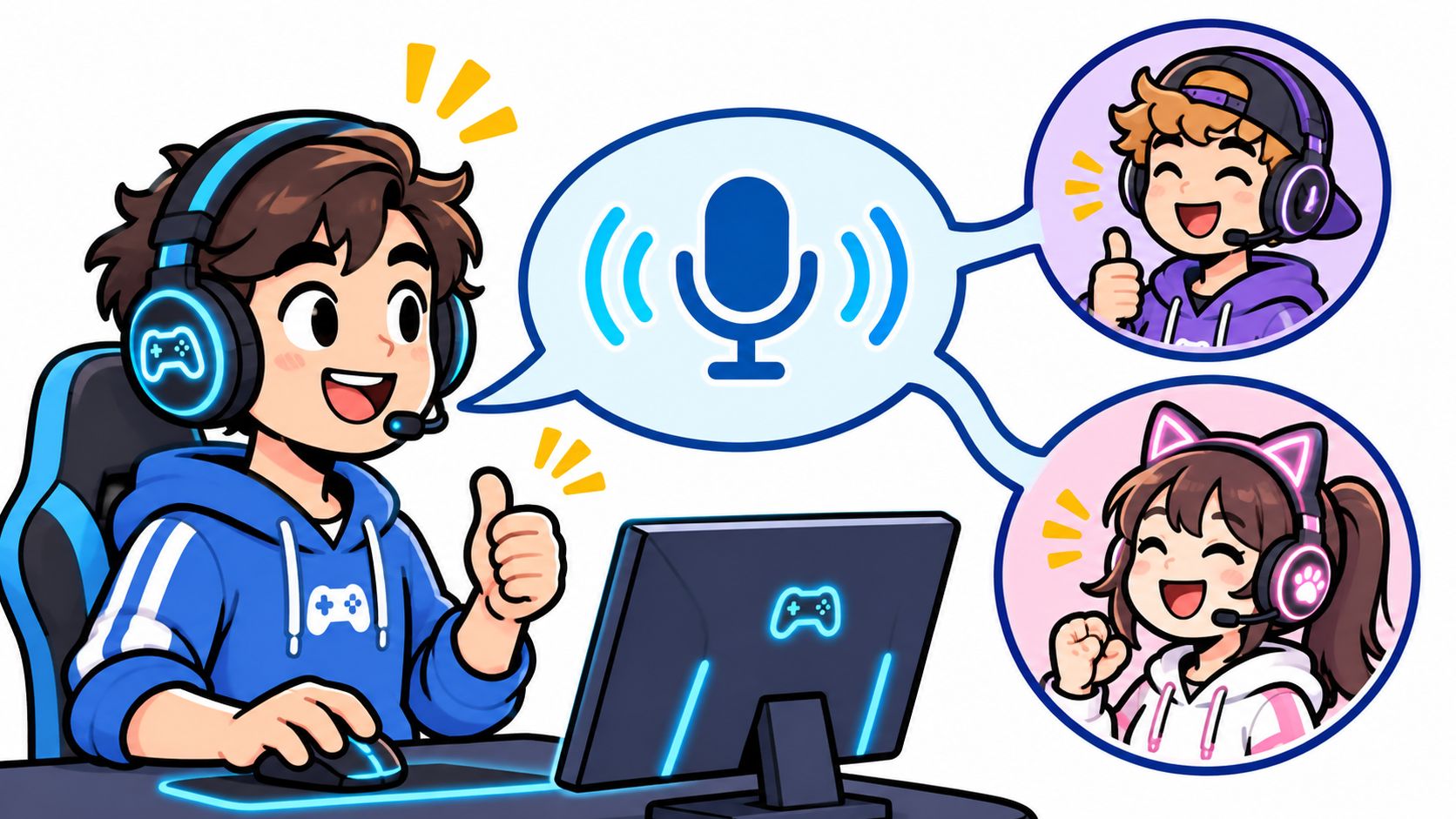
Owning a microphone isn't the same as agreeing to communicate. Ask about the channel, the amount of talking, and what happens when voice isn't available.
Copy-ready question: Are you using voice tonight, do you prefer short callouts or social chat, and what should we use if you can't speak?
For Valorant teammates, separate useful information from backseat instructions. A player may welcome location callouts but hate hearing a running commentary while trying to clutch. Use this guide to voice chat for gaming to plan the setup, then agree on the behavior yourselves.
Agree on language and boundaries
- Communication channel. Choose in-game voice, a console party, or Discord before joining the match.
- Callout style. Agree on clear location names, concise information, and when to leave the channel quiet.
- Accessibility and comfort. Allow a clear answer about text, pings, push-to-talk, or listening without speaking.
A IIIT Hyderabad overview of matchmaking work discusses language, cultural norms, and social bias as issues conventional matchmaking can overlook. Ask which language teammates can comfortably follow, rather than assuming an accent means poor communication.
Say your casual console squad includes someone playing in a shared room. Ping-led coordination might suit everyone perfectly. For a ranked squad that specifically needs spoken calls, politely acknowledge the mismatch instead of pressuring them to unmute.
Require a communication method when necessary, not personal disclosure. Nobody owes the squad an explanation of their identity, household, or reasons for avoiding voice.
4. What is your team-play and tilt-tolerance preference?
The Friday night squad starts with jokes and ends with accusations. A failed push becomes an argument about who always throws, and suddenly everyone has somewhere else to be.
Asking whether someone is chill won't tell you much. Give them a situation where staying constructive takes effort.
Copy-ready question: When we lose a winnable match or someone repeats a mistake, do you want a quick review, a quiet reset, or a break? How do you give feedback?
A study of toxicity in team-based gaming found that teammate toxicity could be two to more than three times more common than opponent toxicity, depending on match outcome. That makes your own party's conduct worth screening, not just the lobby outside it.
Set a reset rule before anyone needs it
For a ranked squad, agree that feedback describes a decision and a next action. Saying the team should wait for utility before entering gives everyone something to do. Calling someone useless doesn't.
- During play. Keep calls actionable. Save disagreements that need explanation for a safe moment.
- After a loss. Ask whether everyone wants feedback before launching into a review.
- At the stopping point. Let someone request a break without demanding another match to win back lost rank.
High-energy banter only works when everyone enjoys it. Calling harassment a joke doesn't make it an agreed team preference.
Say your squad wants serious improvement but dislikes mid-round criticism. You can agree to play the match out, discuss a specific decision afterward, and stop if frustration keeps rising.
Don't confuse tilt tolerance with accepting abuse. Threats, slurs, and targeted harassment aren't compatibility quirks. Leave, block, or report through the relevant platform rather than debating whether someone meant it.
5. When do you usually play, and what time zone are you in?
A teammate can match your rank, role, and sense of humor while never being online when you are. Availability needs to describe a usable session, not a vague promise to play sometime.
Copy-ready question: Which days and local time windows can you reliably play, what time zone are you in, and when do you need to be finished?
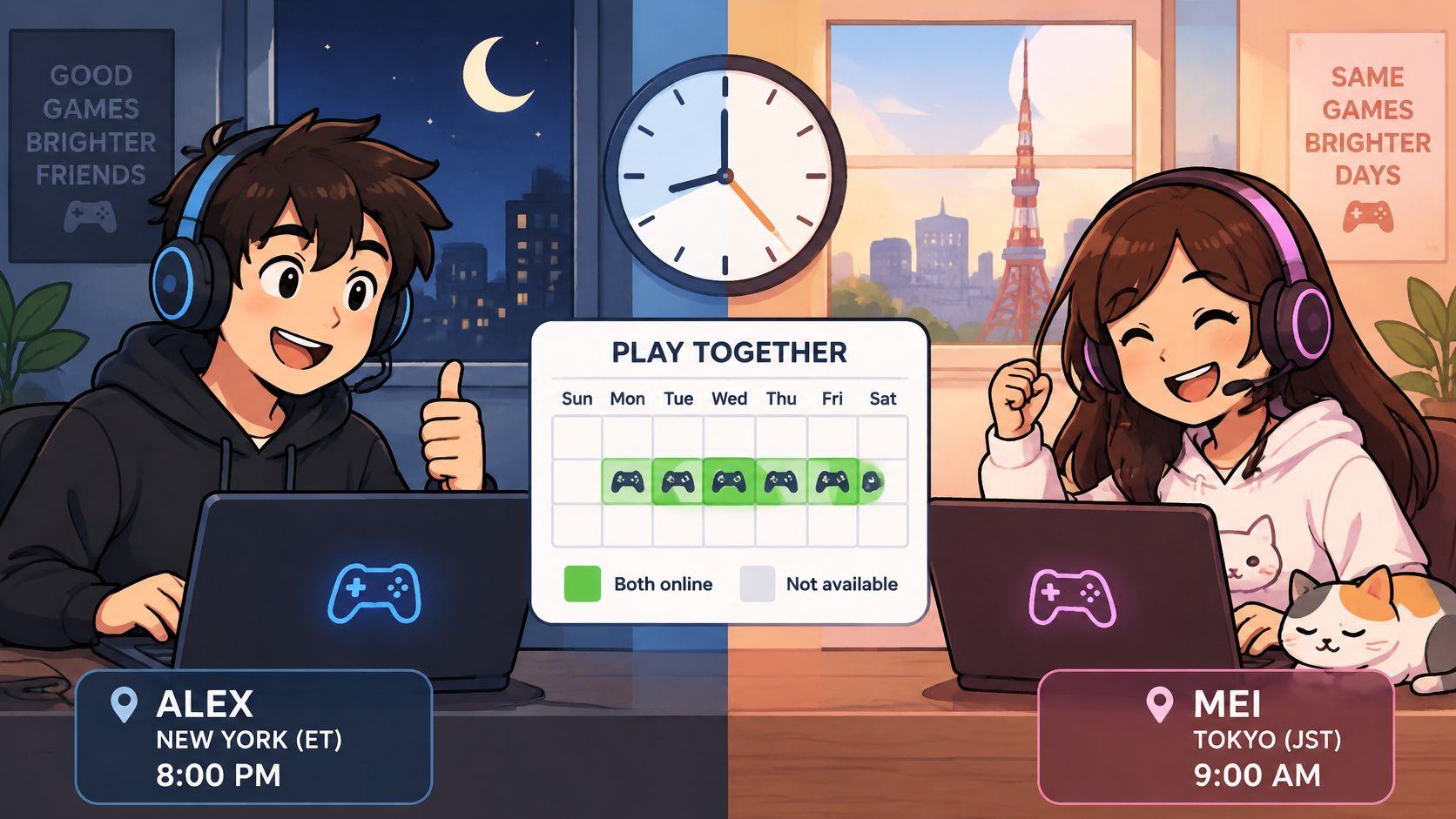
In Unity's 2022 Multiplayer Report, 36% of surveyed multiplayer gamers across the United States, United Kingdom, South Korea, and Japan identified quickly joining a game with others as an important enjoyment feature. Don't make your own group harder to assemble by leaving availability unclear.
Separate arrival time from the last queue
Say your regular support is available after dinner but must log off for an early shift. Your carry becomes free around that teammate's bedtime. Calling both players evening gamers hides the actual mismatch.
Use a shared calendar event that displays each player's local time. Include the meeting time, expected finish, and a last-queue decision that leaves room for the mode you're playing.
- Reliable window. Distinguish a recurring commitment from occasional availability.
- Notice expectations. Agree on how players should flag lateness or cancellation.
- Regional fit. Check whether your overlapping hours also allow a server region everyone can reasonably use.
A narrow schedule means fewer potential teammates. That's still better than building a roster around people who can't attend.
For casual squads, keep the commitment light and welcome drop-ins. For tournament practice, ask for a clear attendance commitment and arrange substitutes rather than treating every absence as a personal betrayal.
6. Which platform do you play on, and are you open to cross-platform play?
The squad is ready in chat, but someone can't join the lobby. You've checked the game title and forgotten that platform, edition, settings, and mode can affect whether you can play together.
Crossplay is something to confirm for your exact setup, not assume from a familiar game name.
Copy-ready question: Which platform and game version are you using, is crossplay enabled for this mode, and do you play on controller or mouse and keyboard?
For a Fortnite squad or a Call of Duty party, check the current game's support information and account settings before promising a mixed-platform session. This cross-platform compatibility guide is a useful starting point, but your actual lobby is the practical test.
Run a lobby check before committing
- Confirm the version. Make sure everyone has the appropriate edition, updates, and required content.
- Check the account connection. Use the game's official account-linking process where required, without sharing passwords.
- Agree on input expectations. State any controller or mouse-and-keyboard preference directly rather than arguing after a loss.
- Test the full setup. Join the party, confirm the mode is selectable, and check voice before scheduling regular play.
Say a Rocket League player has both a console and a PC. Listing only their usual device might hide a workable option for your group. Ask what they can use tonight.
Opening the squad to more platforms can widen your search, but it doesn't guarantee an identical experience for everyone. Voice arrangements and platform-specific settings still need checking.
Treat platform compatibility as a hard requirement and platform preference as negotiable. Don't reject a suitable teammate over hardware branding if the game supports your arrangement and everyone accepts the setup.
7. Which game modes are you looking for?
You recruit for Apex, fill the party, and discover that someone wants ranked while another wants a relaxed warm-up. Everyone joined for the same title, but not the same session.
Name the exact mode before sending invites. Include any restrictions or preparation that matter.
Copy-ready question: What mode do you want tonight, are we warming up first, and are you happy to stay with that plan unless everyone agrees to change?
A looking-for-group post that only names Valorant leaves too much unanswered. Ranked, an unrated session, and a custom practice lobby call for different expectations, even when the players enjoy the same agents and maps.
Make the session plan explicit
Use a short listing that tells someone what they're joining:
- Main activity. State ranked, casual, customs, practice, or the specific mode name.
- Preparation. Explain whether warm-up is optional, shared, or handled before joining.
- Switching rules. Ask before changing modes, especially when someone joined for a specific purpose.
- Queue fallback. Decide whether you'll wait, change activities, or reschedule if the preferred mode is difficult to fill.
Say your regular squad plays ranked, but someone wants to learn an unfamiliar character tonight. A casual session could be a good compromise if everyone agrees. Sneaking practice picks into a serious climb isn't the same arrangement.
Before you invite: Tell players what they're joining tonight, not everything the group might eventually play.
Flexibility helps mixed-interest groups, but unlimited flexibility can leave nobody satisfied. Keep the main activity clear and make optional changes optional.
For a niche mode, check the in-game availability and practical queue conditions before organizing the evening around it. Don't promise an easy session you haven't confirmed you can start.
8. What are your gaming goals: competitive grind, casual fun, tournaments, or content?
A squad can agree on ranked mode and still disagree about why it's playing. Someone wants promotion, someone wants relaxed company, and someone wants entertaining footage even if the risky play costs the match.
Mode describes the activity. Goals describe what players want from it.
Copy-ready question: What matters most to you right now, climbing, relaxing, tournament practice, or making content, and what would make this squad worth coming back to?
For an amateur tournament roster, ask about preparation and willingness to review mistakes. For a casual group, ask whether players welcome experimentation or prefer familiar strategies. Don't recruit someone into an improvement project when they've clearly said they want downtime.
Agree on what you won't sacrifice
A useful answer includes a priority and a boundary. A player might want to climb while refusing to turn every loss into a lengthy review. A creator might want funny moments while agreeing not to sabotage teammates for a clip.
- Competitive squads. Discuss practice expectations, feedback, and how roster decisions will be handled.
- Casual groups. Clarify whether relaxed means low pressure, social conversation, experimental picks, or all of those.
- Content groups. Get agreement before recording or broadcasting teammates' voices and conversations.
- Mixed-goal squads. Separate serious sessions from experimental or content-focused sessions.
Say you're building a League of Legends duo partnership. Both players want ranked, but only one wants coaching during play. Agreeing on post-game feedback may solve that mismatch without abandoning the pairing.
Revisit goals when the game or someone's availability changes. A teammate changing priorities isn't automatically unreliable. The problem is continuing to promise the old arrangement after it no longer fits.
How the 7 Matchmaker Questions Compare
| Question | Key Signal | Best For | Main Risk |
|---|---|---|---|
| What is your current rank or skill level, and how can it be verified? | Current game rank and verification method | Balanced ranked teams | Ranks may be outdated or difficult to verify |
| What is your preferred play style or role? | Preferred role, aggression level, and flexibility | Building complementary team compositions | Roles can be subjective or change by mode |
| Do you use a microphone for voice comms? | Mic availability and preferred communication method | Teams that rely on coordinated callouts | Voice chat may be uncomfortable or toxic |
| What is your team-play and tilt-tolerance preference? | Attitude toward losses, mistakes, and competitive intensity | Finding teammates with compatible attitudes | Self-reported behavior can be unreliable |
| When do you usually play, and what time zone are you in? | Typical availability and time zone | Recurring squads and scheduled practice | Schedules can change or fail to overlap |
| Which platform do you play on, and are you open to cross-platform play? | Platform, crossplay preference, and input type | Finding players who can queue together | Crossplay support and input balance vary |
| Which game modes are you looking for? | Preferred modes and competitiveness level | Aligning squads on match type and pace | Modes may be hard to fill or change over time |
| What are your gaming goals: competitive grind, casual fun, tournaments, or content? | Primary goal and level of commitment | Long-term teams, tournament rosters, and creator partnerships | Goals may differ or change over time |
Turn These Questions Into Your Squad Checklist
Don't paste every question into a stranger's inbox and demand a completed application. Pick the priorities that could ruin the squad you're trying to build, then share your own answers first. Ranked duos might start with current rank, role, and communication, while a regular tournament roster needs a firmer conversation about attendance and goals.
Separate hard requirements from preferences. Being able to join the same mode is a requirement. Preferring a particular character, platform, or conversation style might leave room for compromise if the rest of the fit is strong.
Keep the agreement short enough to use
Save the answers in a shared note or pin them in party chat. Record decisions rather than vague personality labels.
- What we play. Include the game, mode, platform arrangement, and intended competitive level.
- How we coordinate. Note roles, communication channel, language, and feedback preferences.
- When we meet. Add the reliable availability window and how players should flag a change.
- Where we draw the line. State conduct boundaries, recording consent, and when the squad should pause.
If you're organizing a larger community, you can compare Kiwiform with Google Forms when choosing a way to collect availability and preferences. Keep the form focused on information that changes a roster decision. Don't collect sensitive identity details just because a form makes them easy to request.
For teammate discovery, our Gamerplug profiles combine gameplay clips and verified ranks, with play style, mic usage, team-play preference, and schedule information. We're currently in development, so readers can join the waitlist rather than planning tonight's session around access.
Treat the first session as a mutual fit check
Answers give you a starting point, not a guarantee. Pay attention to whether teammates follow the agreed plan, respect boundaries, and communicate when something changes.
After playing, ask whether the pace, comms, and expectations worked. Discuss a specific mismatch rather than declaring someone a bad teammate. Maybe the player suits your casual nights but not tournament practice, or they're a strong duo partner whose schedule won't support a regular roster.
The goal isn't to find a flawless player. It's to find people whose expectations fit yours. Save the questions that prevent your usual queue problems, keep your own answers current, and make the next invitation with a clear plan.
We're building Gamerplug to help you find squadmates through gameplay clips, verified ranks, and clear preferences instead of a username and a guess. Visit Gamerplug to join the waitlist, and have your rank, play style, comms preference, and schedule ready for your next teammate search.