
You queue for ranked after work, ready to make a serious push. Two teammates never join voice, one refuses to play the team's needed role, and the fourth disappears after the first lost round. Your aim may be sharp, but a squad built from four unrelated habits rarely plays like a unit.
That's the weakness of relying on random matchmaking for organized competition. A competitive gaming platform should do more than place players near the same rating. It should help you find gaming teammates who fit your role, schedule, communication style, and expectations before the match starts.
The shift from arcade contests to online competition created enormous player pools, but it didn't solve the human problem. Atari's 1980 Space Invaders Championship drew over 10,000 players across the United States, demonstrating that structured competition could attract mass participation long before modern esports apps existed, as documented in this history of gaming tournaments. Today, the winning advantage often comes from building the right roster before you ever enter the queue.
Table of Contents
- The Reality of Random Matchmaking
- Core Features of Modern Gaming Platforms
- Why Equal Skill Does Not Guarantee Team Chemistry
- Comparing Platform Models for Different Player Types
- How to Evaluate Teammates Using Verified Profiles
- Solving the Cross-Platform Squad Building Challenge
- Building Your Roster and Entering the Arena
The Reality of Random Matchmaking
Random matchmaking is built to start a game. It isn't built to build a team.
You can receive a teammate with the same rank who plays every engagement differently from you. You might hold space and wait for information while they push alone. You might want short, focused sessions while they only play late at night. You might call rotations clearly while they refuse voice chat entirely. None of those conflicts appear on a rank badge.
That's why solo queue feels so inconsistent. The system may create a mathematically reasonable lobby, but it doesn't know whether the players can communicate under pressure, accept coaching, fill a secondary role, or return for another session tomorrow. In ranked Apex Legends, a mechanically strong fragger can still weaken the squad if nobody knows who's calling zones or managing utility. In Valorant, five players with capable aim can lose to a less flashy roster that shares information and trades consistently.
The hidden cost of anonymous LFG posts
Traditional looking-for-group posts often give you a username, a game, and a vague request for “good vibes.” That isn't enough information to make a useful decision. A player can claim to be flexible, communicative, and committed, then vanish after one bad round.
A dedicated LFG app guide makes the distinction clear. Looking for group systems work best when they turn an undefined social search into a structured request with criteria such as game, mode, rank range, platform, microphone requirement, and open slots.
Squad leader rule: If you can't describe what you need from a teammate before inviting them, you aren't recruiting. You're gambling.
The practical answer isn't to abandon matchmaking altogether. Use it for fast games, warmups, and low-stakes sessions. For ranked climbing or amateur tournaments, build a repeatable pool of players who share your competitive standards.
Consistency beats one perfect session
A good teammate isn't necessarily the player with the highest visible rank. It's the player who arrives when they say they will, communicates clearly, understands the team's plan, and responds constructively after a mistake. Those traits create a stable environment where players can improve together.
Your first filter should therefore be reliability. Ask when the player normally plays, which roles they enjoy, whether they use voice chat, and what kind of session they want. Then check whether their clips and profile support those answers. The goal is simple, stop rebuilding your team from zero every time the queue ends.
Core Features of Modern Gaming Platforms
A serious competitive gaming platform has three jobs. It verifies who players are as competitors, gives them places to compete, and keeps the team organized between matches.
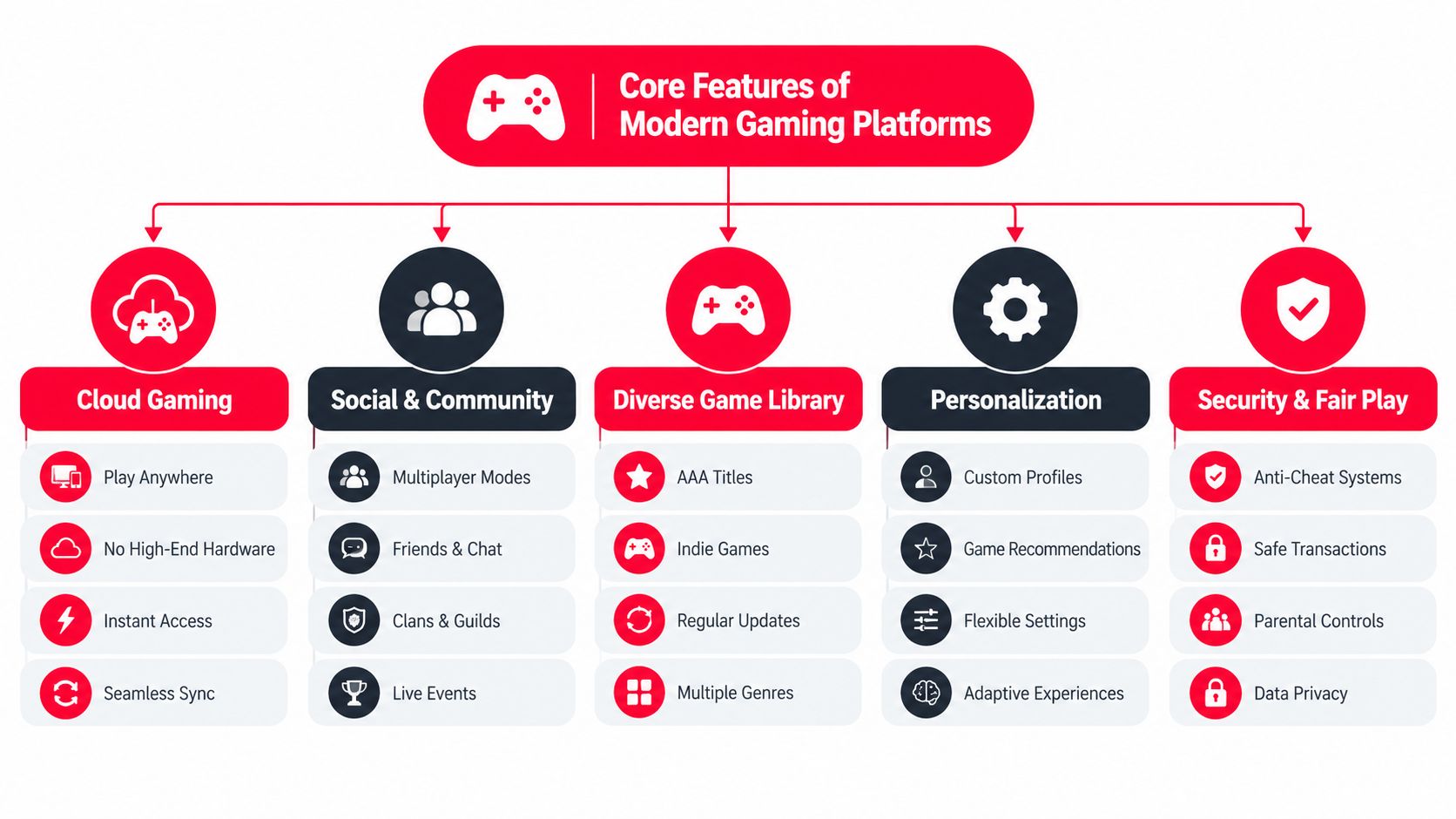
Verification replaces guesswork
A basic server browser shows open rooms. A modern platform adds context.
For games such as Apex Legends, Valorant, and League of Legends, rank and performance data can sync from official game APIs. That gives teammates something stronger than a self-reported “high elo” claim. A verified profile can show whether a player competes in the mode they're advertising, while gameplay clips reveal how they make decisions when the fight gets messy.
Verification shouldn't stop at rank. Useful profiles also show platform, preferred roles, mic usage, team-play preference, and normal gaming schedule. Those details answer the questions that rank can't:
- Can this player communicate? Look for a clear mic preference and evidence of useful callouts.
- Will the schedule work? Compare usual play windows before you start building expectations.
- Does the role fit the roster? A squad with four players demanding the same position still has a structural problem.
- Is the experience current? Recent clips and synced data are more useful than an old achievement.
Short clips also matter beyond games. Players who publish highlights often need a reliable way to present them, and a practical short form video platform guide can help creators package gameplay for discovery without turning every profile into a full production project.
Tournaments turn players into teams
Tournament infrastructure is the second pillar. A useful system should support more than a single-elimination bracket. Different events need different formats, including Double Elimination, Swiss, and Round Robin, with registration, check-in, match reporting, and live leaderboards.
That structure changes player behavior. A squad that only queues together can avoid difficult conversations about roles and preparation. A squad entering a bracket has to define its roster, confirm availability, understand the format, and manage results. The platform becomes the connective tissue between casual play and organized amateur esports.
Team management keeps chemistry alive
The third pillar is persistent communication. Group threads, direct messages, @mentions, read receipts, reactions, and tournament discussions help players coordinate across sessions instead of starting over in a new voice channel every night.
Here, modern platforms separate themselves from disposable LFG boards. A post gets you an introduction. A persistent squad space helps you establish strategies, record expectations, and decide whether the group deserves another run.
The broader esports economy shows why this infrastructure matters. It reached about USD 2.6 billion in 2025 and is forecast to reach roughly USD 6.2 billion by 2031, with a projected 15.73% CAGR, according to this global esports market analysis. That growth supports tournaments, media, sponsorships, digital goods, and the tools that help recurring competitive activity happen. A platform that only finds a random teammate addresses one moment. A platform that verifies players, forms squads, and runs events supports the entire competitive loop.
Why Equal Skill Does Not Guarantee Team Chemistry
Equal skill is a useful starting point. It isn't a team strategy.
A rank measures performance within a game's system. It doesn't fully measure patience, communication, tilt response, role discipline, or willingness to follow a caller. Two players can sit at a similar rating and still create completely different experiences for everyone around them.
Researchers studying 5.4 million online chess matches found that optimizing pairings for engagement instead of equal skill increased engagement by 4% to 6%, with theoretical gains reaching up to 50% under some conditions, according to the INFORMS matchmaking study. The lesson applies beyond chess. Recent wins, losses, frustration, confidence, and preferred challenge level affect whether a player wants to continue.
Matchmaking is not team formation
Matchmaking answers one question: who should play against whom?
Team formation answers a harder set of questions:
- Who communicates in a way the group understands?
- Who can cover the required role without complaining?
- Who plays during the same sessions?
- Who handles losing without blaming teammates?
- Who wants improvement, casual competition, or tournament preparation?
A static rating cannot answer those questions. A stronger gaming matchmaking app uses rank as a filter, then adds behavioral and social signals. A player on a losing streak may want a lower-pressure session. A player on a winning streak may want difficult opponents. Someone who normally plays a support role may be far more valuable to your roster than another high-ranked duelist.
Chemistry has observable signals
Chemistry isn't magic. You can inspect it.
Watch how a candidate explains a clip. Do they identify the information they had, the decision they made, and what they'd change? Or do they only blame teammates and celebrate aim? Look for whether their gameplay supports the role they claim. A player who says they enjoy setting up teammates should show positioning, utility, timing, or information gathering that makes that claim credible.
Then run a short trial session with a defined goal. Choose a role split, agree on communication standards, and play enough rounds to see how the group reacts to pressure. Don't judge only by the scoreboard. Track whether players share information, recover after mistakes, and keep the plan intact when the match becomes chaotic.
The useful question isn't “Are they as good as me?” It's “Will this player make the next four teammates easier to play with?”
A strong platform should let you filter for mic use, team-play preference, schedule, and challenge level before the invite. That moves the search from rank matching toward human team formation, which is where most long-term ranked success is decided.
Comparing Platform Models for Different Player Types
Not every player needs a full esports suite. A weekend Fortnite player looking for a friendly duo needs speed and social fit. A Valorant roster preparing for a bracket needs verified identities, organized communication, and event administration.
The main choice is between broad tournament aggregators and focused teammate-finding apps. Both can be useful, but they solve different problems.
Platform Model Comparison
| Feature | Tournament Aggregators | Teammate-Finding Apps |
|---|---|---|
| Primary purpose | Discover and run competitive events | Find compatible players and form squads |
| Verification depth | Often centered on event eligibility and registration | Can combine verified ranks, gameplay clips, role preferences, and social signals |
| Cross-platform support | Depends on the tournament and game rules | Usually built around filtering players by game, device, and availability |
| Communication tools | Event announcements, match rooms, and bracket updates | Direct messages, squad threads, group chat, and ongoing coordination |
| Tournament flexibility | Strong for event discovery and bracket operations | Strong when squad formation and event entry need to happen in one workflow |
| Best fit | Established teams, event organizers, and players seeking competitions | Solo players, duos, casual squads, and rosters still being built |
| Main weakness | May not help you find the right teammates first | May offer less value if you already have a complete, stable roster |
A tournament aggregator makes sense when your roster already exists. You need rules, registration, seeding, scheduling, and results. If you're a community organizer, that infrastructure can save hours of manual administration.
A teammate-finding app makes more sense when the roster is the problem. You need to find a gaming duo, replace an unreliable player, or assemble a squad across different platforms. Search tools should let you specify the game, mode, rank range, mic requirement, platform, and available slots instead of forcing you to sort through anonymous posts.
For a player comparing a dedicated esports team finder, the decision comes down to workflow. Do you need to enter an event, or do you first need people worth entering with? Choose the model that solves your current bottleneck.
Match the tool to the competitive objective
Use a focused discovery app for:
- Ranked climbing: Filter for role fit, voice chat, and shared sessions.
- Casual team play: Prioritize personality, game mode, and low-pressure expectations.
- Cross-platform groups: Confirm device support and communication options before inviting.
- Amateur esports: Combine teammate discovery with bracket registration and persistent team chat.
Use an aggregator when your players are already selected and your priority is event execution. The wrong tool creates friction. The right one shortens the path from “I need teammates” to a roster with a clear plan.
How to Evaluate Teammates Using Verified Profiles
Finding a profile is easy. Choosing the right teammate takes a repeatable filter.
Start with the clip, not the rank. A verified rank tells you where the player has competed. A gameplay clip shows how they think. Even a short clip can reveal positioning, target priority, utility use, awareness, patience, and whether the player communicates information that helps the team.
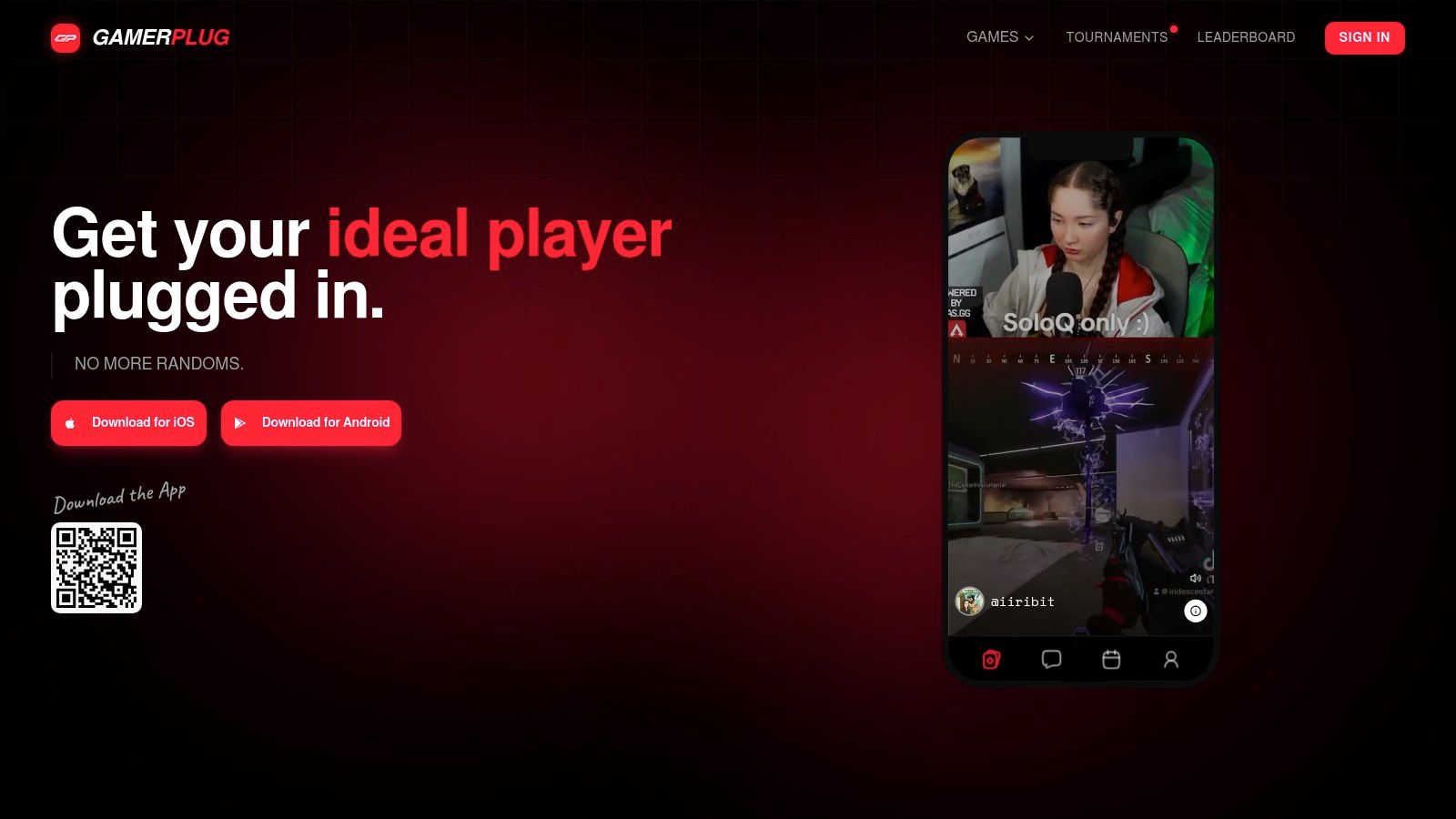
Use this evaluation sequence
Confirm the game and mode. A player may be strong in one title or mode and unsuitable for the one you play. Check the exact game before judging a profile.
Check the verified rank. Treat rank as a baseline, not a complete verdict. Verify that the account information aligns with the player's stated role and competitive goal.
Watch the gameplay clip. Look for decisions rather than only eliminations. Does the player hold useful angles, trade for teammates, disengage when needed, and use resources with purpose?
Read the social tags. Mic usage, team-play preference, schedule, and role preferences often predict session quality better than a badge. A great player who never speaks may not fit a squad that depends on live calls.
Inspect the communication. Send a direct message with a concrete question. Ask what role they want, when they play, and what they expect from teammates. Clear answers are a green light. One-word replies, instant trash talk, or demands for a carry are warning signs.
Run a trial session. Agree on the mode, roles, and session length before queueing. Afterward, ask whether the group felt coordinated. You're testing habits, not searching for one perfect match.
Red flags that should end the trial
A low-quality profile usually reveals itself quickly. Avoid players who refuse to show relevant gameplay, inflate their rank without verification, blame every loss on teammates, ignore agreed roles, or become hostile when corrected. A player who repeatedly cancels without communicating will create the same problem at tournament time.
Trust tools also matter. Optional identity badges, clip-based profiles, and in-app reporting give communities more ways to discourage impersonation, harassment, and unreliable behavior. Research on paid teammate matching found that users value social relationship quality and coordination, while broader gaming privacy research continues to identify personalization, moderation, consent, and trust as unresolved concerns. The CHI research on paid teammate matching supports a practical conclusion: the social layer isn't decoration. It directly affects whether people want to keep playing together.
Solving the Cross-Platform Squad Building Challenge
Cross-platform play gives players more potential teammates, but it also makes coordination easier to get wrong.
A PC player, a PlayStation player, and an Xbox player may all access the same match, yet their usernames, friend systems, voice settings, and account data can live in separate ecosystems. If your group handles invitations, schedules, stats, and tournament check-ins through disconnected tools, the squad spends more time organizing than practicing.
Cloud and platform competition are pushing gaming across more devices and regions, while cloud services increasingly compete through hardware independence, according to this cloud gaming market overview. The player-facing opportunity is obvious. The social infrastructure needs to catch up.
Team size changes the problem
A duo has one relationship to manage. A five-player roster has role dependencies, availability conflicts, and more ways for communication to break down.
Research on dynamic matching with teams found that optimal assignment changes as team size grows and as the available player market becomes more balanced, making simple greedy matching less attractive in larger team settings, as shown in this Stanford study on dynamic matching with teams. In practical terms, a platform shouldn't fill every open slot with the first acceptable player. It should weigh queue age, role distribution, compatibility, and fairness together.
For squad leaders, that means setting hard requirements before browsing:
- Device and input: Confirm the player's platform and any hardware-related expectations.
- Role coverage: Fill the role the roster lacks instead of adding another player with the same preference.
- Schedule overlap: A cross-platform roster still fails if nobody shares a reliable session window.
- Communication channel: Decide whether the team will use in-game voice, platform chat, or another agreed channel.
- Event availability: Check tournament dates before calling the roster complete.
Centralize the human layer
The best cross-platform workflow keeps the game account where it belongs but centralizes the team's social information. Profiles should show the player's games, platform, rank verification, clips, schedule, and communication preferences in one place. Squad threads should hold strategy notes, event reminders, and roster decisions without forcing every player to translate between separate friend lists.
That structure also helps community leaders. A streamer organizing a mixed-device event can publish requirements once, review applicants consistently, and keep check-in details in the same team space. Players stop asking whether someone is “on the right console” and start asking the more useful question, whether that person fits the roster.
Cross-play expands access. Cross-platform squad building makes that access usable.
Building Your Roster and Entering the Arena
Stop treating every ranked session as a fresh lottery. Build a small player pool, test chemistry deliberately, and keep the people who improve the team's communication.
Start with a clear roster brief. Name the game, mode, preferred roles, rank range, platform requirements, mic expectations, schedule, and competitive goal. “Looking for good teammates” is too vague. “Need a support player for evening ranked sessions who communicates and can commit to tournament practice” gives the right people a reason to respond.
Then use a simple launch checklist:
- Create a credible profile: Add a relevant gameplay clip, verified rank where available, preferred roles, and realistic availability.
- Recruit for the missing role: Don't stack the roster with players who all want the same spotlight position.
- Trial the communication: Run a session with agreed callouts and review the result without ego.
- Set the team routine: Choose a regular play window and decide how the squad handles absences.
- Enter a manageable bracket: Pick a tournament format that matches your roster's experience and availability.
- Review after the event: Keep players who communicate, adapt, and show up, regardless of the final result.
The strongest competitive gaming platform is the one that helps you complete this entire loop. Anonymous LFG posts can start a conversation, but verified clips, schedule alignment, and persistent team communication give that conversation a chance to become a real roster.
Your rank gets you into the lobby. Your teammates determine what happens once the match becomes difficult.
GamerPlug helps players find squadmates through verified ranks, gameplay clips, role and mic preferences, platform filters, schedules, persistent chat, and tournament tools. Visit Gamerplug to stop rebuilding your team from randoms and start assembling a squad that can play together.