
You queue with two players who look compatible on paper. One stays silent until the squad is already split. Another calls every fight, while your third wants to rotate early. Then a friend of a friend joins with a rank far below the lobby and no idea what the group expects. The match ends quickly, and nobody agrees on what went wrong.
That's why finding Apex Legends teams isn't just a matter of finding two available players. It's a matchmaking problem first: check whether a candidate's rank, role, communication, and schedule fit yours before you commit to a queue. A rank badge helps, but it doesn't tell you how someone calls a rotation or whether they'll show up again tomorrow.
EA's matchmaking results point to the value of playing together: a premade duo with one solo player won more often than three solo-queued players, and a full premade trio also won more often than three solos, according to EA's matchmaking test results. Coordination matters, but it doesn't mean any premade squad will work. The useful question is whether your habits and expectations match.
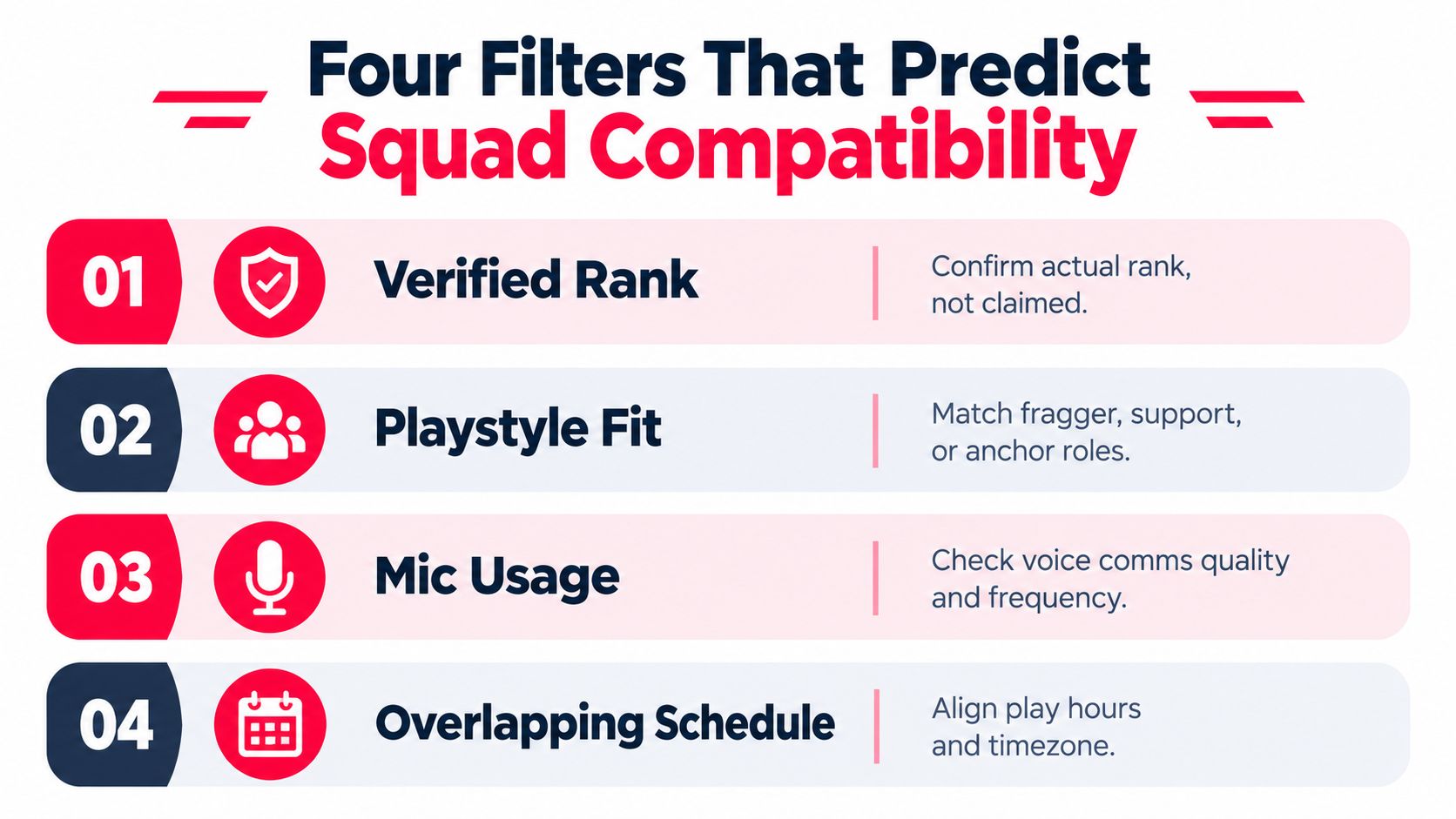
Before you queue, check four things: verified rank, playstyle fit, mic use, and overlapping play hours. If a candidate fails on more than one, keep looking.
Table of Contents
- Why Most Apex Legends Squads Fall Apart in a Week
- The Four Filters That Actually Predict Squad Compatibility
- Where to Find Apex Legends Teams Without Wasting a Weekend
- Writing an LFG Post That Gets Filled in Minutes
- Vetting a Candidate Using Clips, Ranks, and Play Style
- How to Trial a Teammate Without Locking In a Roster
- Your 48-Hour Apex Squad Plan and Final Checklist
Why Most Apex Legends Squads Fall Apart in a Week
The familiar failure starts before the first fight. Your third says they're ready, then drops without a word into a contested area. One teammate pushes while another is already rotating out. A late addition joins from a friend's list, but their rank is too far from the rest of the squad for a fair ranked match.
None of these players has to be bad at Apex. The problem is that you didn't check how they play together before you treated the group like a team. A high rank can reflect individual skill, but it doesn't tell you whether someone shares information, follows a plan, or handles a disagreement without turning the next game into an argument.
Three failure patterns to spot early
The silent third can't help you coordinate if they don't call what they see. Silence isn't automatically a deal-breaker, but it matters if you rely on quick voice comms to focus a target or decide whether to disengage.
The role clash is harder to spot from a profile. Three players who all want to lead the push can leave nobody watching the flank or calling the reset. A squad with different strengths can still fail if nobody agrees on who makes the call.
The rank mismatch creates a different kind of friction. EA says ranked matchmaking uses current Ranked Points (RP), requires premade squad members to be within two ranks of one another, and considers the squad's highest RP when matching opponents. That means the highest-ranked teammate can shape the lobby difficulty for everyone, as EA explains in its ranked matchmaking guidance.
The larger competitive scene also shows why a team is more than three individual badges. ALGS has grown into a global circuit with region-based qualification and recurring championships, and its roster history includes champions from different organizations. Those results reward coordinated lineups and team systems, not a famous name by itself, as summarized in the ALGS history.
Before you add someone, ask what you ignored last time: rank fit, role expectations, comms, or availability. Those are observable signals. “They seem chill” isn't a screening process.
The Four Filters That Actually Predict Squad Compatibility
A good teammate match takes less time to assess than a bad ranked session. Check four signals before you queue. You don't need a perfect profile, but a candidate should be clear about the basics and willing to test the fit.
Rank and role
Verified rank comes first for ranked play. Check current RP and rank, not just a claim in a post. EA's two-rank limit for premade squads and highest-RP matchmaking rule can make a seemingly balanced group face a much tougher lobby than the lower-ranked players expect. If you want a clearer picture of how ranked tiers and points work, use this guide to the Apex Legends ranked system.
Role fit is about what someone does in a fight, not which legend they main. An IGL makes calls; an entry player creates pressure; an anchor protects space and watches the team's position; support players help keep the squad stable. Those roles can overlap, but a squad of three players who all want to entry and call every fight may struggle to cover different needs.
Mic and schedule
Ask what “mic” means to the candidate. Do they make short, useful calls during fights, or only talk between matches? A voice check can reveal whether they communicate clearly, whether their setup is usable, and whether they're comfortable receiving a call without turning it into a debate.
Schedule needs the same directness. “Usually on” doesn't tell you whether someone is available for your usual ranked sessions. Confirm the days, approximate hours, and time zone you play.
Use a quick yes-or-no check for each filter: rank fits the lobby; roles complement each other; comms meet your needs; play hours overlap. If someone misses more than one, don't talk yourself into a queue just because they're online.
Where to Find Apex Legends Teams Without Wasting a Weekend
Different LFG channels solve different problems. A busy community can give you lots of replies, but you'll still have to sort out who's a fit. A structured profile can reduce that screening work, while an in-game request is often the fastest way to fill a slot for the current session.
| Channel | Time to First Reply | Verification Built In | Best For |
|---|---|---|---|
| Reddit communities such as r/apexlegends and r/apexlfg | Varies | Usually limited; screen candidates yourself | Reaching players who are already posting about Apex |
| Discord servers, including Apex LFG and franchise communities | Varies | Server-dependent; often requires direct questions | Finding active communities and regular groups |
| In-game LFG | Often quick when players are available | Limited to what players share in the session | Filling a spot for a one-off queue |
| GamerPlug | Varies by listing and availability | Profiles can show synced rank and gameplay clips | Comparing potential teammates before inviting them |
Reddit and Discord offer reach, but a username and a short post don't verify rank, playstyle, or schedule. Make your own screening questions specific: What mode are you playing? What rank are you? Are you using a mic? When do you normally play? For a long-term trio, make time for a voice check or trial rather than assuming a good first conversation means a good squad.
In-game LFG is convenient when you want teammates now and aren't trying to build a permanent roster. Its trade-off is that you'll usually have less time to compare candidates before the queue. For amateur tournaments, look for players who can share rank or clips, confirm their availability, and agree on who handles calls before you register as a team.
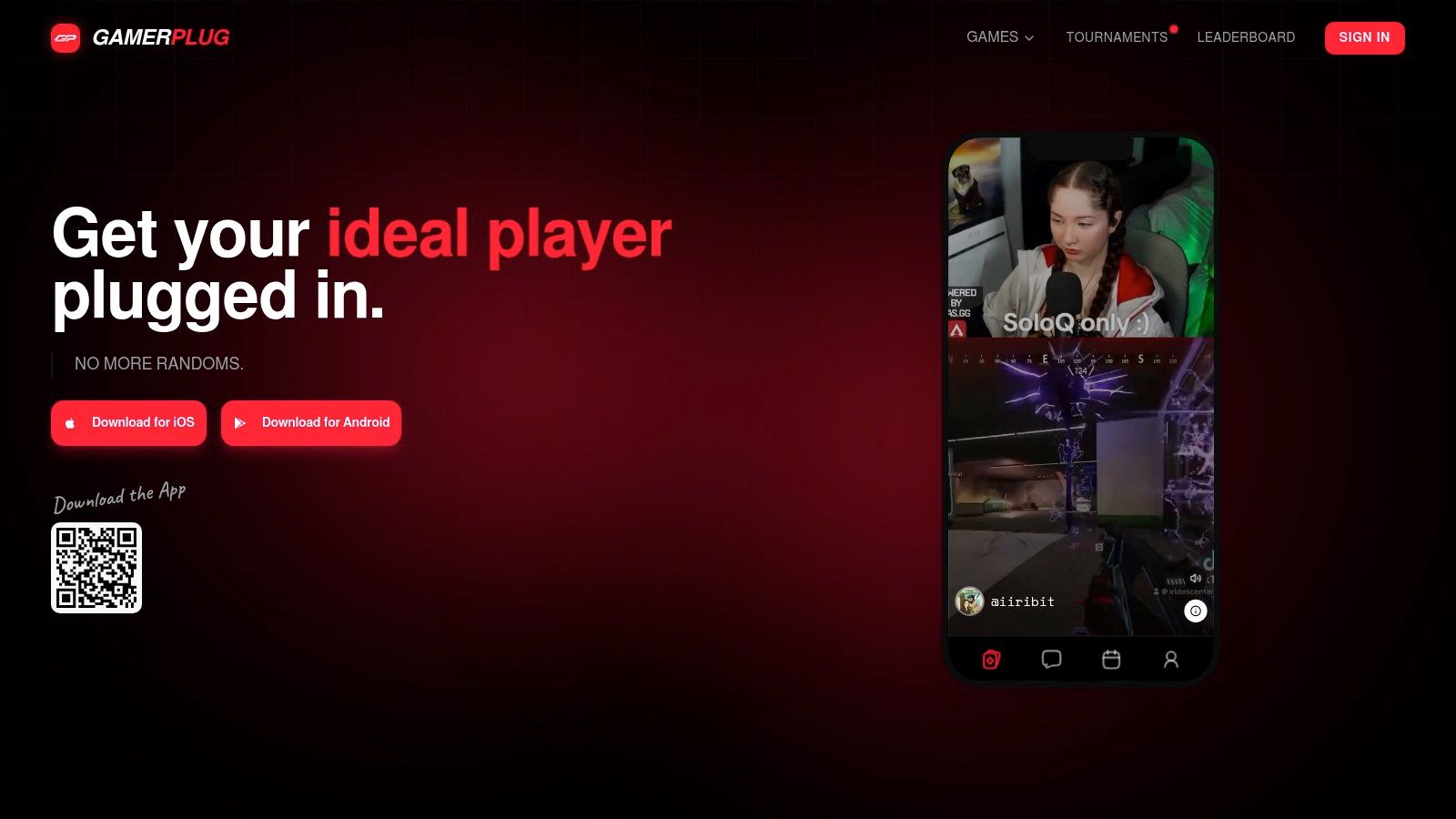
GamerPlug is one option for comparing profiles and filling a squad listing. Its Apex profiles sync ranks and stats from the official game API, and can include gameplay clips up to 90 seconds. The app's Squads listings let players specify details such as mode, rank range, platform, mic requirement, and open slots. If you're comparing tools for a broader search, this overview of a gaming buddy app covers the teammate-finding use case.
Writing an LFG Post That Gets Filled in Minutes
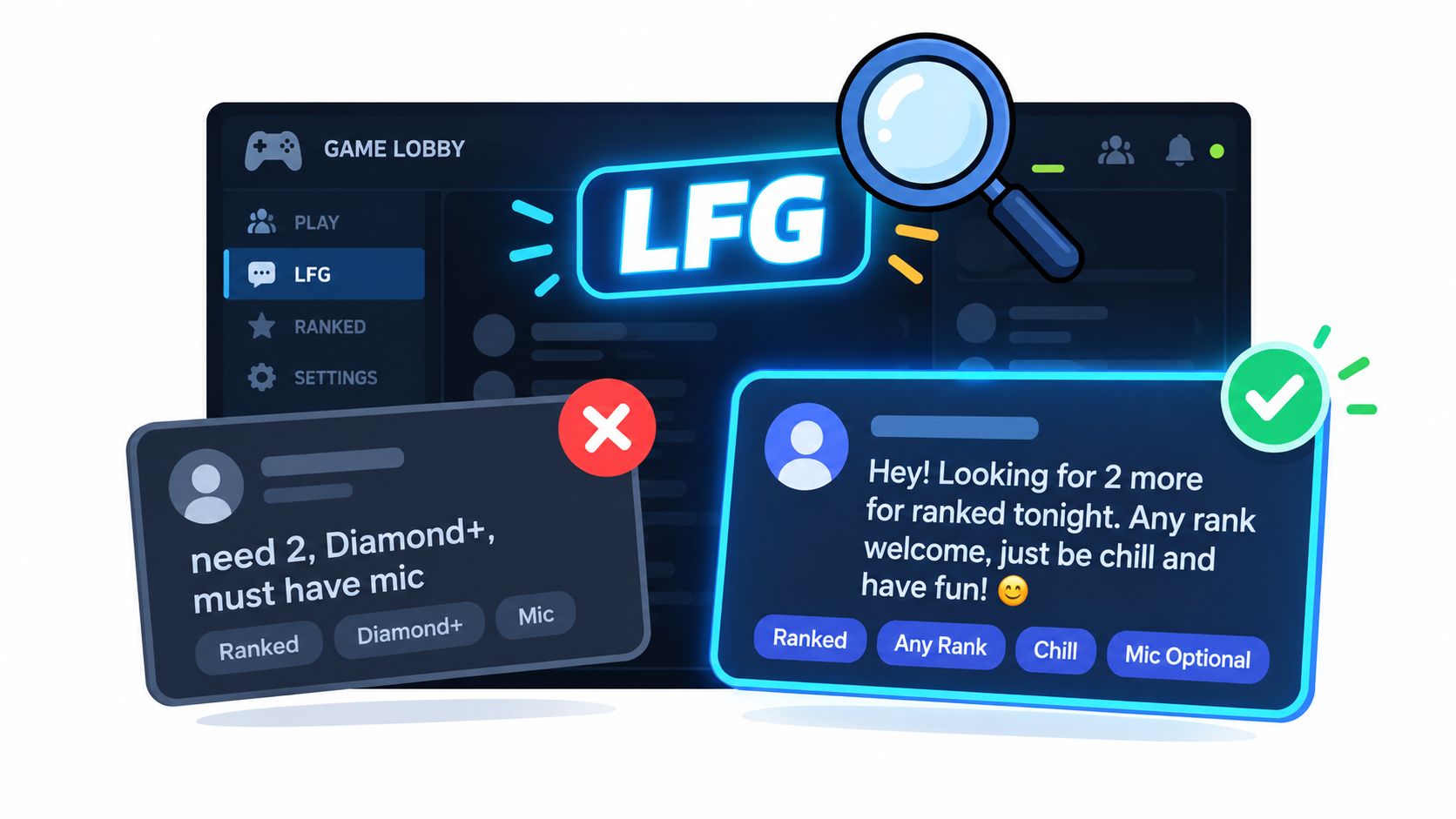
“Need 2, Diamond+, must have mic” gives a candidate almost nothing to judge. It doesn't say whether you're playing Ranked or Pubs, when you're online, what role you need, or whether you want calm comms or constant aggression. Strong players may skip it because they can't tell if the lobby will suit them.
Give candidates enough to self-select
Include rank range, and make the acceptable gap clear. EA's ranked rules require premade teammates to be within two ranks of each other, so check the current ranks rather than using an open-ended “Diamond+” label. Then state mode and time zone, so someone can tell whether the session works before they message.
Say what role or playstyle you need. “Looking for an anchor who's happy to play zone” gives more useful information than “need a good player.” Add your mic expectation, including whether clear fight calls are important. Finish with a vibe check that describes how you play: chill but focused, patient rotations, or confident pushes when the team agrees.
Here's a template you can adapt:
Ranked, current rank: [your rank and acceptable range]
Mode and hours: [mode, time zone, usual play hours]
Need: [role or playstyle]
Mic: [required or preferred, comms expectation]
Session style: [chill or tryhard, push or rotate, goal for the session]
Avoid vague or hostile phrases like “don't be bad,” “carry me,” or “no bots.” They attract arguments, not useful information. “Must have mic” is also incomplete on its own. Say what you expect players to communicate.
GamerPlug's Squads feature turns several of these details into listing fields, so players can respond with a clearer idea of your requirements instead of guessing from a free-text post. For a more general template and advice on posts across games, see this guide to LFG gaming.
You can also see the kind of LFG workflow used to fill a group in practice:
Vetting a Candidate Using Clips, Ranks, and Play Style
Treat a profile like a scout report, not a highlight reel. A clip can show aim, but it can also show whether a player checks their surroundings, stays with the squad, and makes sensible choices when a fight turns. You're not looking for a flawless montage. You're looking for evidence that their habits fit yours.
Watch decisions, not just eliminations
Start with the moments around the fight. Does the player look for a route before pushing? Do they stay close enough to trade damage, or break off alone? When the first engagement goes badly, do they regroup or keep chasing without checking where their teammates are?
Listen for useful communication if the clip includes audio. Short calls about an enemy's position or the squad's next move help you judge whether you'd understand this player under pressure. A clip with no clear comms doesn't prove they're silent, but it means you should ask and test it during a trial.
A verified rank is more useful than a screenshot because you can check the profile's synced information instead of relying only on what someone claims. On GamerPlug, Apex Legends ranks and stats sync from the official game API, and profiles can include gameplay clips up to 90 seconds so players can check competitive level and playstyle before queuing together. Profile details about mic use, team-play preference, and schedule help you compare stated preferences with your own.
Decide whether to pass, queue a trial, or keep looking
Make a simple call based on the evidence. Yes means the rank fits, the clip shows habits you can work with, and the availability matches. Trial means the fundamentals look promising but you need to hear their comms or see how they react to a real match. No means the candidate's claims and signals don't line up.
Red flags include refusing to share current rank, having no clip or explanation of their playstyle, dodging a trial, or describing their profile as chill while demanding a highly restrictive tryhard lobby. One missing detail isn't always a reason to reject someone; evasiveness across several questions is.
How to Trial a Teammate Without Locking In a Roster
A trial should answer one question: can you make reasonable decisions together when a match gets messy? Play three ranked games, then take a short break and talk through what happened. That's enough to surface recurring communication or rotation issues, though it isn't enough to judge a player's whole skill level.
Don't score the session only by wins or damage. EA's matchmaking guidance also considers signals such as average squad damage and whether players outperform other teams, which is a reminder that damage alone doesn't capture how a player contributes. Notice whether teammates share information, coordinate before a push, and recognize when the squad should disengage.
Use a debrief that stays specific
After the games, give each player a fair chance to answer these questions:
- Comms: Were calls clear and timely, or did someone go quiet when the fight started?
- Rotations: Did the squad agree on where to move, or split without a call?
- Tilt: After a rough game, did everyone reset, or did frustration take over the next queue?
- Contribution: What was one useful decision or play from each teammate?
Keep feedback about actions, not personalities. “We split when we took that fight because we didn't confirm the push” opens a conversation. “You're a bad teammate” ends one.
If it isn't a fit, be direct and polite: “Thanks for the games. I don't think our playstyles line up for a regular trio, so I'm going to keep looking. No hard feelings.” A clear message is better than disappearing or inventing an excuse.
Make trials a normal part of building a squad. Invite the people who fit your rank, roles, comms, and schedule to play again. Keep looking if the same mismatch keeps showing up. A permanent trio should come from repeated good sessions, not pressure to turn the first decent queue into a commitment.
Your 48-Hour Apex Squad Plan and Final Checklist
Use the next two days to test compatibility instead of collecting random invites.
Night one: Update your profile or write a clear LFG post. State your current rank, mode, time zone, needed role, mic expectations, and session style. Reply only to candidates who give enough detail to check those filters.
Day two: Review profiles and clips, confirm current rank and availability, then run trial games with promising players. Debrief on comms, rotations, and how everyone handled frustration. Keep the trio if the fit holds up; otherwise, thank the players and restart the search.
Before you queue, check:
- Rank: Is the current rank compatible with the squad?
- Role: Do your playstyles cover different needs?
- Mic: Can everyone communicate in the way the team needs?
- Schedule: Can you play together consistently?
Don't overweight a badge, ignore time zones, or skip the trial. Once your ranked trio works, look for amateur brackets that match your goals and make sure everyone agrees on availability and tournament expectations.
Start tonight by posting your rank, role, and play hours, then invite only players who match all four filters.
GamerPlug offers Apex player profiles with synced ranks and gameplay clips, plus Squads listings for specifying your mode, rank range, platform, mic requirement, and open slots. Use Gamerplug to compare candidates and find teammates before your next ranked queue.